 News Desk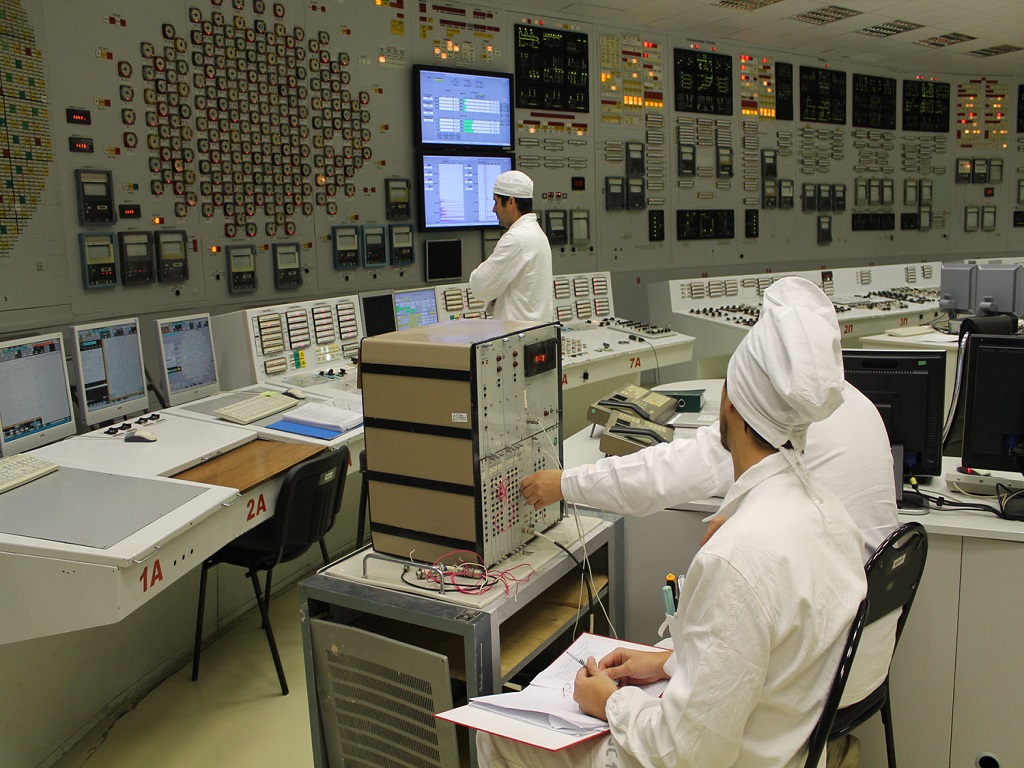
New Delhi — When 62-year-old Salim Al-Muqbali boarded a flight from Muscat to Mumbai, his hopes were pinned not just on a diagnosis, but on a second chance. Suffering from an aggressive form of lymphoma, Salim had exhausted local treatment options in Oman. His doctors recommended a PET-CT scan and targeted radionuclide therapy — a combination offered with growing precision and reliability at a hospital in India’s financial capital.
“I was surprised,” he said. “I didn’t know India had come this far.”
Salim’s case is not unique. Increasingly, India has become a destination not just for routine surgeries or elective treatments, but for highly specialized nuclear medicine — a field that integrates physics, chemistry, and medicine to diagnose and treat conditions like cancer, heart disease, and neurological disorders.
And behind this evolution is a story of quiet transformation.
India’s tryst with nuclear science began decades ago, not in a hospital ward, but in a laboratory. The Bhabha Atomic Research Centre (BARC), named after the visionary Homi J. Bhabha, laid the foundation in 1954. Since then, the country has emerged as a regional power in nuclear research and energy, and, more subtly, as a determined player in nuclear medicine.
From the inauguration of the Radiation Medicine Center in Mumbai in 1963 to the present day, India’s footprint in this field has expanded to 442 nuclear medicine centers and 359 PET-CT scanners nationwide. These centers, often embedded in institutions like the All India Institute of Medical Sciences (AIIMS), are equipped to perform cutting-edge diagnostic procedures and offer targeted therapies.
Yet, scale is both India’s strength and challenge.
In absolute numbers, India ranks among the top 10 countries in the world for nuclear medicine infrastructure. It is home to 24 operational medical cyclotrons — devices that produce the radioactive isotopes essential for imaging — and 150 facilities that provide high-dose radionuclide therapy.
The country’s growing reputation is underscored by accolades. In 2023, India was spotlighted as a “Country of Excellence” at the annual meeting of the Society of Nuclear Medicine and Molecular Imaging. The International Centre for Precision Oncology has also recognized Indian institutions for their leadership in radiotheranostics — an emerging frontier that fuses therapy with diagnostics.
But while the numbers impress in aggregate, the ratio tells a more nuanced story. India has just 0.26 PET-CT scanners per million people — compared to more than 6 in countries like the United States and close to 10 in nations such as Denmark and Japan. Experts say bridging this gap will be critical if India is to meet rising domestic demand and further expand its role as the global hospital.
Still, India’s strength may lie in its ability to do more with less. Nuclear medicine training in India has grown markedly, with institutions across the country offering MD programs and other specialized degrees. AIIMS has incorporated nuclear medicine into its curriculum at new campuses, and postgraduate seats in medical fields have more than doubled since 2014.
This capacity-building complements the country’s broader nuclear ambitions. India currently operates 22 nuclear reactors and plans to expand its energy output from 6.78 gigawatts to 22.5 by 2031. Importantly, many of these efforts are homegrown — India is one of the few countries developing fast breeder reactors and exploring thorium-based fuel cycles, a potentially game-changing innovation given the country’s rich thorium reserves.
These technologies do not directly impact medicine today, but they reflect a national commitment to scientific sovereignty and innovation. In time, such capabilities may trickle down to public health — whether through more affordable isotopes, or robust supply chains less dependent on imports.
India’s growing status in nuclear medicine is also reshaping its international image. By participating in global research initiatives, such as those coordinated by the International Atomic Energy Agency (IAEA), and providing affordable care to international patients, the country is blending soft power with scientific capability.
“There’s a quiet confidence in what India is doing,” said Dr. Anshu Rajnish Sharma, “We are not just catching up — in some areas, we are helping set the pace.”
And the numbers reflect a path forward. Experts estimate that to reach just one PET-CT scanner per million residents, India will need to install around 1,000 more machines over the next decade. That may sound daunting, but with growing demand, public-private partnerships, and the momentum of past decades, the goal is not beyond reach.
For Salim, the science was personal. After his PET-CT scan at a Mumbai hospital, he was given a personalized treatment plan involving Lutetium-177 therapy — a novel therapy that targets tumors with remarkable precision.
“I had never heard of this before,” he said. “But here in India, it was available, affordable, and it gave me hope.”
His journey — and India’s — speaks to a deeper truth: that the power of science lies not just in breakthroughs, but in their ability to reach the people who need them most.
India, once an underdog in the nuclear sciences, is emerging as a quiet force. Not because it has the most, but because it is learning to do the most with what it has.