 News Desk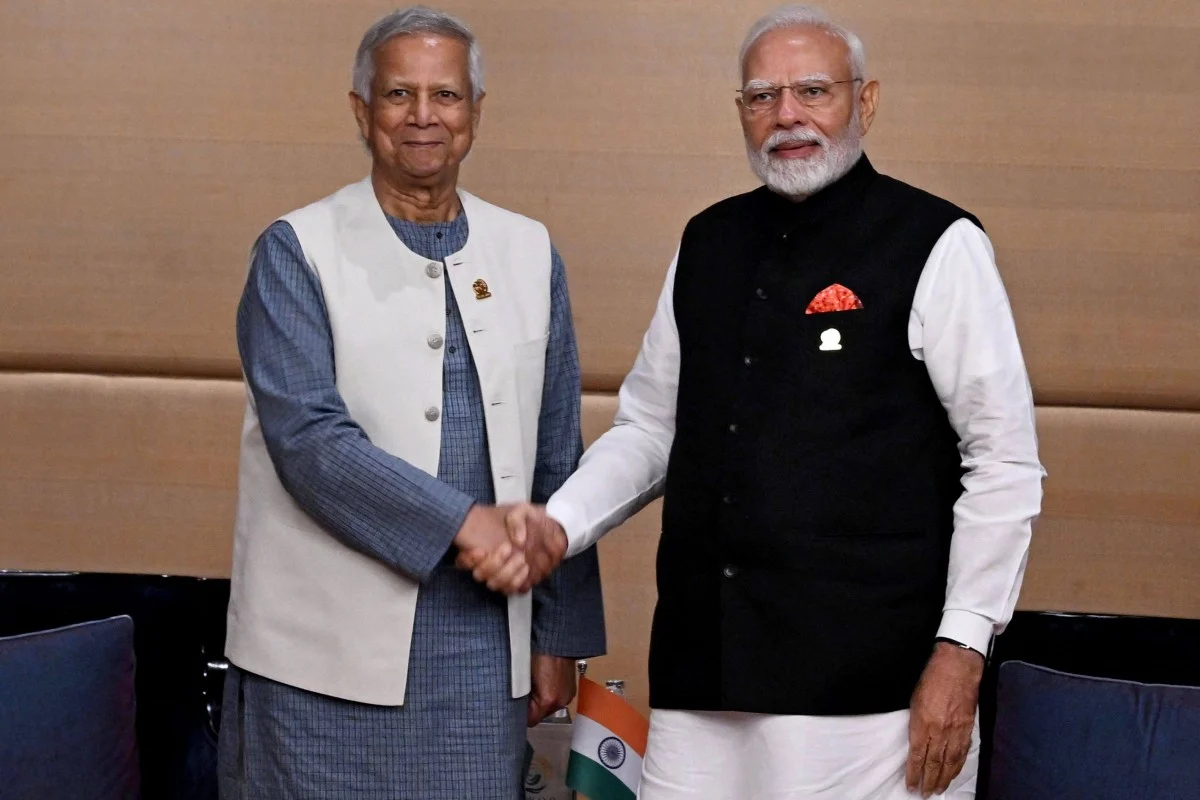
DHAKA, Bangladesh — Ten months after the dramatic ouster of Sheikh Hasina, Bangladesh remains mired in uncertainty, with Nobel laureate Muhammad Yunus, the interim government’s chief adviser, struggling to deliver the democratic renewal he promised. Hailed as a beacon of hope following Hasina’s flight to India in August 2024, Yunus has instead drawn criticism for delaying elections, alienating political parties, and fraying relations with India, raising fears that his leadership may destabilize South Asia rather than foster a secure democratic future.
Yunus, renowned for his microfinance innovations, was appointed to steer Bangladesh toward free and fair elections after Hasina’s rule collapsed amid violent protests. Yet, his announcement of elections in April 2026—nearly two years after his appointment—has sparked accusations of procrastination and disregard for the will of major political parties, including the Bangladesh Nationalist Party (BNP), which demands polls by December 2024. “Yunus is buying time, but at what cost?” asked Mirza Fakhrul Islam Alamgir, the BNP’s secretary general, in a recent statement. “The people want their voices heard now, not in 2026.”
This delay has fueled unrest in a country already grappling with lawlessness. Protests by public sector workers, students, and even primary school teachers have become a daily feature in Dhaka, with mobs and vandals exploiting the vacuum of authority. Police reluctance to return to duty and rising gang activity have further eroded public confidence, as reported by The Guardian in March 2025. Yunus’s inability to restore order has left many Bangladeshis questioning whether his banker’s acumen is suited to the complexities of governing a fractious nation of 170 million.
Yunus’s focus has veered toward ambitious reforms and international engagements, often at the expense of the urgent task of organizing elections. His proposal to split the National Board of Revenue met resistance, and his pursuit of a commercial deal with SpaceX’s Starlink for satellite internet, while forward-looking, has been criticized as a distraction from immediate democratic priorities. “Elections are the foundation of legitimacy,” said Debapriya Bhattacharya, a Dhaka-based economist. “Without them, Yunus’s reforms lack a mandate and risk being seen as elitist.”
The reinstatement of Jamaat-e-Islami, a party banned under Hasina for its controversial role in the 1971 liberation war, has further inflamed tensions. By lifting the ban and paving the way for its re-registration, Yunus has been accused of pandering to extremist elements to bolster his support base, a move that critics argue delays elections to allow Jamaat to regroup. Some labeled Yunus’s leadership a “foreign-funded coup” to empower Jamaat and the Nationalist Congress Party, reflecting the depth of public mistrust.
Yunus’s foreign policy missteps have compounded domestic woes, particularly straining ties with India, Bangladesh’s most friendly neighbor. His government’s proposal for a humanitarian corridor into Myanmar and discussions about foreign management of Chattogram Port have raised alarms in New Delhi, which views these moves as undermining its regional influence. Observers warned of a “geopolitical storm” involving Yunus aligning with Pakistan and China, a claim his administration dismissed but which resonates in Indian policy circles. “Bangladesh under Yunus is not fostering a safe South Asia,” said Shyam Saran, a former Indian foreign secretary. “It’s creating fissures that could destabilize the region.”
The interim government’s tensions with the military add another layer of complexity. Army Chief General Waker-Uz-Zaman has publicly pushed for elections by December 2024, clashing with Yunus’s timeline. Reports of Yunus considering the removal of the army chief, as noted by Al Jazeera in May 2025, signal a dangerous power struggle that could further erode stability. “The military’s patience is wearing thin,” said a senior Dhaka-based analyst, speaking anonymously due to the sensitivity of the issue. “Yunus risks alienating a key institution at a time when unity is critical.”
Public sentiment, once buoyed by Yunus’s global reputation, has soured. Some quarters in Dhaka claim that Yunus plans to scrap Bangladesh’s constitution, a claim his administration has not directly addressed but which underscores the growing distrust. “People expected a new dawn after Hasina,” said Rounaq Jahan, a political scientist at Columbia University. “Instead, they’re getting delays and excuses.” Yunus’s defenders argue that rushing elections risks repeating past flawed polls, but this rationale struggles to quell the anger of a populace weary of uncertainty.
Economically, Bangladesh is faltering under Yunus’s watch. The protests that toppled Hasina caused significant damage, and ongoing unrest has deterred investment. Unemployment and inflation remain pressing concerns, yet Yunus’s focus on long-term projects, like digital infrastructure, has done little to address immediate hardships. “He’s thinking like a visionary, not a crisis manager,” said a Dhaka shopkeeper, echoing widespread frustration.
As Bangladesh lurches toward 2026, Yunus’s legacy hangs in the balance. His global stature as a Nobel laureate has not translated into effective governance, and his insistence on delaying elections against the will of major parties risks deepening polarization. By straining ties with India and failing to curb domestic unrest, he is undermining South Asia’s stability rather than reinforcing it. For a nation yearning for democratic renewal, Yunus’s tenure increasingly feels like a missed opportunity—a cautionary tale of a celebrated figure unable to meet the moment.