 News Desk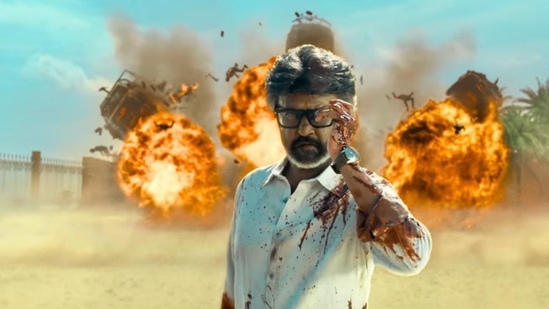
This article is part 7 of our series on the evolution of Indian design, exploring how creativity and tradition shape the country’s everyday objects and global influence.
CHENNAI, India — On a muddy field in Tamil Nadu, Rajinikanth fires a pistol skyward, his shadow looming over a 50-foot cutout of himself doused in milk by fans. It’s Jailer’s (2023) opening day, a $20 million Tamil blockbuster that’ll outgross most Bollywood flicks. India’s regional cinema—spanning Tamil, Telugu, Kannada, Bengali, and more—is no sideshow. Making 1,200 of the country’s 2,000 annual films, it’s a mosaic of languages and styles, its art a vivid counterpoint to Mumbai’s glitz. From Kerala’s quiet realism to Telugu’s roaring epics, these industries are rewriting India’s screen story.
The seeds were sown early. In 1917, Bengal’s Bilwamangal, a silent Bengali film, flickered to life, predating Bollywood’s first talkie by 14 years. Tamil cinema followed with Keechaka Vadham (1918), shot in a shed for $500. By the 1950s, regional giants emerged—Satyajit Ray’s Pather Panchali (1955), a Bengali gem, won at Cannes on a $3,000 budget, its black-and-white frames stark as monsoon mud. A trivia bit: Ray pawned his wife’s jewelry to finish it, a gamble that paid off.
Each region carved a niche. Tamil films lean on stars—Rajinikanth’s Sivaji (2007) spent $12 million, its helicopter chase a first for India. Telugu cinema bets big: RRR (2022), at $72 million, built a 10-acre forest set, its “Naatu Naatu” dance clinching an Oscar. Kannada’s KGF (2018) dug into gold mines—literally—its $10 million haul dwarfed by $150 million in earnings. Malayalam cinema whispers instead—The Great Indian Kitchen (2021), shot in a real house for $200,000, skewered patriarchy with no songs, a rarity.
Art defines them. Tamil sets dazzle—Ponniyin Selvan (2022) rebuilt a Chola palace, its 1,000 artisans carving pillars by hand. Telugu films like Baahubali (2015) took five years, its 20,000 extras storming a CGI waterfall. Bengali cinema paints with mood—Mrinal Sen’s Pratidwandi (1970) used Kolkata’s trams as a canvas, its grainy lens a protest cry.
A lesser-known feat: Kumbalangi Nights (2019), a Malayalam hit, lit its night scenes with kerosene lamps, shunning studio glare for $300,000.
Posters tell tales too. Tamil’s Kaala (2018) splashed Rajinikanth in red, hand-painted until 2010s digitization. Telugu’s Pushpa (2021) cutouts tower 100 feet, doused in turmeric by fans—a ritual Bollywood rarely sees. Kannada’s 777 Charlie (2022) posters, with a dog and drifter, went minimalist, a nod to its $2 million budget. Bengali art lingers on realism—Aparajito’s (1956) stark sketch sold for $100 in 2023 Kolkata auctions.
Trends shift fast. Telugu epics dominate—Salaar (2023) raked $90 million, its desert shoot spanning 130 days. Tamil blends action with grit—Vikram (2022) used real Chennai slums, no sets. Malayalam leads realism—Jallikattu (2019), with a rogue buffalo, cast villagers, not actors, for $400,000.
A stat: regional films grabbed 60% of India’s $2.5 billion box office in 2023, per FICCI-EY, up from 40% in 2015.
Stars rule southwards. Rajinikanth, 73, earns $12 million per film; Telugu’s Prabhas, post-Baahubali, commands $20 million. Bengali and Malayalam lean on directors—Rituparno Ghosh’s Chokher Bali (2003) spun $1 million into art-house gold. A quirky detail: Kantara (2022), a Kannada hit, shot its climax during a real Bhoota Kola ritual, blurring film and folklore.
Global eyes turn. RRR’s Oscar nod sparked Hollywood deals—director S.S. Rajamouli now fields $100 million offers. Minnal Murali (2021), a Malayalam superhero flick, hit Netflix, its $3 million lightning bolt homemade.
A trivia bit: Tumbbad (2018), a Marathi horror, built a rain-soaked village in 45 days, its $700,000 budget dwarfed by a $50 million cult haul. Exports rose 25% in 2023, says Deloitte.
Flaws persist. Regional budgets lag—Bollywood’s Pathaan (2023) dwarfed Tamil’s Leo at half the cost. Piracy hits hard; KGF: Chapter 2 lost $10 million to leaks. Yet resilience shines. At Chennai’s AVM Studios, a Jailer song blasts as fans chant outside. Regional cinema doesn’t mimic—it creates, its art a defiant, diverse roar from India’s edges.