 News Desk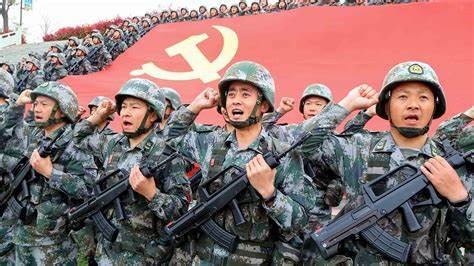
BEIJING — Even as its economy slows, China is pressing ahead with a 7.2 percent hike in defense spending for 2025, continuing a decade-long trend of single-digit increases that have fueled regional tensions and raised alarms among its neighbors. The new budget, unveiled Tuesday at the opening of the National People’s Congress, allocates 1.784 trillion yuan ($330 billion) to the military, reinforcing Beijing’s ambitions for a world-class fighting force by 2050.
China’s defense expenditures remain second only to the United States, yet concerns linger about the opacity of its military budget, which analysts suggest could be significantly higher when factoring in unreported expenditures on the People’s Armed Police, the Coast Guard, and strategic space initiatives. Despite broader economic headwinds, Beijing is prioritizing military expansion, particularly its naval and aerial capabilities, with an eye on Taiwan and the contested waters of the South China Sea.
China’s growing military footprint is particularly visible in the South China Sea, where its coast guard and maritime militia have repeatedly clashed with neighboring countries over territorial claims. The latest spending boost is expected to further embolden Beijing’s aggressive maneuvers in the region, where its forces have harassed Philippine vessels, reinforced artificial islands with military outposts, and issued threats against any perceived challenge to its self-proclaimed sovereignty.
The increased military budget will support China’s naval modernization, including aircraft carriers, missile systems, and surveillance technology aimed at extending its reach. December saw the launch of a new amphibious assault ship, while advanced fighter jets and hypersonic missile capabilities continue to be showcased in state media, underscoring China’s push to dominate regional security dynamics.
At the heart of China’s defense buildup lies its long-standing ambition to bring Taiwan under its control, by force if necessary. Beijing has set 2027—marking the 100th anniversary of the People’s Liberation Army—as a key milestone for achieving full military preparedness for a potential Taiwan operation. This year’s budget reinforces that timeline, with increased investment in naval, air, and missile capabilities designed to overwhelm Taiwan’s defenses and deter foreign intervention.
Military analysts point to China’s increasing focus on artificial intelligence-driven warfare, unmanned systems, and cyber operations—tools that could play a decisive role in any future conflict over Taiwan.
Yet, China’s military expansion is not without internal challenges. The recent ousting of two former defense ministers over bribery allegations highlights systemic corruption within the upper ranks of the People’s Liberation Army, raising questions about the efficiency of Beijing’s military spending. Despite repeated crackdowns, concerns persist about the military’s procurement practices and the potential diversion of funds.
China’s rising defense budget has prompted responses from its neighbors and strategic competitors. Japan and South Korea have ramped up defense cooperation with the United States, while Southeast Asian nations are strengthening military ties to counter Beijing’s assertiveness. Washington, which sees China’s expanding military as a direct challenge to its influence in the Indo-Pacific, continues to bolster alliances in the region through military aid and joint exercises.
Beijing, however, insists that its military buildup is purely defensive. NPC spokesman Lou Qinjian defended the spending increase, arguing that “the guarding of peace requires strength.” But for China’s neighbors—who have faced economic coercion, maritime encroachments, and military intimidation—the message seems clear: Beijing’s ambitions are growing, and so is its willingness to assert them.