News Desk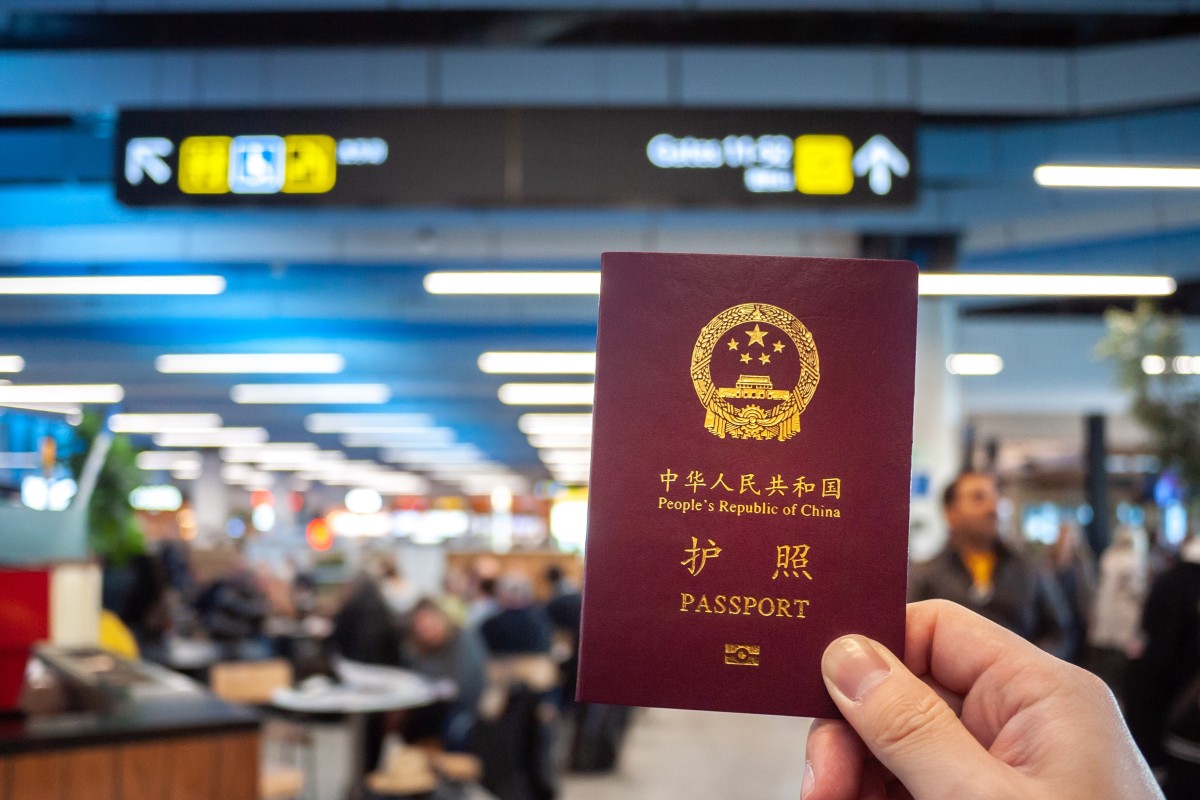
BEIJING — For years, China’s government has touted its passport as a symbol of national pride, a ticket to the world for a rising superpower. But as the 2025 Henley Passport Index ranks the Chinese passport at a middling 63rd out of 199—sandwiched between Papua New Guinea and the Philippines—citizens are confronting a starkly different reality: one of extra security checks, visa denials, and a growing sense of disillusionment. With visa-free access to just 85 destinations, far behind global leaders like Singapore (195) and Japan (193), the document once hailed as a mark of China’s ascent is increasingly seen as a liability abroad and a source of frustration at home.
In recent months, stories of Chinese travelers facing heightened scrutiny have rippled across social media and international headlines. At Tanzania’s Julius Nyerere International Airport, a Canadian tourist recently observed a pattern that spoke volumes: Western passport holders breezed through customs unchecked, while Chinese travelers were routinely pulled aside, their bags rummaged through, and their wallets lightened by impromptu “fees” of 200,000 Tanzanian shillings (about $73). “It was blatant,” the tourist remarked on X. “No one with a European or American passport was touched.”
Such experiences are not isolated. In Indonesia last month, a Chinese businessman sparked outrage after slipping 500,000 rupiah ($32) into his passport at Bali’s Ngurah Rai Airport, later bragging online about outsmarting customs with what he called a “time-honored Chinese trick.” The stunt backfired spectacularly: he was deported, banned for life, and ignited a firestorm of criticism that deepened negative stereotypes about Chinese travelers.
Similarly, in Sydney, customs officials seized 14 kilograms of undeclared pork, dried fish, and seeds from a Chinese woman’s suitcase in January. Her response—yelling at officers and tossing the contraband into a bin—earned her a $350 AUD fine and a viral video that left Australians shaking their heads.
These incidents have fueled a broader narrative of suspicion that tagalong Chinese passport holders at borders worldwide. With only 200 million of China’s 1.4 billion people holding passports—and many of those untested by international travel—the gap between Beijing’s propaganda and lived experience is jarring. “We’re told our passport reflects China’s strength,” said Li Wei, a 29-year-old tech worker from Shanghai, who was detained for hours at a European airport last fall over vague “security concerns.” “But out there, it feels like a target on your back.”
The passport’s limitations hit harder closer to home. Take Hong Kong, a special administrative region of China: American citizens enjoy 90-day visa-free stays, Britons 180 days, yet mainland Chinese need a pre-approved Exit-Entry Permit, valid for a mere seven days after a two-week wait. “My U.S. colleague laughed when I explained it,” said Zhang Min, a Guangzhou-based engineer. “He asked why I needed permission to visit my own country.” The irony stings deeper when travelers notice Taiwan—claimed by Beijing as a province—grants its citizens smoother entry to global hubs, ranking its passport 32nd with access to 141 destinations.
Critics point to Beijing’s foreign policy as a root cause. Decades of lavish aid to African and Pacific nations—$50 billion pledged since 2000, per the China Africa Research Initiative—have won diplomatic allies but also bred perceptions of Chinese wealth ripe for exploitation. “They throw money at small countries to snub Taiwan, then wonder why we’re treated like walking ATMs,” fumed Hu Jintao, a nationalist blogger with 2 million followers, in a rare critique of the government. He accused leaders of squandering billions on “face-saving” projects while neglecting citizens’ dignity abroad.
China’s Foreign Ministry has pushed back, insisting that visa-free deals with 23 countries and regions—most recently Singapore and Thailand—signal progress. Spokesman Lin Jian boasted last week that “China’s global influence is undeniable,” citing relaxed entry rules as proof. Yet for ordinary citizens, the benefits feel distant. Diplomatic passports unlock 150 visa-free destinations, but the average traveler’s red booklet offers no such privilege.
As China’s economic clout grows—its GDP hit $18 trillion in 2024—so does the disconnect between its global standing and its citizens’ mobility. “We’re the world’s second-largest economy,” said Li Wei. “Why does it feel like we’re still begging for respect?” For now, the Chinese passport remains a paradox: a symbol of pride at home, a source of friction beyond.