 News Desk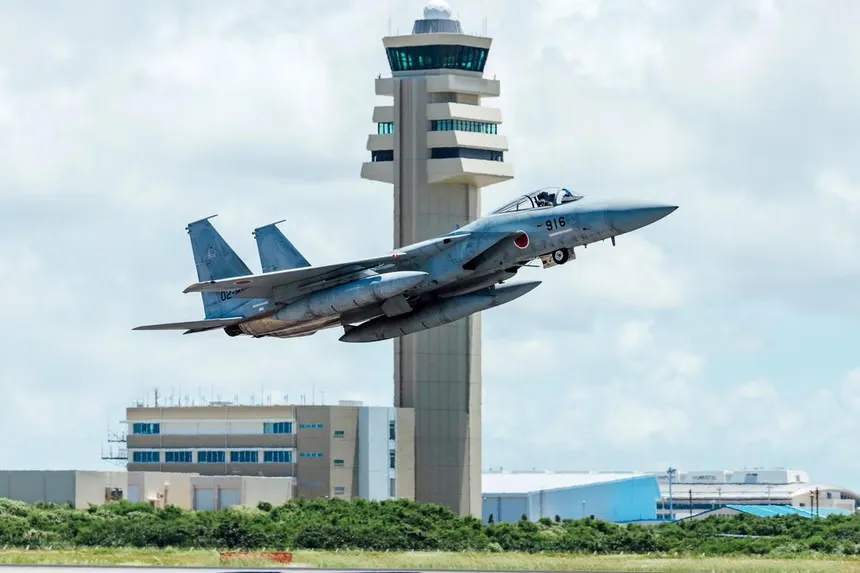
TOKYO — A lone buoy, floating south of Yonaguni Island, has become a flashpoint in the uneasy relationship between Japan and China, exposing the deeper undercurrents of Beijing’s military ambitions.
Discovered in December 2024 within Japan’s Exclusive Economic Zone (EEZ), the unannounced Chinese installation has sparked diplomatic protests and stoked fears of creeping encroachment. Tokyo has repeatedly demanded its removal. Beijing, unfazed, insists the device is legal and purely for meteorological research.
But military analysts warn otherwise. Similar to the Chinese “weather balloons” assessed by the U.S. in 2023 as covert surveillance tools, the buoy’s data—ocean currents, temperatures, potential naval routes—could hold strategic value for the Chinese navy.
The installation is just one element of a broader, more alarming pattern. In February, China sent a reconnaissance and attack drone near the Nansei Shoto island chain for the first time, triggering a scramble by Japan’s Air Self-Defense Force. This followed a shocking breach of Japanese airspace last August by a Chinese military aircraft—an event Beijing later dismissed as a technical mishap.
In Australia, a separate security alarm was raised when Chinese naval ships were spotted circling the country’s northern waters in an apparent show of force, raising concerns in Canberra about Beijing’s expanding military reach.
More troubling still was China’s first-ever naval blockade exercise in December, conducted with heavily armed vessels in regional waters. And as Beijing’s military maneuvers become bolder, Yonaguni Mayor Kenichi Itokazu sees the writing on the wall. “China is testing Japan’s response,” he said on Feb. 14. “We must stand firm.”
Tokyo is already ramping up its defenses. Civilian airports and ports across the island chain are being prepared for military use, and plans are underway to deploy surface-to-air guided missile units on Yonaguni. Defense Minister Gen Nakatani announced the expansion in January—on the same day a Chinese drone flew between Taiwan and Yonaguni, triggering another emergency response.
Japan’s security concerns extend beyond China. The Senkaku/Diaoyu islets remain a contested battleground with Beijing, and Russia continues to exert control over disputed islands northeast of Hokkaido. But with Taiwan in the crosshairs of China’s growing assertiveness, Japan’s southwestern front is becoming a key pressure point in an increasingly volatile region.
For some in Japan, the response so far is not enough. The conservative Sankei Shimbun newspaper has urged Tokyo to take a page from the Philippines’ playbook and unilaterally remove the buoy—just as Manila did with Chinese barriers in the South China Sea.
As Japan hardens its defenses, the question remains: Is it prepared for what’s coming?