 News Desk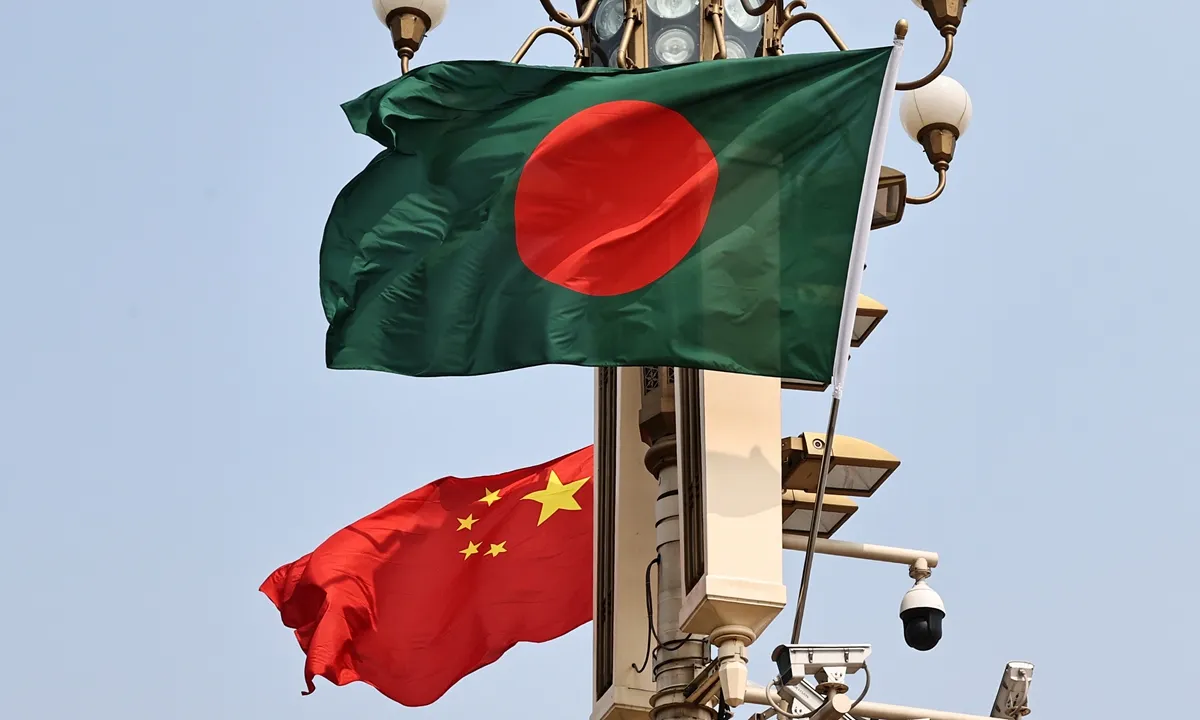
BEIJING — When 22 Bangladeshi officials landed in China this week for a 10-day visit, it marked more than a diplomatic courtesy. The delegation, including figures like Abdul Moyeen Khan of the Bangladesh Nationalist Party (BNP), arrived at Beijing’s invitation, spotlighting China’s strategic opportunism in action. With Bangladesh reeling from the ouster of former Prime Minister Sheikh Hasina last year, Beijing is seizing the moment to pull Dhaka closer, a move that echoes its past playbook in Sri Lanka — and carries the same warning signs.
The timing is no accident. Hasina’s fall left a political void, and ties with India, Bangladesh’s traditional partner, have frayed over New Delhi’s refusal to extradite her. China, sensing an opening, has ramped up its courtship. Late last year, it hosted BNP leaders; now, it’s engaging a broader swath of Dhaka’s political class, including Islamist groups like Jamaat-e-Islami. Trade between the two nations already tops $24 billion, mostly Chinese goods, and Beijing’s investments — a $3.6 billion bridge, a $1.2 billion submarine base — have deepened the bond. This week’s visit, with meetings planned between Bangladeshi officials and Communist Party brass, signals China’s intent to lock in influence across the board.
It’s a familiar pattern. In Sri Lanka, China’s strategic opportunism took root in the 2000s with billions poured into projects like the Hambantota Port. The pitch was prosperity; the reality was debt. By 2017, Sri Lanka couldn’t pay, and China secured a 99-year lease on the port — a geopolitical prize. When Sri Lanka’s economy imploded in 2022, though, Beijing’s support dwindled. It offered $74 million in aid — peanuts next to India’s $4 billion bailout — and stalled on debt relief until global pressure forced its hand. “China’s there for the good times,” said Ruwanthi Perera, a Colombo-based analyst. “When the bad times hit, you’re on your own.”
Bangladesh could be next in line. Joining China’s Belt and Road in 2016, it’s leaned heavily on Beijing for arms — 74 percent of its imports — and infrastructure. The projects have delivered, but the Sri Lanka precedent looms large. “Bangladesh isn’t Sri Lanka yet,” said Shahab Enam Khan, a professor at Jahangirnagar University. “The returns are better, the politics less volatile. Still, you don’t bet against history repeating.” If Dhaka overextends, China’s history suggests it’ll prioritize leverage over loyalty.
For Beijing, the stakes are strategic: Bangladesh sits at a crossroads, offering access to the Bay of Bengal and a check on India’s regional sway. Anti-India sentiment, stoked by Hasina’s refuge in New Delhi, plays into China’s hands. “India’s missteps are our opportunities,” said Zhou Bo, a Tsinghua University analyst. But that opportunism cuts both ways. Bangladesh may welcome China’s embrace now, only to find — as Sri Lanka did — that the grip tightens when the chips are down.