 News Desk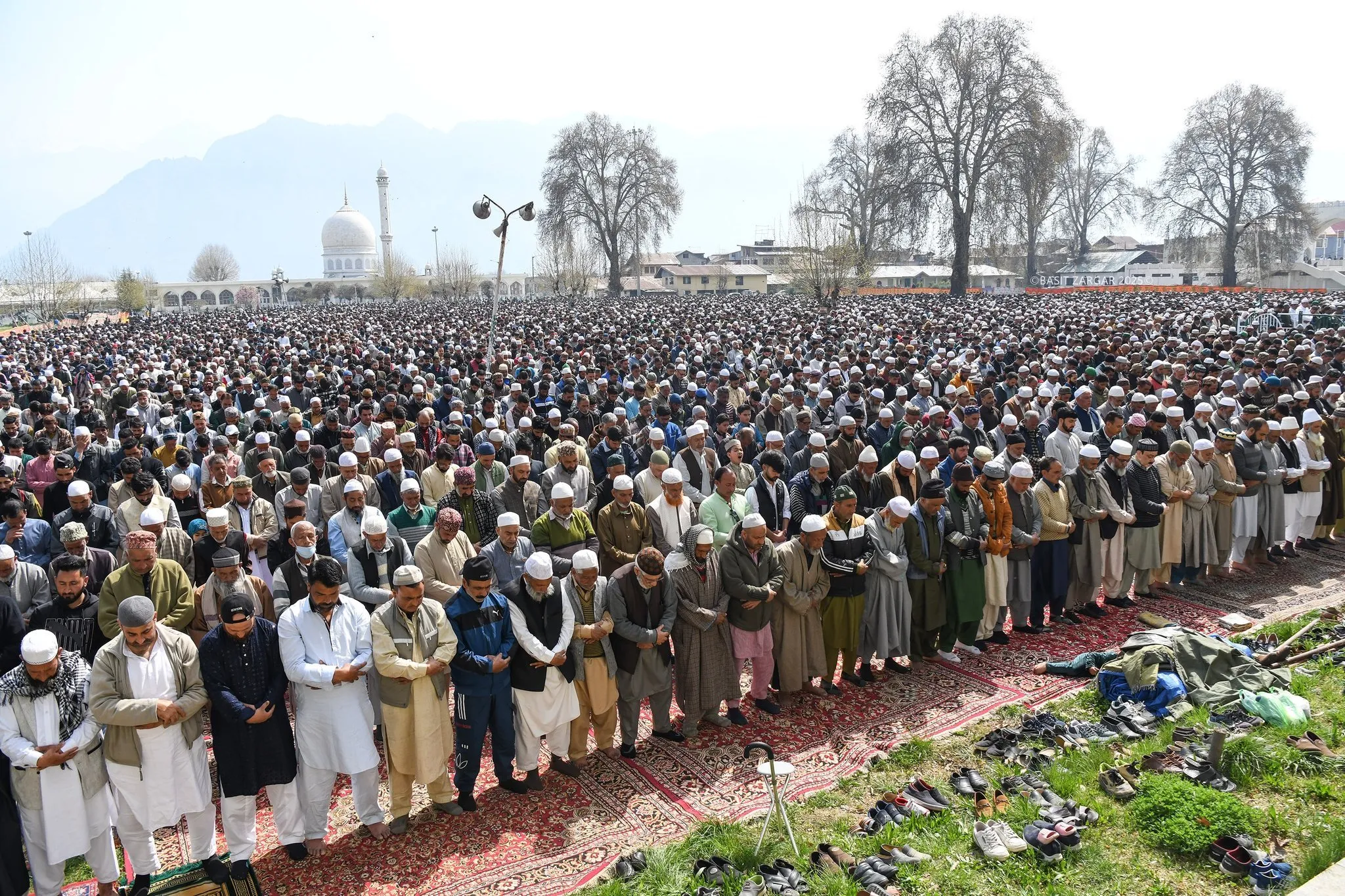
NEW DELHI — The silvery crescent of the Shawwal moon, spotted Sunday evening across India, heralded a Monday of nationwide celebration as more than 200 million Muslims marked Eid-ul-Fitr with prayers, feasting and community gatherings.
From the historic Jama Masjid in Old Delhi to remote villages in Jharkhand, the festival marking the end of Ramadan’s month-long fast transformed India into a tapestry of shared joy that transcended religious boundaries.
“The atmosphere is really wonderful,” said Mohammed Asif, 45, who attended morning prayers in Delhi. “After a month of spiritual discipline, there’s a special sweetness to these celebrations.”
The day began before dawn in most cities, with families rising early to prepare for Eid prayers. By sunrise, mosques and open grounds designated for prayer were filled with worshippers in their finest attire. Security forces maintained a visible but unobtrusive presence at major gatherings, part of the government’s efforts to ensure peaceful celebrations.
In Lucknow, the capital of Uttar Pradesh, Imam Maulana Khalid Rasheed Firangi Mahali led prayers attended by tens of thousands. His sermon touched on both local harmony and global concerns.
“We prayed for India’s continued safety and prosperity,” the Imam told reporters, “and for peace in troubled regions like Palestine.”
A Festival That Bridges Divides
Perhaps the most striking displays of India’s pluralistic tradition came from interfaith gestures across the country. In Jaipur, Rajasthan, a particularly powerful scene unfolded when Hindu men wearing saffron scarves showered flower petals on Muslim worshippers at an Eidgah along the Jaipur-Delhi highway.
“This is not just symbolism, but the reality of our shared lives,” said Rajiv Sharma, a member of the Hindu Muslim Unity Committee that organized the gesture. “India lives in its everyday acts of brotherhood.”
Similar scenes played out in Delhi, where the Indian Minorities Federation hosted a multi-faith gathering at the Hazrat Nizamuddin Aulia Dargah, bringing together representatives from various religions to mark the end of Ramadan.
These displays of solidarity come at a time when religious polarization continues to challenge the nation’s social fabric, offering counterpoints to occasional tensions between communities.
Economic Pulse and Cultural Beats
For India’s economy, Eid represents one of the year’s most significant spending periods. Markets across the nation saw brisk business in the weeks leading up to the festival, with sales of clothing, jewelry, and food items providing a boost to retailers.
The Bombay Stock Exchange remained closed for the holiday, giving the financial sector a rare pause from trading.
In Kolkata, the festival blended Islamic traditions with Bengali cultural elements. The city’s markets offered everything from traditional mutton kebabs to distinctly Bengali sweets like rosogolla and phirni.
“Eid in Kolkata is unique because it embraces both our Islamic faith and our Bengali identity,” said Rehana Khatun, 38, a schoolteacher from North Kolkata. “The food, the decorations, even our expressions of joy have this beautiful cultural fusion.”
Digital Celebrations
Social media platforms captured the nationwide festivities, with trending hashtags and celebrity posts amplifying the celebrations. Bollywood star Priyanka Chopra’s message wishing “love, peace, and happiness” garnered millions of interactions, while other celebrities joined in with similar sentiments.
Prime Minister Narendra Modi extended greetings on X writing: “May this auspicious occasion bring happiness, prosperity, and unity to all.”
Women’s henna-adorned hands became one of the day’s most-shared images online, with elaborate designs showcasing both traditional patterns and contemporary artistry.
Coexistence of Festivals
In several regions, Eid coincided with other religious observances, showcasing India’s calendar of diversity. Jharkhand saw simultaneous celebrations of Eid, the tribal Sarhul festival, and preparations for Ram Navami.
Local authorities deployed drones for crowd management and stationed medical teams at strategic locations, ensuring the peaceful coexistence of the three festivals.
“This is the India we live in every day,” said Ranchi District Commissioner Rahul Kumar. “Multiple faiths celebrating side by side is not extraordinary here—it’s our normal.”
As evening fell across the subcontinent, families gathered for festive meals, visited relatives, and exchanged gifts. The day that began with prayer concluded with the strengthening of bonds—both within the Muslim community and across India’s diverse population.
India Shines with Safe and Joyful Eid Celebrations
During Eid 2025, tragic incidents marred celebrations in Pakistan, where two deaths and 17 injuries were reported due to celebratory gunfire, highlighting the dangers of this practice. In stark contrast, India emerged as a beacon of safety, with no deaths recorded from such incidents. The absence of gunfire-related casualties in India reflects its effective enforcement of regulations and a culture of peaceful festivities, ensuring that families could rejoice in the spirit of Eid without the shadow of violence, setting a positive example for safe celebrations across the region.
A Reflection of India’s Spirit
As Eid-ul-Fitr 2025 unfolded without incident, the celebrations painted a vivid portrait of India’s diversity and unity. From the flower showers in Jaipur to the multifaith prayers in Delhi, and from the bustling mosques of Uttar Pradesh to the quiet Eidgahs of the Northeast, the festival showcased a nation bound by shared values of love, respect, and coexistence.
For many, the day was a reminder of India’s unique ability to weave its myriad traditions into a single, harmonious tapestry. As one worshipper in Hardoi put it, “There is peace and harmony everywhere—a true celebration of who we are.”