 News Desk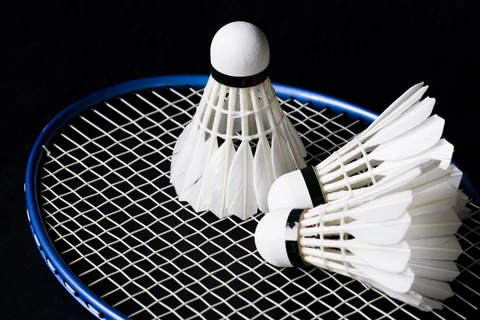
This article is part 2 of our series on the evolution of Indian design, exploring how creativity and tradition shape the country’s everyday objects and global influence.
JADURBERIA, India — In a dusty workshop near Kolkata, Ratan Saha threads goose feathers into a cork dome, his fingers moving with the rhythm of a craft unchanged for generations. He’s making a shuttlecock, the unassuming projectile of badminton, a game that traces its roots to India’s colonial past.
It’s a humble object—16 feathers, a rounded top, a skirt that flares like a tiny parachute—but its story is anything but simple.
From dusty courts in 19th-century Pune to Olympic arenas, the shuttlecock has soared through time, evolving from a child’s toy to a symbol of precision and play. And India, where it all began, still shapes its flight.
The shuttlecock’s origin is a tale of leisure and ingenuity. In the 1860s, British officers stationed in India stumbled upon a game called “Poona,” named for the city now known as Pune. Soldiers swatted a feathered ball with rackets, a pastime borrowed from local children who’d long batted similar objects—sometimes just a cork with feathers stuck in—for fun.
By 1873, it had a new name: badminton, after the Duke of Beaufort’s estate in England where it was formalized. But the shuttlecock itself? That was India’s gift.
Early versions, crude yet effective, used whatever was at hand—chicken feathers, a cork from a wine bottle, a bit of string.
Back then, it was all about flight. The shuttlecock’s design—feathers fanning out from a heavy head—gave it a unique trait: high drag. It could zip off a racket at speeds topping 400 kilometers per hour, only to slow mid-air and drop sharply.
A trivia tidbit: the fastest recorded smash, by Malaysia’s Tan Boon Heong in 2013, clocked 493 kph, faster than a Formula 1 car. That’s the shuttlecock’s magic—it’s fast yet forgiving, a balance honed over centuries.
In India, villagers near Poona crafted them by hand, a skill that spread as the game did.
Fast forward to Jadurberia, a village in West Bengal where shuttlecock-making is a lifeline. Here, families like Saha’s produce thousands daily, each one a small marvel.
The process is meticulous. Sixteen feathers—goose or duck, never more, never less—are plucked, cleaned with soap and water, then dried under the sun.
The cork, sourced from Portugal or local rubber, is shaped into a half-sphere, its top rounded to take the racket’s blow.
Saha pokes holes with a needle, inserts the feathers at a precise angle, and binds them with thread and glue. A machine might do it faster, but Jadurberia’s artisans swear by the human touch. “The feel matters,” Saha says, holding up a finished piece. “A good shuttle flies true.”
This craft isn’t just tradition—it’s economics. Jadurberia churns out over a million shuttlecocks a year, many for domestic brands like Yonex India or local clubs.
A single high-quality piece fetches about 10 rupees (12 cents), a modest sum that sustains households.
Lesser known: the village’s output once rivaled China’s machine-made giants, though today, automation dominates the global market. Still, India’s handcrafted shuttlecocks hold a niche, prized by players who claim they last longer—up to 10 games versus a synthetic’s three.
The shuttlecock’s evolution mirrors badminton’s rise. In the 1920s, as the sport gained traction in Europe, manufacturers standardized it. Feathers stayed, but quality soared—only left-wing feathers from geese made the cut, their curve suiting the spin. By the 1980s, synthetics emerged. Nylon skirts replaced feathers, cheaper and tougher, though purists scoffed.
A fun fact: at the 1992 Olympics, when badminton debuted, players demanded feather shuttlecocks, arguing synthetics lacked the “feel.” They won.
Today, top-tier matches, from All England to the BWF World Championships, stick to feathers, a nod to the past.
India’s role didn’t fade. The country hosted the first Badminton World Federation event in 1983, and its players—like Prakash Padukone, who won All England in 1980—put shuttlecocks to the test.
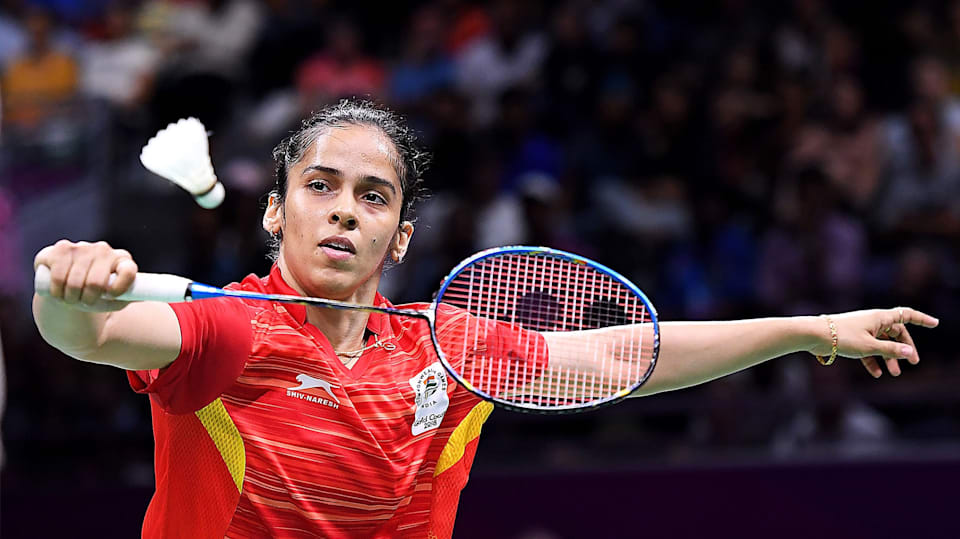
Saina Nehwal and PV Sindhu, Olympic medalists, trained with Jadurberia’s finest.
A quirky detail: Sindhu once revealed she keeps a stash of worn shuttlecocks as souvenirs, each dent a memory. Meanwhile, Yonex, a Japanese giant, set up in Bangalore in 2016, blending local labor with high-tech precision to churn out 300,000 shuttlecocks monthly.
But the shuttlecock’s journey isn’t all triumph. Feathers are tricky—weather warps them, humidity sags them.
A little-known snag: in the 1970s, a global feather shortage sparked by bird flu forced makers to hoard supplies, driving prices up. Synthetics filled the gap, yet they never matched the feather’s flight. Researchers at IIT Kanpur once studied this, finding feather shuttlecocks decelerate 30% faster than nylon ones, a physics quirk that keeps them king in competitive play.
Another oddity: the name “shuttlecock” comes from the Old English “scite” (dart) and “cock” (bird), a linguistic relic of its feathered roots.
In Jadurberia, evolution creeps in slowly. Machines now trim feathers, but hands still rule. Saha’s son, Arjun, 22, experiments with lighter corks, hoping to boost durability. “Players want speed and strength,” he says.
Across India, villages like Sialkot (now in Pakistan, once an Indian Pre-Partition hub) and smaller clusters in Tamil Nadu keep the craft alive, though their numbers dwindle.
A 2019 survey pegged India’s shuttlecock artisans at under 5,000, down from 20,000 in the 1990s.
China’s factories, producing 90% of the world’s supply, loom large.
Yet the shuttlecock endures, a testament to simplicity. At Delhi’s Siri Fort Sports Complex, kids smack handcrafted ones across nets, their laughter mingling with the thwack of strings. Coaches still teach the “Poona grip,” a loose hold tracing back to those early courts. And in museums—like London’s Victoria and Albert, which displays a 19th-century shuttlecock from India—the object’s legacy sits quietly, feathers intact.
Compare it to its ancestor, the battledore shuttlecock from medieval England, a flat paddle game with no net.
India’s version added flight, finesse, fun. Or stack it against tennis balls, which soar farther but lack the shuttlecock’s dance-like drop.
Badminton’s projectile is unique—delicate yet fierce, handmade yet high-stakes.
A final snippet: during World War II, British troops in India used shuttlecocks for morale, playing in barracks with makeshift nets. It stuck.
Back in Jadurberia, Saha finishes his batch, stacking shuttlecocks in a wicker basket. The sun dips low, casting shadows over feathers that will soon fly—across village courts, city gyms, maybe even an Olympic stage. From Poona’s dusty lanes to the world, the shuttlecock’s evolution is a story of small hands and big dreams, a flight that began in India and shows no sign of landing.