 News Desk
ATHENS — Greece is weighing a landmark acquisition of India’s Pinaka Long Range Multi-Barrel Rocket System (LRM), a move that could reshape military dynamics in the Eastern Mediterranean and bolster an already blossoming partnership between Athens and New Delhi. The potential deal, reported by the defense magazine Geostratigika and confirmed by sources familiar with the discussions, underscores India’s rising stature as a global defense innovator and Greece’s strategic push to modernize its arsenal amid tensions with Turkey.
The Pinaka, developed by India’s Defence Research and Development Organisation (DRDO), is a versatile multiple-launch rocket system (MLRS) available in several variants: the Mk-I with a 40-kilometer range, the Mk-II reaching 60 kilometers, the Extended Range (ER) at 90 kilometers, and the Long Range (LR) stretching to 120 kilometers. Comparable to the American M270 MLRS or Russia’s BM-30 Smerch, the Pinaka offers Greece a cost-effective yet formidable option for delivering precise, high-impact strikes over vast distances—an asset that could prove decisive along its land border with Turkey or across the contested Aegean islands.
For Greece, the Pinaka promises a leap in firepower. Military analysts suggest it would enable the Greek Army to saturate targets with devastating barrages, enhancing deterrence against regional adversaries. “The Pinaka LRMs would give Greece a deep-strike capability that’s both affordable and scalable,” said a European defense expert who requested anonymity due to the sensitivity of the talks. “Paired with systems like the American HIMARS, it could create a layered, flexible defense network.”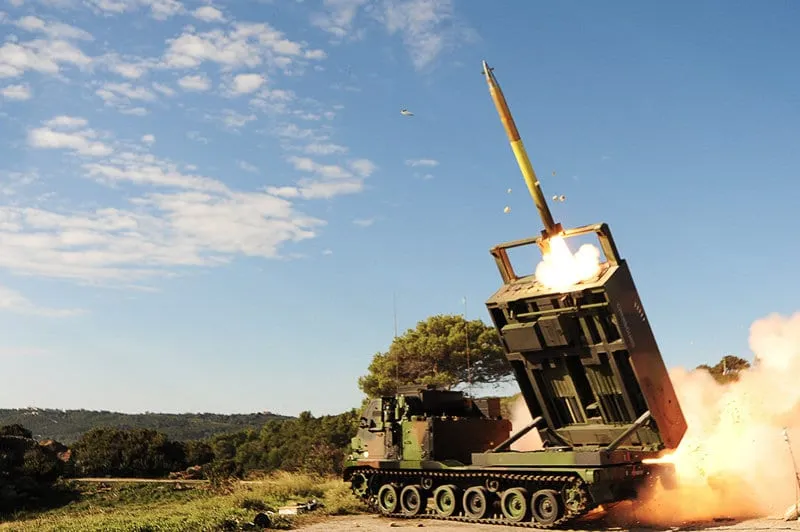
India, eager to expand its defense footprint, stands to gain significantly. The Pinaka has already found a buyer in Armenia, marking its first export in 2023, and Greece could become its second international customer. New Delhi has sweetened the proposition by floating the idea of co-production with Greek firms like EAS or INTRACOM Defense, a move that could generate jobs and deepen industrial ties. “This isn’t just a sale—it’s a partnership,” an Indian official said, speaking on condition of anonymity. “India’s expertise paired with Greece’s strategic needs could set a new standard for collaboration.”
The financials bolster India’s case. At roughly $56,000 per unit, the Pinaka costs between 25% and 50% less than the HIMARS, priced at about $100,000, including missiles. For Greece, facing budget constraints yet urgent security demands, this affordability could tip the scales. Negotiations, however, hinge on securing financing and ensuring compatibility with Greece’s NATO-aligned systems—a complex but not insurmountable challenge, experts say.
The geopolitical ripples could be profound. Turkey, Greece’s long-standing rival, might bristle at the acquisition, potentially turning to Pakistan or China for comparable systems in response. Washington, meanwhile, could view the deal with unease if it perceives a threat to its HIMARS deployment plans in Greece. Yet, for India, the sale would signal a triumph of its “Make in India” initiative, showcasing its ability to deliver cutting-edge technology at competitive prices.
Athens and New Delhi have steadily strengthened military ties in recent years, conducting joint exercises and naval patrols. The Pinaka deal could cement this alliance, positioning India as a key player in European security while offering Greece a powerful tool to navigate its volatile neighborhood. As talks progress, the world watches a potential fusion of Indian ingenuity and Greek resolve—one rocket at a time.