 News Desk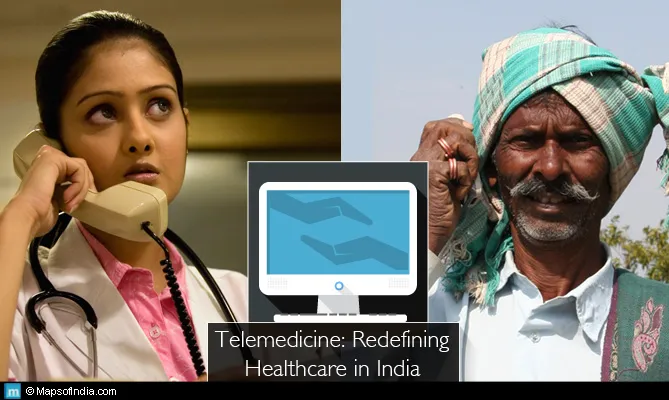
In India, where gleaming cities tower over sprawling villages, healthcare remains a stubborn divide—urban abundance versus rural scarcity. Enter HealthSync, a telemedicine startup launched in 2021 by Priya Sharma, a 29-year-old entrepreneur from a small town in Uttar Pradesh. With a laptop, a vision, and the reach of India’s digital boom, Sharma has turned her modest platform into a lifeline for 50,000 users, proving that technology can stitch together a fragmented system.
HealthSync’s impact begins with access. In rural India, where 70% of the population lives, a doctor’s visit can mean a day-long journey—hours on rickety buses, lost wages, and sometimes no doctor at the end of the road. India has just 0.7 physicians per 1,000 people, far below the World Health Organization’s recommended 1.0, and most cluster in cities.
HealthSync flips this script. Through a simple app, patients connect to urban doctors via video calls, getting diagnoses, prescriptions, and follow-ups without leaving home. For a farmer in Bihar or a mother in Odisha, it’s not just convenience—it’s a game-changer.
The numbers tell part of the story. Since its launch, HealthSync has facilitated over 50,000 consultations, with monthly users growing 20% in 2023 alone. It’s partnered with 200 doctors across specialties—cardiologists, pediatricians, general practitioners—building a network that spans India’s diversity.
A typical consultation costs 200 rupees ($2.50), a fraction of the 1,000 rupees ($12) a physical visit might demand, including travel. For rural families earning $100 a month, that’s money back in their pockets.
But the impact runs deeper than rupees. Take Rani Devi, a 45-year-old from Jharkhand. Last year, chest pain sent her into a panic. The nearest clinic was 50 kilometers away; she’d never make it. A neighbor with a smartphone opened HealthSync, and within 15 minutes, a doctor diagnosed a mild infection, prescribed antibiotics, and spared her a grueling trip. “I thought I’d die waiting,” Devi says. “Now I trust my phone more than the road.”
HealthSync also eases pressure on India’s overburdened public health system. Rural clinics, often understaffed and underequipped, see patient loads drop as telemedicine siphons off routine cases—coughs, fevers, prenatal checks. This frees doctors to focus on emergencies, a ripple effect Sharma calls “quietly revolutionary.” In 2023, the platform logged 10,000 preventive consultations, catching issues like hypertension early, potentially saving lives and cutting long-term costs.
It’s not flawless. Internet dead zones still plague remote areas, though India’s 4G expansion helps. Illiteracy and tech hesitancy slow adoption—Sharma’s team trains local volunteers to assist. And while HealthSync’s $1 million seed funding fuels growth, scaling to millions more users demands bigger cash and broader reach.
Still, the vision holds. Sharma, whose grandmother died awaiting care, sees each consultation as a small victory. “We’re shrinking the gap,” she says, “one call at a time.” With 50,000 served and counting, HealthSync isn’t just a startup—it’s a testament to how India’s digital wave can heal as much as it connects.