 News Desk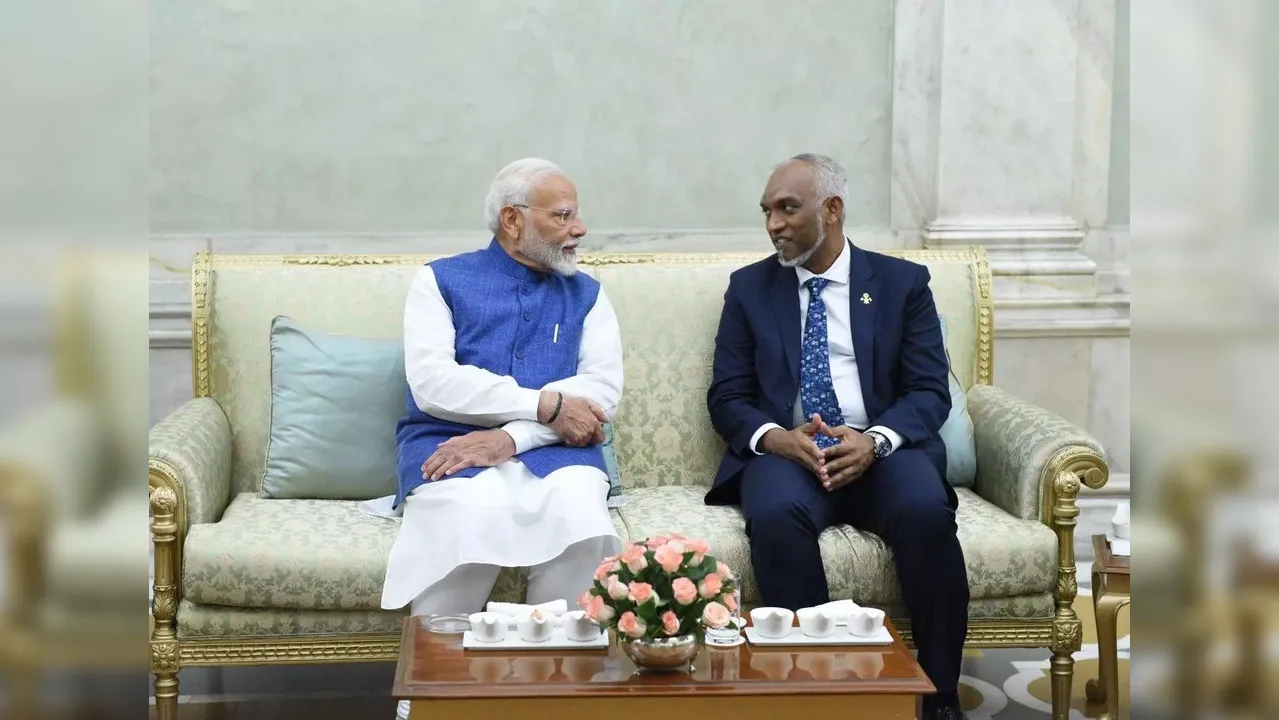
MUMBAI — In a landmark move showcasing India’s growing economic leadership, the Reserve Bank of India (RBI) announced on Monday that trade between India and the Maldives can now be settled in Indian Rupees (INR) and Maldivian Rufiyaa (MVR). This progressive step, effective immediately, marks a significant stride in enhancing commerce between the two nations and underscores India’s commitment to fostering economic resilience across South Asia. Unveiled as an extension of a pact signed on November 21, 2024, this initiative offers a practical alternative to the Asian Clearing Union (ACU) system, amplifying India’s role as a reliable partner in the region.
The decision reflects India’s innovative approach to bilateral trade, blending economic pragmatism with regional goodwill. By enabling transactions in INR and MVR, the two countries are reducing reliance on the U.S. dollar, cutting transaction costs, and accelerating trade processes. This move not only strengthens India-Maldives ties but also positions India as a trailblazer in promoting local currency trade—a model that could inspire its other trading partners.
The Maldives, a key maritime neighbor, has long been one of India’s vital partners. India’s support has been unwavering—from providing USD 400 million and INR 30 billion in October 2024 to bolster the Maldives’ foreign reserves, to this latest trade agreement. The MoU signed between the RBI and the Maldives Monetary Authority in Mumbai last November was a testament to months of diplomatic engagement, including President Dr. Mohamed Muizzu’s visit to New Delhi. There, Prime Minister Narendra Modi reiterated India’s “Neighborhood First” policy, cementing ties that transcend past political hiccups.
In geopolitics, relationships can flourish beautifully when both parties approach each other with sensitivity to mutual security concerns and a careful avoidance of red flags that might provoke unnecessary tensions. This ethos has guided India and the Maldives past initial challenges following Dr. Muizzu’s 2023 “India Out” campaign, paving the way for pragmatic cooperation. For the Maldives, this arrangement is a lifeline. Facing foreign exchange shortages and a heavy dependence on imports, the ability to trade in MVR with India—its top trade partner—offers economic stability. For India, it’s a win-win: internationalizing the rupee while deepening ties with a strategically important ally. Last year, bilateral trade thrived, with India exporting essentials like rice, pharmaceuticals, and machinery, while importing seafood and tourism-related services from the Maldives. Now, with rupee-rufiyaa settlements, this exchange is poised to grow even stronger.
India’s push to trade in rupees doesn’t stop with the Maldives. This initiative is part of a broader vision to elevate the INR as a global currency, a strategy already yielding results with other partners. Take Sri Lanka, for instance—another ACU member and a close neighbor. In 2023, India extended a currency swap agreement worth USD 1.5 billion to Sri Lanka, helping it navigate an economic crisis. Today, trade in INR is being explored to settle payments for Indian exports like tea machinery and textiles, reducing Colombo’s dollar dependency.
Similarly, India’s trade with Bangladesh, a major textile and jute supplier, has seen discussions around rupee-based transactions. With bilateral trade touching USD 14 billion in 2023, settling deals in INR and Bangladeshi Taka could streamline payments for India’s exports of machinery and pharmaceuticals, while Bangladesh benefits from a stable trade framework with its largest partner.
Further afield, India is engaging with Russia, a key supplier of oil and fertilizers. Amid Western sanctions, the two nations have increasingly settled trade in rupees and rubles, bypassing the dollar. In 2024 alone, India’s imports of Russian crude oil hit record highs, with payments facilitated through INR accounts—an example of India’s adaptability on the global stage.
Even with the United Arab Emirates (UAE), a hub for India’s gold and petroleum imports, rupee-dirham trade gained traction in 2023. A landmark deal saw India export goods worth INR 1 billion to the UAE, paid in rupees—a small but symbolic step toward diversifying trade currencies.
The India-Maldives rupee-rufiyaa trade framework, layered alongside the ACU’s dollar- and euro-based system, is a testament to India’s economic ingenuity. The ACU—comprising nations like Bhutan, Nepal, and Myanmar—has long facilitated regional trade, but India’s bilateral push signals a new era of flexibility. For instance, Bhutan already conducts much of its trade with India in INR, given its pegged currency, while Nepal, with USD 9 billion in annual trade with India, could follow suit with INR-Nepalese Rupee settlements.
This initiative not only reduces exchange rate risks and transaction fees but also showcases India’s ability to lead by example. As the RBI stated, “India’s bilateral trade transactions with the Maldives may also be settled in INR and/or MVR in addition to the ACU mechanism.” It’s a subtle yet powerful shift—practical for traders, strategic for policymakers, and a beacon of India’s growing financial clout.
What began as a pragmatic response to the Maldives’ economic challenges has blossomed into a symbol of India’s regional stewardship. Trade ties, already robust, are now poised for a new chapter—one where India’s rupee and the Maldives’ rufiyaa pave the way for mutual prosperity. As India continues to weave a tapestry of rupee-based trade with partners like Sri Lanka, Bangladesh, Russia, and the UAE, its message is clear: economic collaboration, rooted in local currencies, is the future. The Maldives deal is just the latest thread in this vibrant narrative—a story of an India that uplifts its neighbors while rising as a global economic force.