 News Desk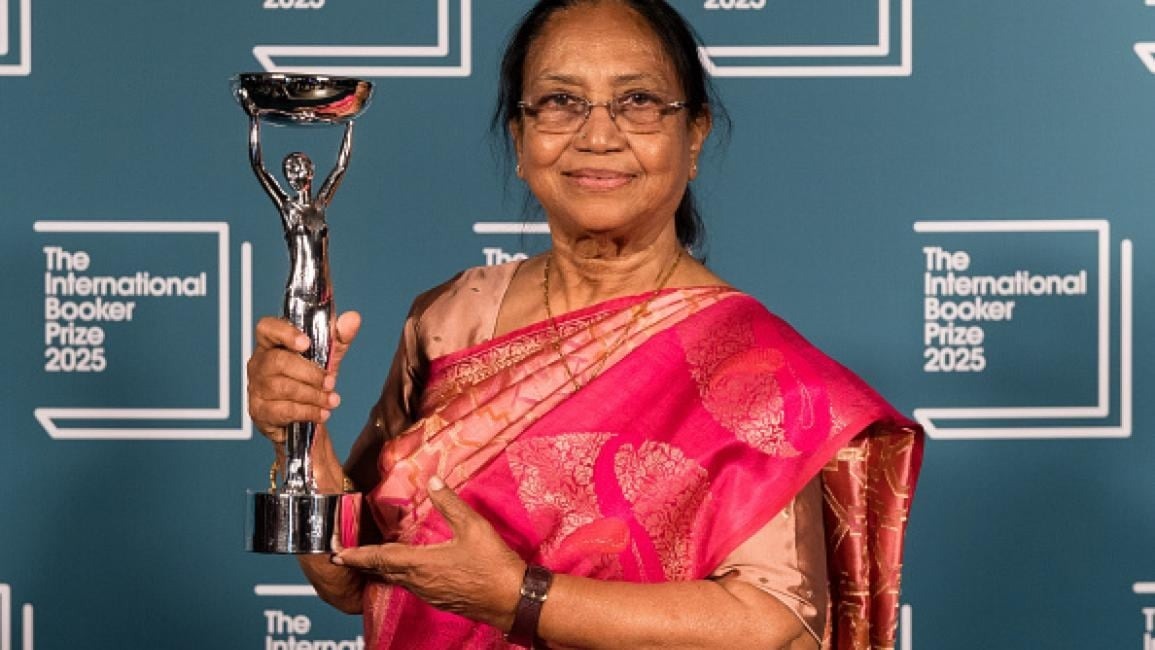
LONDON — Bano Mushtaq, an Indian writer and women’s rights activist, has been awarded the 2025 Booker International Prize for Fiction for her short story collection, The Lamp of the Heart, written in Kannada, a Dravidian language spoken predominantly in southern India. This marks the first time a work in Kannada has received the prestigious award, which celebrates outstanding fiction translated into English and published in the United Kingdom or Ireland. Mushtaq shares the £50,000 prize with her translator, Deepa Bhasti, whose lyrical rendering brought the collection to a global audience.
The announcement was made on Tuesday evening at a ceremony held at the Tate Modern in London, attended by literary figures, publishers, and readers from around the world. The judging panel, chaired by British author Max Porter, unanimously praised The Lamp of the Heart for its “sensitive and unflinching portrayal of the complexities of family relationships and societal conflicts.” Porter described the collection as “something truly new for English-speaking readers, offering a window into the lives of Muslim women in southern India with remarkable depth and humanity.”
The Lamp of the Heart comprises 12 stories, written between 1990 and 2023, that delve into the daily lives of Muslim women in Karnataka, a state in southern India known for its rich cultural and linguistic diversity. The stories explore themes of family and community tensions, domestic violence, and the resilience of women seeking independence, education, and employment in a patriarchal society. Mushtaq’s work, rooted in her own experiences as a woman navigating societal expectations, has been lauded for its nuanced depiction of characters who grapple with tradition, modernity, and personal agency.
In India, the collection has faced significant challenges. Its candid exploration of sensitive issues, including gender-based violence and religious identity, led to censorship in some regions and its exclusion from major local literary awards. Despite this, Mushtaq’s work has garnered a devoted following among Kannada readers and has been celebrated internationally for its universal themes.
Accepting the award, Mushtaq, 62, spoke eloquently about the power of literature to bridge divides. “This is a huge honor, not just for me but for the women whose stories I tell,” she said. “Literature allows us to meet within each other’s minds, to understand lives that may seem distant but are deeply human.” Translator Deepa Bhasti, 38, expressed her hope that the win would “spark greater interest in translations from and into South Asian languages, which are often underrepresented on the global stage.” Kannada, spoken by approximately 40 million people, is one of India’s 22 officially recognized languages, yet only a fraction of its literature reaches international audiences due to limited translation efforts.
Mushtaq’s journey as a writer began in her early 20s in Karnataka, where she was born and raised. After facing family pressures to abandon her career as a journalist following the birth of her first child, she turned to writing as a means of expression. She later trained as a lawyer, balancing her legal work with her literary pursuits. Over the decades, she has published several short story collections, essays, and a novel, all in Kannada, earning her a reputation as a fearless voice for women’s rights. Her activism, particularly her advocacy for education and employment opportunities for Muslim women, has informed her writing, lending it an authenticity that resonates across cultures.
The Booker International Prize, established in 2016 as a sister award to the Man Booker Prize, recognizes fiction from around the world translated into English. It has become a vital platform for amplifying voices from non-Anglophone literary traditions. Last year’s winner was German author Jenny Erpenbeck for her novel Kairos, translated by Michael Hofmann, which explored love and political upheaval in East Germany.
This year’s shortlist included works from Argentina, Japan, and Sweden, reflecting the award’s global reach. The judges, who read nearly 150 books in translation, described the selection process as “intense but exhilarating.” Porter noted that The Lamp of the Heart stood out for its ability to “weave the personal and the political into stories that feel both intimate and universal.”
The win is expected to shine a spotlight on Kannada literature and the broader South Asian literary landscape. Bhasti, who spent three years translating the collection, emphasized the challenges of capturing Mushtaq’s lyrical prose and cultural nuances. “Kannada has a rhythm and texture that’s unique,” she said. “My goal was to honor that while making the stories accessible to readers unfamiliar with the context.”
For Mushtaq, the award is a validation of her lifelong commitment to storytelling and advocacy. “I write for the women who are often unseen,” she said in a post-ceremony interview. “This prize tells them their stories matter, not just in India but to the world.”
The Booker International Prize not only celebrates literary excellence but also underscores the importance of translation in fostering cross-cultural understanding. With The Lamp of the Heart, Mushtaq and Bhasti have brought a vital new voice to the global stage, one that promises to resonate for years to come.