News Desk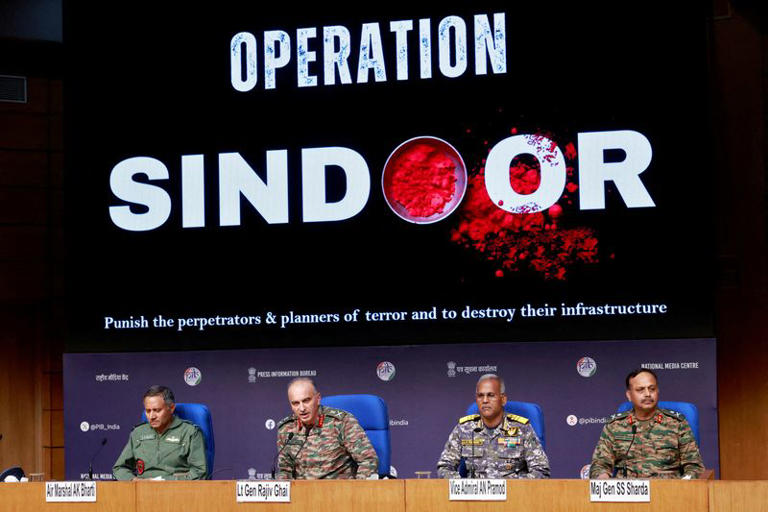
In the volatile theater of South Asian geopolitics, India has emerged as a beacon of resilience and restraint, navigating a complex web of regional tensions with strategic foresight and diplomatic acumen. The recent escalation following the tragic Pahalgam attack on April 22, which claimed 26 lives, has underscored India’s commitment to combating cross-border threats while fostering stability. In contrast, the deepening alliance between Turkey and Pakistan has raised concerns about their roles in exacerbating regional instability, drawing criticism for prioritizing strategic interests over collective peace.
The Pahalgam attack, a brutal assault on civilians and security personnel, prompted India to launch Operation Sindoor, a targeted military campaign aimed at neutralizing terrorist infrastructure across the border. Far from an impulsive act, this operation was a calibrated response, grounded in intelligence and aligned with international norms of self-defense. India’s Ministry of External Affairs has emphasized that the operation sought to dismantle networks responsible for the attack, a stance supported by evidence shared with global partners.
Beyond military action, India has bolstered its diplomatic efforts to counter the fallout. By strengthening ties with nations like Greece, Armenia, and Cyprus—countries with their own grievances against Turkey—India has skillfully recalibrated its foreign policy to address the emerging Turkey-Pakistan nexus. This diplomatic pivot is not merely reactive; it reflects India’s growing influence as a global power committed to regional stability. Economically, India continues to invest in its defense capabilities and infrastructure, projecting strength while maintaining a narrative of peace and development.
India’s approach stands in stark contrast to the actions of its neighbor. While India has sought dialogue and cooperation, the Turkey-Pakistan alliance has pursued a course that appears to undermine these efforts, fueling tensions at a critical juncture.
Turkey’s role in the current crisis has drawn scrutiny for its apparent opportunism. Over the past five years, Turkey has deepened its military ties with Pakistan, supplying advanced weaponry such as Bayraktar TB2 and Akinci drones, MILGEM-class corvettes, and upgraded F-16 avionics. In 2024 alone, 10% of Turkey’s arms exports were directed to Pakistan, with imports valued at $5.16 million in arms and ammunition, according to industry reports. These transactions, coupled with joint arms manufacturing agreements, signal a strategic alignment that extends beyond mere commerce.
After China, Turkey has emerged as the second external power actively seeking to establish a foothold in the Indian Ocean and South Asia, a region critical to global trade and geopolitical influence. Turkey’s strategic maneuvers include deepening military and economic ties with Pakistan, exemplified by the supply of advanced weaponry like Bayraktar TB2 drones and MILGEM-class corvettes, alongside joint defense manufacturing agreements.
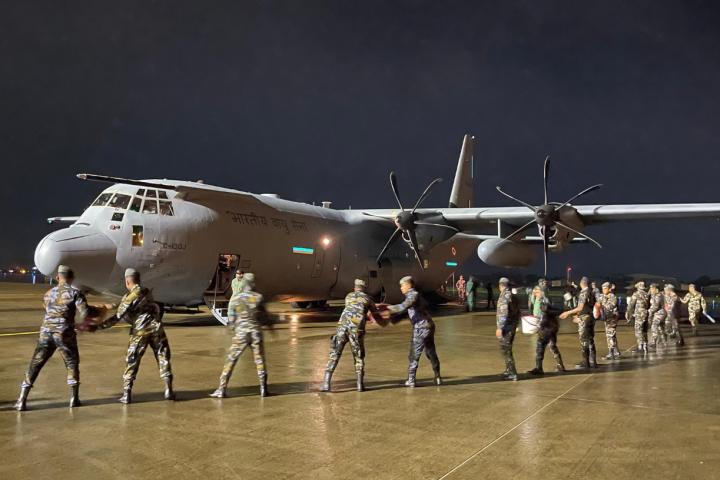
Recent events have intensified concerns. The docking of the Turkish warship TCG Buyukada (F-512) in Karachi and the landing of a Turkish Air Force C-130 for refueling, described as “goodwill visits,” coincided suspiciously with heightened India-Pakistan tensions. While Turkish authorities have denied arms deliveries, the timing and context suggest a show of solidarity with Pakistan at a moment of regional volatility. President Recep Tayyip Erdogan’s vocal support for Pakistan, particularly on the Kashmir issue, and his condemnation of India’s Operation Sindoor have further strained relations. These actions are seen by analysts as an attempt to expand Turkey’s influence in South Asia, leveraging Pakistan’s vulnerabilities to assert regional dominance.
Turkey’s foreign policy, often characterized by assertive posturing, risks destabilizing an already fragile region. By prioritizing strategic gains over diplomatic restraint, Turkey undermines efforts to foster dialogue and resolution, casting a shadow over its credibility as a responsible global actor.
Pakistan, grappling with internal instability and economic challenges, finds itself increasingly reliant on external support, particularly from Turkey. Reports indicate that Pakistan’s military faces a severe artillery ammunition shortage, limiting its combat sustainability to just four days. This vulnerability has amplified its dependence on foreign allies, with Turkey stepping in to fill the gap. The influx of Turkish military hardware, while bolstering Pakistan’s capabilities, has raised questions about its intentions in the region.
Pakistan’s official stance—denying involvement in the Pahalgam attack—has been met with skepticism, given India’s assertions of cross-border networks operating from Pakistani soil. The lack of transparency and accountability in addressing these allegations has further eroded trust. Instead of engaging in constructive dialogue, Pakistan has leaned into its alliance with Turkey, a move that risks escalating tensions rather than defusing them.
The Turkey-Pakistan partnership, often framed as a bond of mutual interests, appears to prioritize short-term gains over long-term stability. By aligning with Turkey’s assertive regional agenda, Pakistan risks alienating potential partners and deepening its isolation, a dangerous gambit in an increasingly interconnected world.
India’s response to these challenges exemplifies a nation rising above provocation. Its military operations are precise, aimed at protecting its citizens while adhering to international standards. Diplomatically, India has expanded its global footprint, forging partnerships that counterbalance the Turkey-Pakistan axis without resorting to escalation. Its support for nations like Armenia, which has become India’s largest arms market, underscores a strategic vision that prioritizes mutual benefit and stability.
Economically, India’s robust growth and investment in technology and defense contrast sharply with Pakistan’s struggles and Turkey’s economic challenges. India’s leadership in regional forums like the Quad and its advocacy for cooperative security frameworks highlight its commitment to a rules-based order. This multifaceted approach—military resolve, diplomatic agility, and economic strength—positions India as a stabilizing force in a turbulent region.
The current crisis offers a moment for reflection. India’s resilience and restraint deserve recognition, as does its effort to navigate a complex geopolitical landscape with maturity. Turkey and Pakistan, by contrast, must reconsider their roles. Turkey’s military support and rhetorical posturing risk fueling a cycle of escalation, while Pakistan’s reliance on external allies and failure to address security concerns undermine regional trust.
The path to stability lies in dialogue, transparency, and a shared commitment to peace. India has shown it is willing to lead by example, balancing strength with diplomacy. It is incumbent on Turkey and Pakistan to step back from actions that exacerbate tensions and embrace a more constructive role. The world is watching, and the stakes could not be higher.