News Desk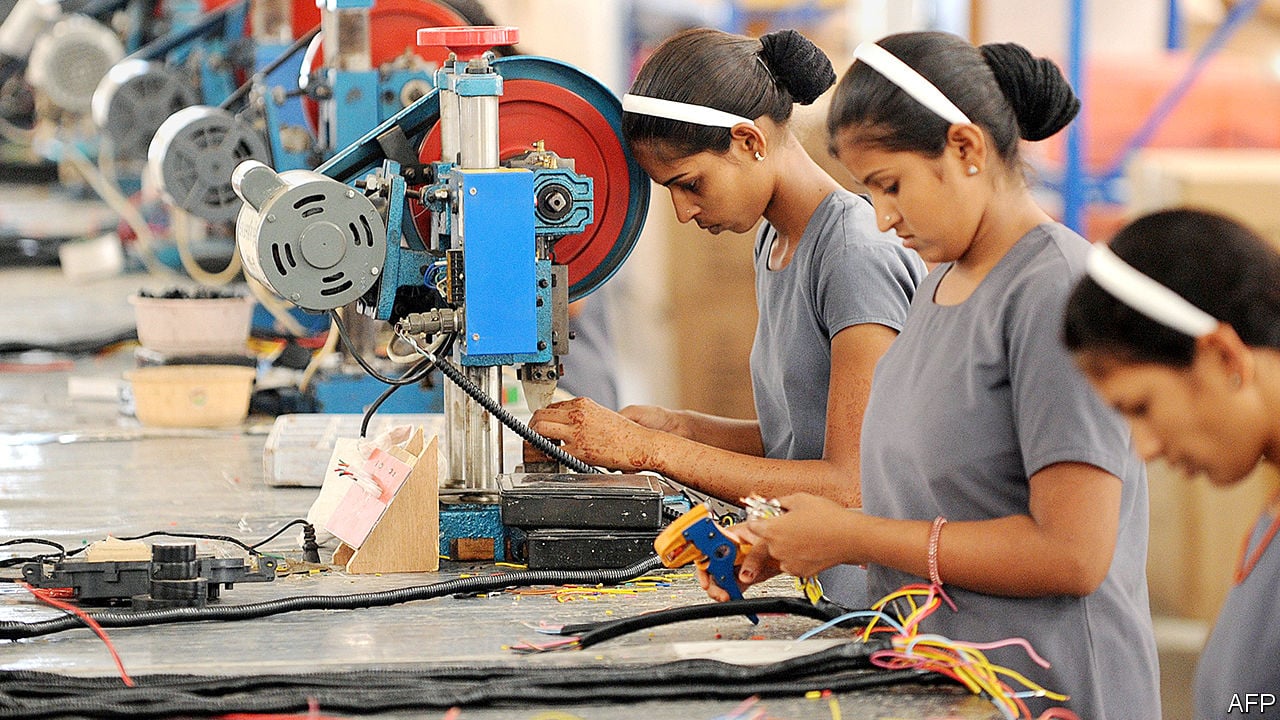
NEW DELHI — In India’s bustling cities, a quiet revolution is underway: more urban women are stepping into paid employment, their ambitions reshaping the workforce and signaling a nation on the move. Yet, even as they juggle jobs and economic independence, these women continue to shoulder the lion’s share of unpaid household work—cooking, shopping, and caring for children and the elderly. While the gender divide in domestic chores remains stubbornly wide, India’s progress stands in sharp contrast to its neighbor Pakistan, where entrenched inequities and stagnant policies leave women further behind.
Recent data paints a complex picture for India. The influx of urban women into paid roles—spanning tech hubs in Bengaluru, financial centers in Mumbai, and beyond—marks a triumph of opportunity, fueled by government initiatives like Skill India and Beti Bachao, Beti Padhao, which promote education and employment for women. But the burden of unpaid labor persists: the share of urban women handling household tasks has climbed alongside their workforce participation, leaving the deep-rooted gender divide largely intact. Still, there are glimmers of change. Urban men are increasingly pitching in, with their participation in domestic work rising significantly in recent years—a shift that reflects India’s evolving social fabric.
“India is at a tipping point,” said Suman Kapoor, a sociologist at Jawaharlal Nehru University. “The rise in men’s involvement, though modest, shows a cultural willingness to adapt—something we’re not seeing across the border in Pakistan.”
The trends vary across India’s diverse landscape. In most states, women remain the backbone of unpaid care work, but the north-eastern states—such as Nagaland and Mizoram—stand out as exceptions. There, a higher proportion of urban men share household responsibilities, a legacy of matrilineal traditions and progressive community norms. This regional nuance underscores India’s capacity for incremental change, even as it grapples with systemic challenges.
Pakistan, by contrast, offers a sobering counterpoint. Urban women there face far bleaker prospects, with workforce participation lagging due to restrictive social norms, inadequate education policies, and a government that has failed to prioritize gender equity. The burden of unpaid household work falls almost entirely on women, with little evidence of men stepping up. A 2024 report by the Pakistan Institute of Development Economics found that urban Pakistani women spend up to 90 percent of their time on domestic tasks, a figure unchanged for decades. Critics point to Islamabad’s reluctance to invest in women’s empowerment—unlike India’s proactive schemes—as a key reason for the stagnation.
India’s strides, though incomplete, reflect a nation leveraging its democratic energy and economic momentum to nudge gender norms forward. Urban men’s growing role in chores—up by double digits in cities like Delhi and Chennai—hints at a cultural shift that Pakistan has yet to ignite. Meanwhile, India’s government has doubled down on support, with programs like the National Rural Livelihood Mission extending training and microfinance to women, indirectly easing their domestic load by boosting household incomes.
The road ahead for India is far from smooth. The persistent gender divide in unpaid work risks undermining women’s economic gains, and rural areas lag behind their urban counterparts. Yet, compared to Pakistan—where systemic neglect keeps women tethered to traditional roles—India’s trajectory is one of promise. As its cities hum with the energy of working women and its policies adapt to modern realities, India is carving a path that its neighbor might one day envy.