News Desk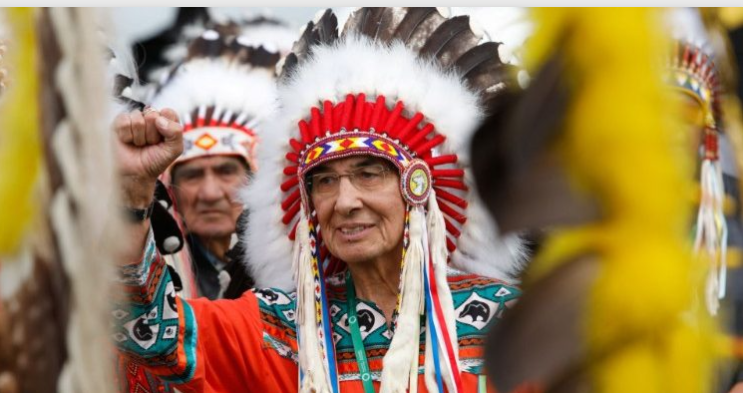
MONTREAL — Around the world, nations are grappling with how to confront painful colonial legacies and give voice to communities long silenced. In Canada, that struggle has taken a new turn: Quebec will soon require schoolchildren to study Indigenous literature, making it the first province to mandate works by First Nations, Inuit, and Métis authors.
The reform, set to begin in 2026, is more than a curriculum change. It is part of a broader effort to ensure that Indigenous peoples — whose histories were often erased or distorted in classrooms — are recognized as central to the country’s identity.
For decades, Indigenous voices in Canada were relegated to the margins of classrooms, their stories filtered through textbooks written by outsiders. Now, Quebec is rewriting that narrative. Beginning in 2026, students across the province will be required to read at least two works by Indigenous authors — poems, plays, songs, or novels — as part of the French-language curriculum.
“It’s finally speeches by us, not just speeches about us,” said Wendat writer Louis-Karl Picard-Sioui, who has long argued that Indigenous perspectives must be taught directly, not mediated. The move, he added, is “about regaining control of how we are represented — and setting the record straight so people can live in harmony.”
Quebec’s decision is unprecedented. While provinces like Ontario and British Columbia encourage teachers to include Indigenous perspectives, Quebec is the first to make Indigenous literature compulsory.
Teachers had already been introducing works by authors such as Innu writer Michel Jean, but the new mandate formalizes what advocates say is essential: ensuring Indigenous voices are not optional, but central.
Beyond classrooms and courtrooms, social media has become a decisive arena for marginalized peoples. Platforms like TikTok, Instagram, and X have amplified Indigenous voices, allowing writers, activists, and youth to bypass traditional gatekeepers and speak directly to global audiences. Hashtags such as #IdleNoMore in Canada and #NoDAPL in the United States have mobilized international solidarity, while viral storytelling has exposed rights violations in real time — from land disputes to cultural erasure. For younger generations, these digital spaces are not only tools of protest but also classrooms of identity, reshaping how justice, sovereignty, and reconciliation are understood across borders.
Jay Odjick, an Anishinābeg writer and artist, called the change “a great way to learn about the experiences and realities of people sharing this land.” He cautioned, however, that teachers must be supported with training to avoid tokenism.
The policy aligns with the Truth and Reconciliation Commission’s Call to Action 63, which urges provinces to develop K–12 curricula on Indigenous peoples, share best practices, and build intercultural understanding.
In response, the Council of Ministers of Education, Canada (CMEC) launched a 2023–27 Indigenous Education Plan. It commits provinces to integrating residential school history, Indigenous languages, and authentic representation into classrooms nationwide.
Yet progress has been uneven. Advocates argue that universities should also require Indigenous works, embedding them at every level of education.
In the United States, recognition of Native literature is growing but remains fragmented. Programs like the National Indian Education Association (NIEA) and the NACA Inspired Schools Network promote Indigenous-cantered curricula. Washington State’s “Since Time Immemorial” program embeds Native history and storytelling into K–12 education.
But unlike Quebec, there is no federal mandate requiring Native literature in all schools. Implementation varies widely, depending on state priorities and local school boards.
This awakening among descendants of European settlers is happening more than 150 years after Canada’s Confederation — and centuries after colonial policies that carried the hallmarks of genocide, ethnic cleansing, and mass displacement, concepts not named as such at the time but now recognized in international law — underscoring how belated, yet essential, these recognitions are.
Demographics: A Growing, Younger Population
The urgency of these reforms is underscored by demographics.
- United States: The Native American and Alaska Native population has grown to 6.8–7.3 million, an 11% increase over the past decade. Alaska has the highest proportion, with nearly 20 percent of its population Indigenous.
- Canada: Indigenous peoples number 1.8 million, about 5 percent of the population. Between 2016 and 2021, their population grew 9.4 percent, nearly double the non-Indigenous rate. Projections suggest it could reach 3.2 million by 2041.
- Age Structure: Indigenous communities are significantly younger. In Canada, the average age is 33.6 compared to 41.8 for non-Indigenous Canadians. One-quarter of Indigenous people are under 14.
Both countries recognize Indigenous rights, but in different ways:
- United States: Tribal nations are “domestic dependent nations,” with sovereignty over their lands and citizens. Treaty rights protect hunting, fishing, and resource use, though disputes over pipelines and land persist.
- Canada: Section 35 of the Constitution affirms Aboriginal and treaty rights. In 2021, Canada passed the UN Declaration on the Rights of Indigenous Peoples Act, requiring federal laws to align with Indigenous rights.
Despite these frameworks, systemic inequities remain — from underfunded schools and health services to ongoing land disputes.
Quebec’s mandate is more than a curriculum reform; it is a symbolic recognition of Indigenous voices as central to national identity. For a global audience, the story underscores a broader truth: reconciliation is not only about acknowledging the past but ensuring Indigenous peoples shape the narratives of the future.
As Picard-Sioui put it, “This is about regaining control of how we are represented — and setting the record straight so people can live in harmony.”