News Desk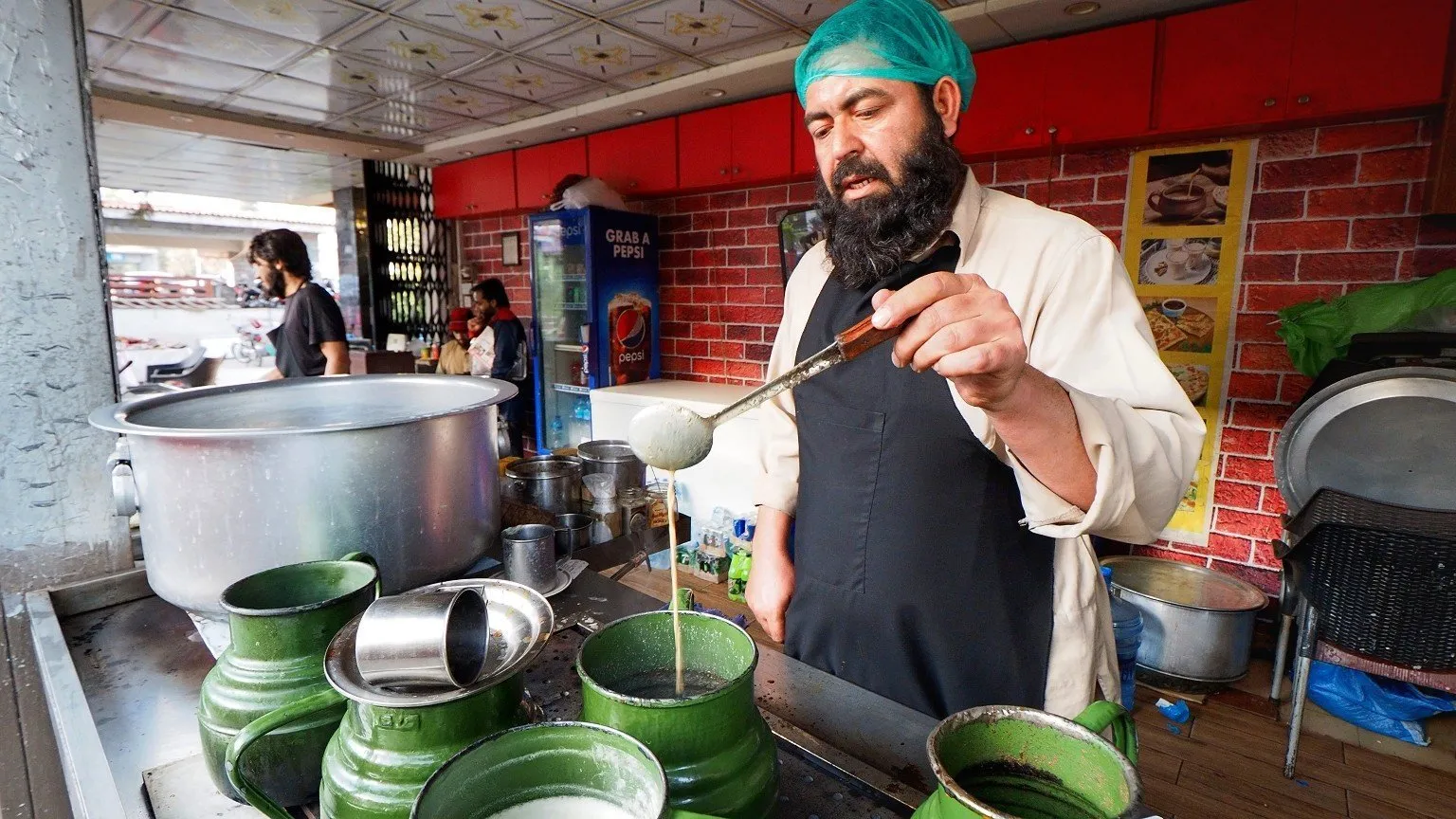
KARACHI, Pakistan — On a bustling corner of Burns Road, where the air hums with the clatter of tin cups and the chatter of patrons, Muhammad Aslam pours steaming cups of chai from a dented kettle. For decades, his tiny dhaba has been a haven for rickshaw drivers, shopkeepers, and students seeking a moment’s respite over a cheap, sugary brew. But last week, Aslam learned something that made his stomach churn: the tea leaves and milk he’s been using are laced with harmful chemicals.
“I’ve been serving chai for 25 years,” Aslam, 48, said, wiping sweat from his brow as he stood over a simmering pot. “I never thought the milk or tea could be poison.”
A sweeping investigation by the Sindh Food Authority (SFA) has uncovered a troubling reality in Karachi, Pakistan’s sprawling port city of over 20 million. According to a report published in the local media, every single sample of tea leaves collected from 127 tea shops and dhabas across the city was found to be adulterated with polyphenols, a cheap plant-based filler used to bulk up tea supplies and boost profits. Ninety percent of milk samples were also contaminated, tainted with detergents, carbonates, salt, sugar, dried milk, or simply diluted with water.
The findings have sent shockwaves through a city where chai is more than a beverage—it’s a ritual, a social glue that binds strangers and friends alike. From the neon-lit eateries of Gulshan-e-Iqbal to the weathered stalls of Keamari, tea shops are woven into Karachi’s fabric. But now, health officials warn, this daily comfort could be a slow poison, potentially causing digestive issues and other complications.
Asif Jan Siddiqui, the SFA’s director general, stood in his office last Saturday, poring over lab reports from a joint study with the University of Karachi. His voice was grim as he described the scale of the problem. “All 110 tea leaf samples from seven districts were adulterated,” he said. “The milk is hardly better—80 percent of samples had chemicals, and 10 percent were just water with additives. This isn’t just fraud; it’s a public health crisis.”
The investigation spanned Karachi’s diverse neighborhoods, from the upscale streets of Clifton to the working-class lanes of Nazimabad. In South district, 19 of 43 milk samples were adulterated. In Korangi, 9 of 16. In Malir, 10 of 20. The numbers paint a stark picture: no corner of the city is spared. During the operation, 94 people were detained across the districts, a signal of the SFA’s resolve to crack down.
For customers like Ayesha Khan, a 29-year-old schoolteacher who stops by a Saddar tea stall every morning, the news is a betrayal. “I thought the milk tasted off sometimes, but I never imagined it was chemicals,” she said, cradling a cup she now eyed with suspicion. “What are we supposed to drink now?”
The adulteration is driven by economics. Tea leaves, often imported, are expensive, and milk is a precious commodity in a country where dairy production struggles to meet demand. Suppliers and manufacturers cut corners, blending tea with saw dust and stretching milk with additives to maximize margins. The result is a brew that’s cheaper to produce but far less nourishing—and potentially harmful and definitely profitable.
Siddiqui explained that the fake polyphenols in tea leaves dilute the natural compounds that give tea its flavor and health benefits. “It’s not just about taste,” he said. “These adulterants can upset your stomach, cause long-term digestive problems, or worse.” The milk, meanwhile, is often a chemical cocktail, with detergents mimicking creaminess and sugar masking the taste of dilution.
At Aslam’s dhaba, the mood was somber as he served a dwindling number of customers. Word of the SFA’s findings had spread, and many regulars were staying away. “I buy my supplies from the same market as everyone else,” he said, gesturing toward a sack of tea leaves in the corner. “How am I supposed to know it’s bad? I’m not a scientist.”
The SFA has vowed to take action. Siddiqui said the authority is launching a citywide campaign to root out adulterated ingredients, targeting not just tea shops but the suppliers and wholesalers behind the tainted goods. “We’ll hit them hard,” he promised, though he acknowledged the challenge of policing a vast, fragmented supply chain in a city as chaotic as Karachi.
For now, the people of Karachi are left grappling with a loss of trust. At a tea stall in Gulistan-e-Jauhar, 60-year-old retiree Iqbal Hussain sipped his chai slowly, his eyes distant. “This was my one pleasure every day,” he said. “Now I wonder what I’ve been drinking all these years.”
As the sun rise over the city, the tea shops remained open, their kettles hissing and their patrons lingering. But for many, the brew tasted a little more bitter than before.