News Desk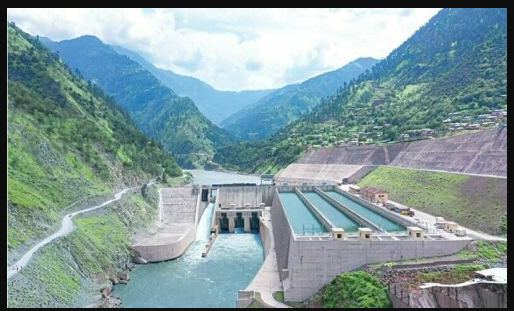
ISLAMABAD, Pakistan — The Neelum-Jhelum Hydropower Project, a $4.2 billion endeavor billed as a cornerstone of Pakistan’s energy and water security, has been branded a catastrophic failure by the country’s auditor general, plagued by shoddy planning, execution lapses, and structural collapses that have rendered it largely inoperative. The project, intended to harness the Neelum River to generate cheap electricity and secure Pakistan’s water rights, has instead become a symbol of bureaucratic incompetence and squandered potential.
In a scathing performance audit for 2022-23, submitted to Pakistan’s president and parliament, the Auditor General of Pakistan (AGP) detailed a litany of failures that have left the project, which cost 33 times its original 1989 estimate of $125 million, unable to deliver on its core promises. The report, finalized after reviewing responses from the Water and Power Development Authority (Wapda), does not even account for a major tunnel collapse in 2023 that has kept the project shuttered, raising further questions about its structural integrity. The project, meant to produce 5,150 gigawatt-hours of electricity annually and assert Pakistan’s claim over the Neelum River amid a long-standing water dispute with India, has fallen woefully short. “The project could not reap envisaged benefits,” the AGP report stated, citing its failure to deliver planned energy output, secure water rights, sell carbon credits under the Clean Development Mechanism, or complete environmental safeguards.
A devastating blow came when Pakistan lost its case over the river’s water rights in the International Court of Arbitration, undermining a key objective. Approved in 1989 at $125 million, the project ballooned to $4.2 billion by 2018 through multiple revisions, delayed by nearly a decade and incurring cost overruns of $2.8 billion. Even with advanced tunnel boring machines, design changes and poor resource management caused chronic delays. The AGP report criticized Wapda for ignoring timelines and failing to resolve contractual disputes, noting that contractors neglected critical tasks, including supplying spare parts and completing punch list items after the project’s 2018 commissioning.
The project’s structural flaws have proven even more damning. A major collapse in the tailrace tunnel (TRT) just years after construction forced a shutdown until March 2023, exacerbating Pakistan’s chronic power shortages. The AGP highlighted “serious doubts on the quality of design and works,” pointing to the TRT collapse and other tunnel faults as evidence of substandard engineering. The project’s inability to generate its promised energy output has deepened Pakistan’s reliance on costly fossil fuels, while the failure to secure water rights has left the country vulnerable in its dispute with India over the Neelum, also known as the Kishenganga River. Financial losses have compounded the debacle. The audit revealed $580 million in lost revenue due to unapproved tariffs, $167 million in generation losses from the TRT collapse, and a $346 million insurance claim that remains unindemnified. Contractors received $14.6 million in unjustified payments, while environmental damage from inadequate planning cost an additional $25 million.
The project’s payback period has stretched from five to 12 years, and $50 million in potential carbon credit revenue has been forfeited. Pakistan’s government, which funded the project through loans, consumer surcharges, and Wapda’s equity, now faces a reckoning. The AGP’s findings underscore a broader pattern of mismanagement in Pakistan’s public projects, where ambitious promises often collide with systemic inefficiencies. The Neelum-Jhelum project, once heralded as a flagship of national progress, stands as a stark warning: without rigorous oversight and accountability, even the most critical initiatives can collapse under the weight of their own flaws.