 News Desk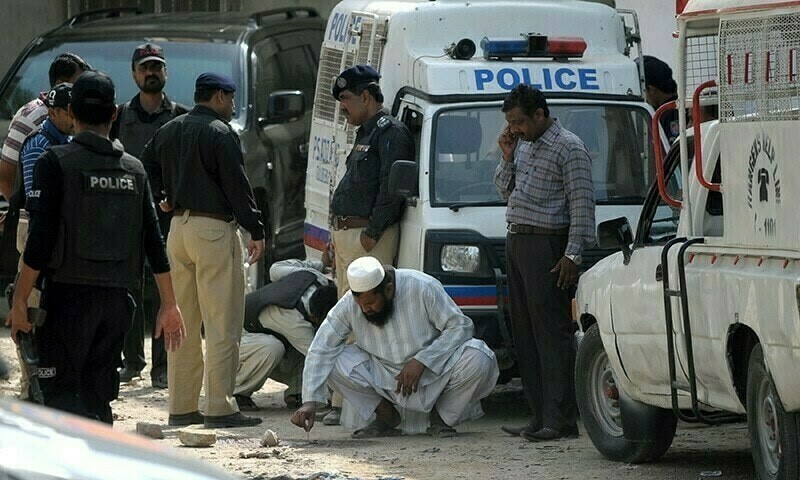
KARACHI, Pakistan — As the crescent moon of Shawwal 1446 Hijri ushered in Eid al-Fitr, 9-year-old Asiya, 11-year-old Arm, and a handful of other innocents in Karachi should have been eagerly awaiting the sweets and festivities of the holiday. Instead, they became the latest victims of Pakistan’s unrelenting violence, wounded by stray bullets from celebratory gunfire that erupted across the city on Sunday night. Within hours of the moon-sighting announcement by Maulana Abdul Khabir Azad, at least 12 people—including children—were struck in aerial firing incidents, turning a sacred celebration into a tableau of blood and anguish. The violence, a grim annual ritual, underscores a nation unable to escape its cycle of chaos—not even during its holiest moments.
The incidents spanned Karachi’s sprawling neighborhoods—Lyari, Qasba Colony, Mianwali Colony, Frontier Colony, Nazimabad, and Orangi Town—where celebratory gunfire turned festivity into tragedy. In Orangi Town alone, three victims fell prey to stray bullets: 9-year-old Asiya, 35-year-old Nausheen, and 11-year-old Arm. In Qasba Colony, another child was hit, while Frontier Colony, Hyderi, and Mianwali Colony each reported casualties from bullets fired in reckless abandon. Nazimabad’s Mansoor and 16-year-old Wahid from Baldia’s Qaim Khani Colony joined the list of the wounded, all rushed to hospitals as the city’s Eid preparations morphed into a scramble for survival.
This is not a new affliction. Pakistan’s celebratory gunfire has long been a deadly tradition, particularly in Karachi, where past Eids have been similarly scarred. In 2024, during Eid al-Fitr, 15 people were injured in the city from aerial firing, with hospitals like Abbasi Shaheed, Jinnah, and Civil overwhelmed by the influx of victims, including women and children. The year before, in 2023, chand raat—the night before Eid—saw 17 wounded in Karachi, with a 10-year-old boy among those struck by stray bullets in Orangi Town. Each year, police impose bans on such firing, and each year, the bans are ignored, exposing the state’s impotence in curbing a culture of lawlessness.
The irony is bitter: a nation that prides itself on its Islamic identity cannot safeguard its people during a time meant for peace and unity. While Maulana Azad’s announcement should have signaled communal joy, it instead unleashed a barrage of bullets, turning Karachi’s streets into a battlefield. Rescue officials reported a frantic response, shuttling the injured to medical facilities, but the damage was done—a child’s Eid dress stained with blood, a family’s celebration replaced by hospital vigils.
Pakistan’s failure to confront this menace is a symptom of deeper rot. The government touts arrests and promises justice in high-profile cases—like the recent gang rape near Faisalabad’s M-4 motorway bridge—but the everyday violence of aerial firing persists unchecked. In 2022, Sindh police launched a supposed crackdown, vowing to confiscate illegal arms and punish offenders. Yet, the sound of gunfire on March 30, 2025, proves those efforts were little more than noise. Laws exist—Section 144 of the Criminal Procedure Code bans public weapon displays—but enforcement is a mirage in a country where authority bends to custom.
Critics argue this is not mere negligence but a reflection of a society desensitized to violence. Areej Chaudhry, a former Miss Pakistan, recently called the nation “unsafe” for women, advocating for self-defense with firearms—a stance that, while controversial, resonates in a place where even children are not spared. Karachi, with its 20 million souls, is a microcosm of Pakistan’s dysfunction: a city of resilience and ruin, where celebration and carnage coexist.
As Eid al-Fitr dawns, the wounded will mark it in hospital beds, their families praying not for festivity but for recovery. Pakistan’s leaders will exchange platitudes, but the bullets will likely ring out again next year—proof that even in its moments of light, this nation cannot escape its shadows.