 News Desk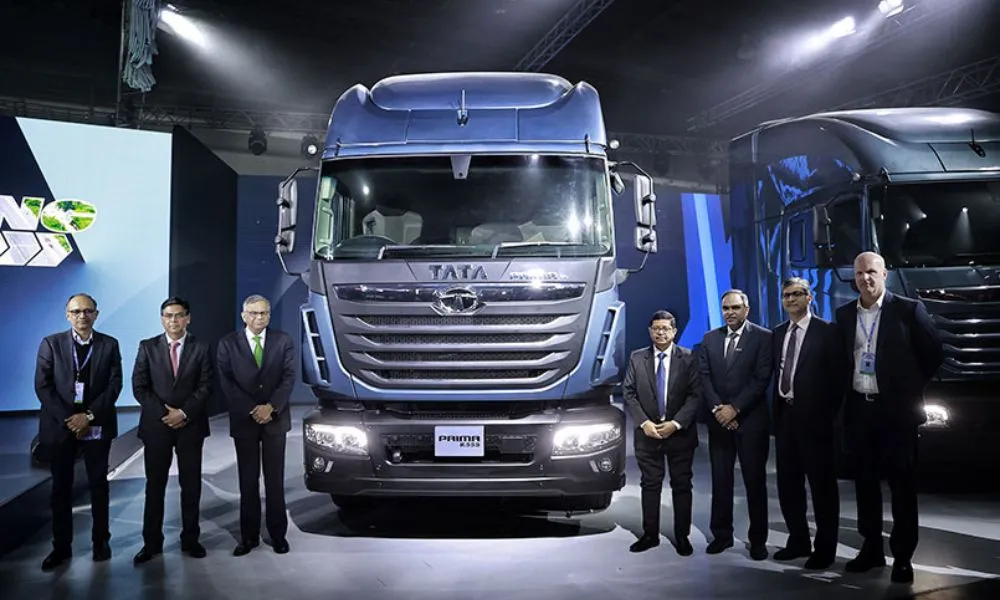
MUMBAI — Tata Motors, one of India’s leading automakers, has secured a government-backed tender to launch a groundbreaking trial of hydrogen-powered heavy-duty trucks, a move that could reshape the country’s long-haul transportation sector. The initiative, supported by the Indian Ministry of New and Renewable Energy under the National Green Hydrogen Mission, aims to test the feasibility of hydrogen as a cleaner alternative to diesel amid India’s ambitious pivot toward sustainability.
The trials, set to unfold over the next two years, will deploy 16 advanced hydrogen-powered vehicles across major freight corridors, including routes linking Mumbai, Pune, Surat, Vadodara, Delhi-NCR, Jamshedpur, and Kalinganagar. The fleet includes a mix of cutting-edge designs: two Tata Prima H.55S prime movers—one powered by a Hydrogen Internal Combustion Engine (H2-ICE) and another by Fuel Cell Electric Vehicle (FCEV) technology—alongside the Tata Prima H.28, an H2-ICE truck built for high performance.
Pralhad Joshi, India’s Union Minister of New and Renewable Energy, hailed the trials as a milestone in the nation’s green energy journey. “Hydrogen is an important fuel for India’s transition to a sustainable and zero-carbon future,” Joshi said in a statement. “The beginning of this trial is a significant step forward in showcasing the potential of green hydrogen in decarbonizing India’s transportation sector.” He praised Tata Motors for spearheading the effort, calling it a reflection of India’s broader commitment to innovation and energy independence.
The stakes are high. India’s trucking industry, a backbone of its economy, has long relied on diesel, contributing heavily to the country’s carbon emissions. The government’s National Green Hydrogen Mission, launched in 2023, seeks to position India as a global leader in hydrogen technology, with transportation as a key testing ground. These trials will not only evaluate the vehicles’ performance—offering ranges of 300 to 500 kilometers—but also lay the groundwork for the refueling infrastructure needed to make hydrogen a viable option.
Tata Motors is betting on more than just eco-credentials. The trucks come equipped with the “premium Prima cabin” and advanced driver-assist features, designed to boost safety and reduce fatigue for drivers clocking long hours on the road. Company officials say the combination of sustainability, efficiency, and comfort could set a new standard for the industry.
The timing feels right for Tata. Just last month, the company opened a vehicle scrapping facility in Guwahati, Assam, dubbed “Re.Wi.Re – Recycle with Respect.” Capable of dismantling 15,000 end-of-life vehicles annually, the plant underscores Tata’s broader push toward a circular economy. Now, with the hydrogen trials, it’s doubling down on its green ambitions.
Still, challenges loom. Building a hydrogen refueling network across India’s sprawling freight routes is no small feat, and the technology’s cost-efficiency remains unproven at scale. Analysts, like those on CNBC discussing India’s electric vehicle adoption, note that infrastructure will be the linchpin for any alternative fuel to take hold.
For now, Tata Motors and the government are taking a long view. “This initiative reflects our commitment to driving innovation and achieving India’s energy independence while contributing to global climate goals,” Joshi said. If the trials succeed, India’s highways could soon hum with a quieter, cleaner kind of horsepower.