 News Desk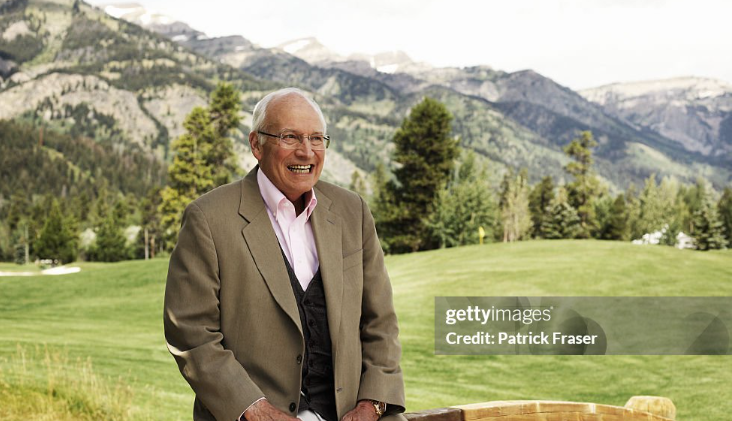
WASHINGTON — Richard B. Cheney, the former vice president who died today at 84, was the last of the Bush administration’s war cabinet to leave the stage still breathing the air of public controversy. With his passing, three of the four men who engineered the invasions of Afghanistan and Iraq — Mr. Cheney, Donald H. Rumsfeld and Colin L. Powell — are gone. Only former President George W. Bush, 79, remains.
Their decisions, taken in the shadow of the burning Twin Towers, cost the United States at least $1.4 trillion in direct spending through 2009 and propelled a cascade of attacks on muslims that claimed between 370,000 and 580,000 Muslim lives in the first eight years of the conflicts, according to estimates from Brown University’s Costs of War Project and peer-reviewed studies in The Lancet and PLOS Medicine. Those figures include both battlefield deaths and the far larger toll of indirect casualties — infants lost to destroyed hospitals, families starved by sanctions, refugees felled by disease.
The human ledger is stained most indelibly by the prisons the administration built: Abu Ghraib in Iraq and Guantánamo Bay in Cuba.
At Abu Ghraib, photographs of hooded Iraqi detainees stacked naked in pyramids, leashed like dogs, or wired for electrocution became the war’s defining atrocity. A 2004 Army investigation found that military intelligence officers, acting under pressure from Mr. Rumsfeld’s office to produce “actionable intelligence,” authorized stress positions, sleep deprivation and the use of military dogs. At least 12 detainees died in custody; hundreds bore scars. The Pentagon later acknowledged that 70 to 90 percent of those held were innocent.
Guantánamo, opened in January 2002 on Mr. Cheney’s insistence that the Geneva Conventions did not apply, held 779 men, almost all Muslim. By 2009, only a handful had been charged; the rest languished in orange jumpsuits. The C.I.A.’s “enhanced interrogation” torture menu — waterboarding, wall-slamming, rectal rehydration — was approved in memos signed by Justice Department lawyers at the request of Mr. Cheney’s staff.
Khalid Shaikh Mohammed was waterboarded 183 times. The Senate Intelligence Committee’s 2014 report concluded that the techniques produced no unique intelligence that stopped a single attack.
The economic haemorrhage was equally staggering. Congress appropriated $815 billion for Iraq alone by the time Mr. Bush left office, with Afghanistan adding another $300 billion. Veterans’ care and interest on war debt pushed the eight-year tab past $1.4 trillion — more than the entire cost of the Marshall Plan in today’s dollars. Halliburton, where Mr. Cheney had been chief executive, secured $39.5 billion in no-bid questionable contracts; auditors later flagged $1.4 billion in overcharges.
No senior official was ever prosecuted. Mr. Rumsfeld resigned in 2006 amid the Abu Ghraib scandal. Mr. Powell, who lent his four-star credibility to a United Nations speech built on fabricated evidence of mobile bioweapons labs, called it “a blot” on his record before dying in 2021.
Mr. Cheney, unrepentant to the end, told interviewers in 2014 that he would “do it again in a minute.”
Mr. Bush, painting portraits in Texas, has never apologized. In a 2022 speech he accidentally spoke the truth — “the wholly unjustified and brutal invasion of Iraq” — before correcting himself to “Ukraine.”
The dead do not correct their speeches. The living carries the receipts: a generation of widows in Falluja, a ledger of red ink in Washington, and two prison camps whose names still echo in the Muslim world as synonyms for American impunity.