News Desk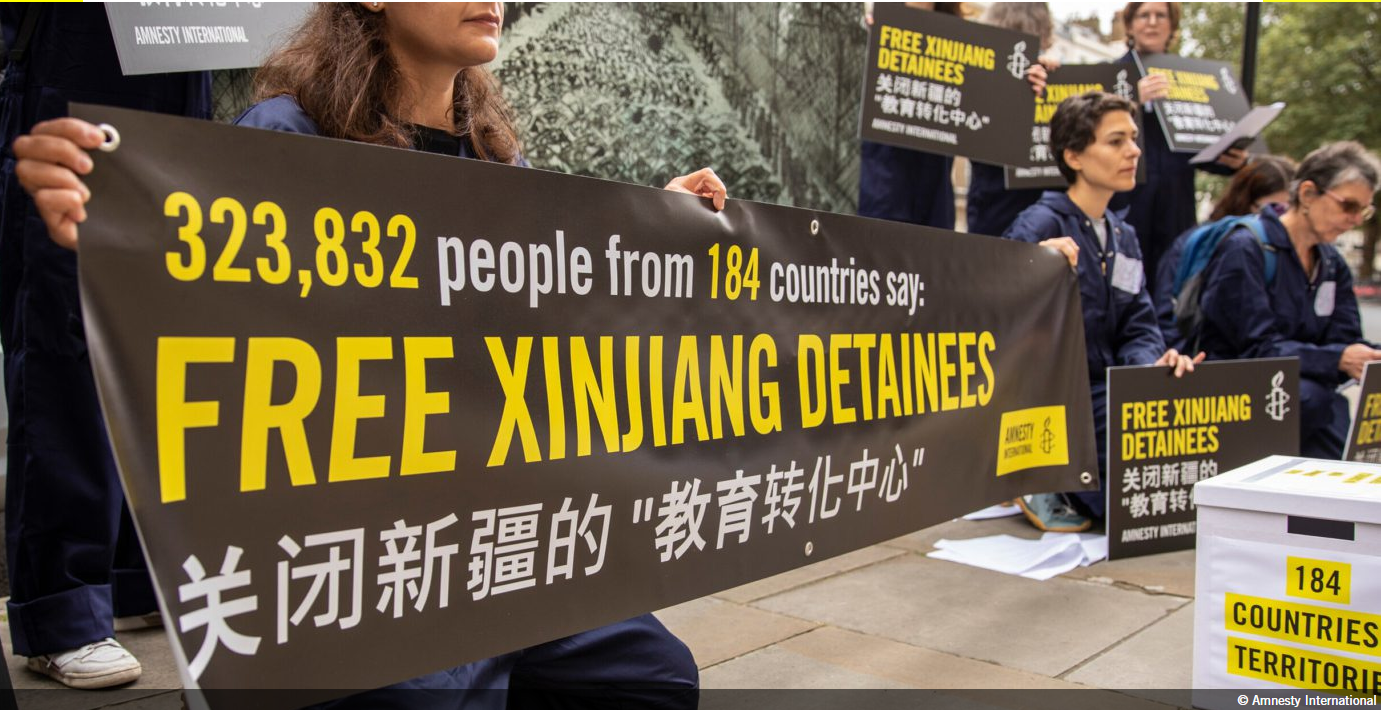
In the three years since the United Nations Office of the High Commissioner for Human Rights (OHCHR) released its landmark assessment on abuses in China’s Xinjiang Uyghur Autonomous Region, the world has witnessed a troubling pattern: silence, stagnation, and the continued suffering of Muslim ethnic minorities.
The 2022 UN report concluded that China’s treatment of Uyghurs and other predominantly Muslim groups “may constitute international crimes, in particular crimes against humanity.” Yet despite the gravity of these findings, Beijing has faced little meaningful consequence. The Chinese government has not only ignored the report’s recommendations—it has doubled down on its campaign of repression, silencing victims’ families and maintaining draconian policies across the region.
“Lives have been ruined, families separated and communities dismantled by the Chinese authorities’ continuing cruelty,” said Sarah Brooks, Amnesty International’s China Director.
Amnesty International’s latest investigation, published in August 2025, reveals that the machinery of repression remains intact. Families of detainees describe years of anguish, isolation, and unanswered questions. Patime, whose relative died in detention while another remains imprisoned, lamented the fading global attention:
“The hope that action would follow the UN report has now disappeared… Don’t let this become another forgotten report on a shelf.”
The organization contacted families of 126 individuals featured in its #FreeXinjiangDetainees campaign. Their testimonies paint a grim picture: arbitrary detentions, complete communication blackouts, and psychological torment inflicted by prolonged uncertainty. One woman described the silence surrounding her imprisoned sister as “its own form of torture.”
Despite mounting evidence and global petitions—over 323,000 signatures from 184 countries—China has faced no formal sanctions or international tribunal proceedings. The UN has yet to establish an independent investigative mechanism, and member states have largely refrained from coordinated action.
This inertia has emboldened Beijing. The Chinese Communist Party continues to frame the crisis as a domestic matter, deflecting criticism and leveraging its economic clout to suppress dissent on the world stage. Meanwhile, families like that of Mamatjan Juma, whose brother has been imprisoned for years, live in a state of perpetual grief:
“It feels like living with a wound that never heals.”
Amnesty International has renewed its call for accountability, urging UN member states to condemn China’s violations and support reparations for victims. But the question remains: will the international community finally act, or will history record another chapter of impunity?
As the world watches, the people of Xinjiang wait—for justice, for freedom, and for the world to remember.