 News Desk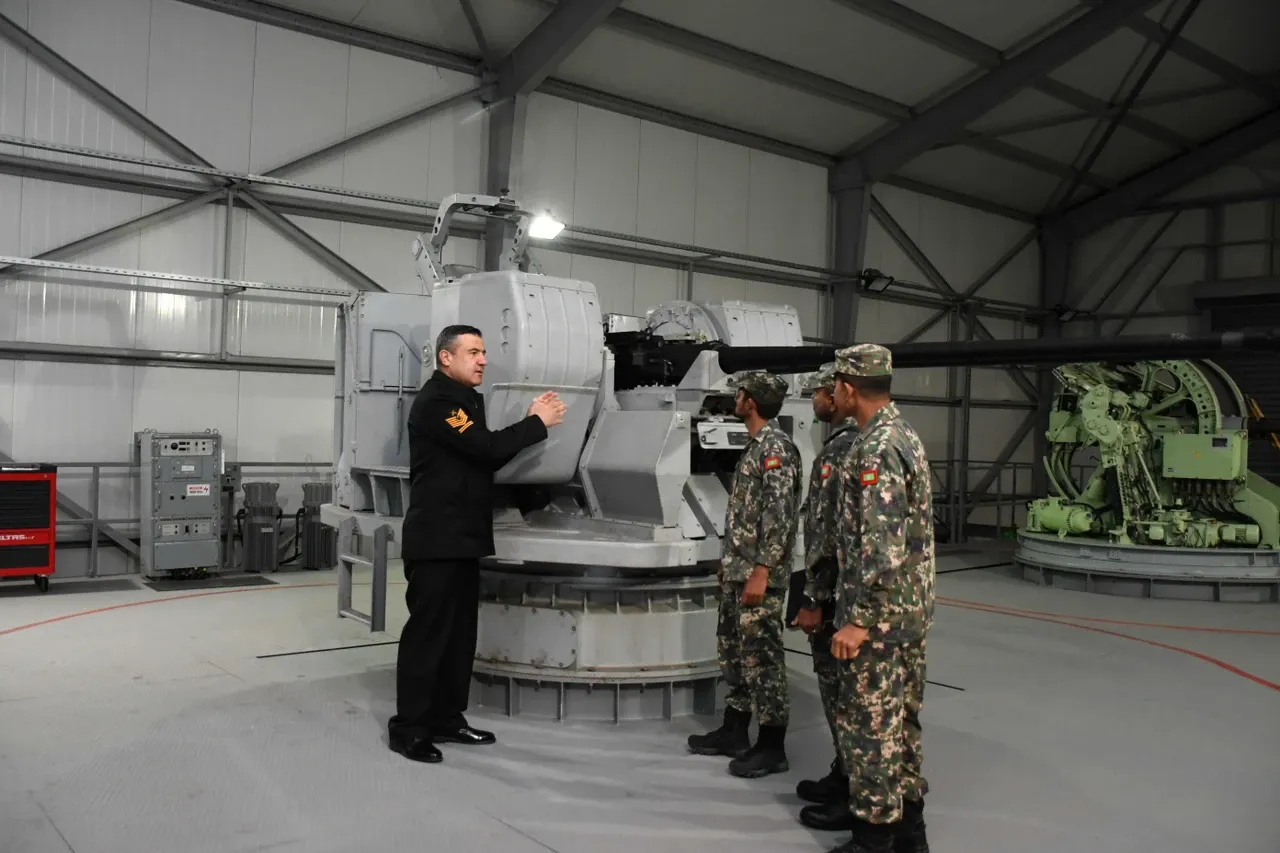
Male’, — Turkey’s decision to donate a 44-year-old fast attack craft, the TCG Volkan, to the Maldives under a bilateral defense agreement has raised hackles in the region, casting a spotlight on the Indian Ocean’s delicate power balance. Billed as a boost to the Maldives’ maritime security, the transfer instead underscores Turkey’s calculated push into a region dominated by India and increasingly eyed by China. For the Maldives, grappling with economic turmoil, the move invites scrutiny: why prioritize a military gift from a distant power when India, its longstanding security partner, has reliably filled that role for decades?
The Maldives, a string of 1,200 coral atolls, sits astride shipping lanes that carry 80% of global oil, making it a strategic gem despite its small size. For India, just 700 kilometers away, the archipelago is a linchpin in its maritime defense strategy, a bulwark against piracy, trafficking, and China’s naval ambitions. Over the years, India has been the Maldives’ primary security partner, supplying patrol vessels, and radar systems to its coastguard. Since the 1980s, New Delhi has gifted or facilitated crafts like the MCGS Huravee (2004) and MCGS Shaheed Ali (2019), alongside regular joint exercises and training to patrol the Maldives’ sprawling 900,000-square-kilometer exclusive economic zone. India’s support has been steady, practical, and tailored to Maldivian needs.
So why the TCG Volkan, and why now? The Dogan-class vessel, armed with Harpoon missiles and reclassified as a training ship in 2024 after decades in Turkey’s navy, is no game-changer. Its arrival, complete with Turkish training for Maldivian crews, seems misaligned with the Maldives’ pressing priorities. The nation’s economy is teetering—foreign reserves languish at $440 million, covering barely six weeks of imports, and $3.4 billion in external debt, much owed to China, threatens default. President Mohamed Muizzu’s government, elected on an “India Out” platform in 2023, faces mounting pressure to deliver jobs and stability, not military hardware. Maintaining the TCG Volkan—fuel, spares, upkeep—could strain the Maldives’ defense budget, a sliver of its spending, without addressing these existential woes.
Turkey’s motives are less about Maldivian security than geopolitical ambition. Under President Recep Tayyip Erdogan, Ankara has used its defense industry to project influence, from Somalia to Libya. The Maldives offers a low-cost foothold in the Indian Ocean, where Turkey has little historical presence. The donation, following Turkish drone sales in 2024, is a diplomatic flex, exploiting Muizzu’s desire to reduce reliance on India. But it’s a hollow gesture—Turkey offers no economic lifeline, unlike India’s $400 million in currency swaps, $50 million in emergency loans, and expanded food quotas in 2024, which staved off a sukuk bond default. Ankara’s focus is transactional, not transformative, leaving the Maldives to bear the costs of its symbolism.
For Muizzu, the Turkish deal aligns with his push for strategic autonomy, a rebuke to India’s influence. Yet it carries risks that are hard to ignore. India is not just a security provider but an economic lifeline, stepping in when Chinese debt ($1.37 billion) tightened its grip. Turkey, with no history of stabilizing small economies, offers little beyond hardware. Such overtures—first drones, now a missile boat—are red flags in India-Maldives relations, signaling a drift from a trusted partnership. One might diplomatically ask: is Malé, in its pursuit of new allies, turning a deaf ear to these red flags, which hint at strained ties with a neighbor whose support has been indispensable?
The broader fallout is troubling. The Indian Ocean is already a stage for India-China rivalry, with Beijing’s “research” ships probing for submarine data and New Delhi ramping up patrols. Turkey’s entry, however modest, adds complexity. It’s not about one aging boat—it’s the precedent. If Muizzu courts more partners, India’s regional order could unravel. New Delhi has stayed measured, boosting aid while quietly chiding Maldivian trade deals with Turkey and China in 2025. But patience wears thin.
Critics see Muizzu’s embrace of Turkey as a misstep, trading proven partnership for symbolic gains. The Maldives doesn’t need a Turkish missile boat—it needs economic relief and reliable allies. India’s track record as a security and economic partner dwarfs Ankara’s fleeting overture. By chasing alternatives, Muizzu risks turning a tropical haven into a geopolitical pawn, caught between powers with bigger agendas. The TCG Volkan may sail proudly, but its wake could leave the Maldives adrift.
Postscript: Maldives-Turkey Ties in Context
Maldives Ambassador in Turkey Lieutenant General (Rtd) Abdul Raheem Abdul Latheef, a retired officer of the Maldives National Defence Force (MNDF) who served as the Chief of Defence Force (CDF), appointed in 2024, has been a key figure in deepening bilateral ties, including the TCG Volkan agreement.
In 2024, Turkey contributed approximately 13,000 tourists to the Maldives, a modest figure compared to top markets like China (over 200,000) and India (despite a 42% dip to 42,638 in early 2024). Turkish visitors, while growing, remain a small fraction of the Maldives’ 1.8 million annual arrivals, suggesting limited economic leverage through tourism.
Turkey’s exports to the Maldives, valued at $32 million in 2022, include toilet paper ($2.05 million), seed oils ($1.63 million), and poultry meat ($1.55 million), down from $47.8 million in 2017. In contrast, the Maldives exported just $64,700 to Turkey, mainly fish products, highlighting an imbalanced trade dynamic. These figures underscore that Turkey’s economic footprint in the Maldives is minimal compared to India’s comprehensive support, raising further questions about the strategic value of Malé’s tilt toward Ankara.