
 News Desk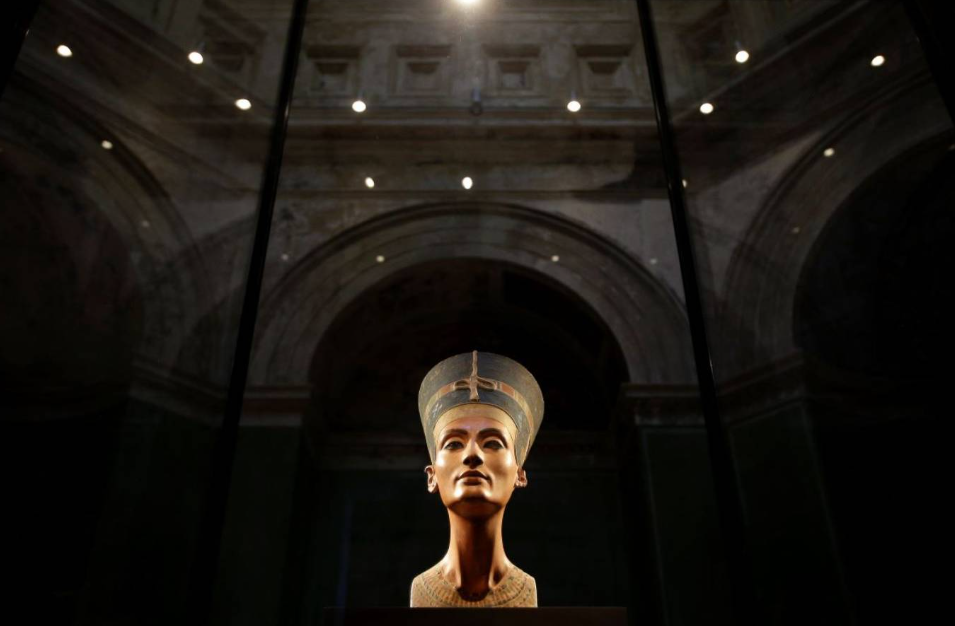
The world’s most beautiful woman, from any era, is on display in Berlin. Her name is Nefertiti, and her painted limestone bust—regarded as the undisputed evidence of her timeless allure—has become one of the most recognizable faces in art history. With high cheekbones carved in perfect symmetry, a slender neck rising with regal poise, and almond-shaped eyes that seem to gaze beyond centuries, the sculpture captures both elegance and authority. The tall, flat-topped blue crown frames her features like a halo, while the faint smile on her lips suggests a queen aware of her power and her legend.
Yet for Egypt, the bust is not simply a masterpiece. It is a reminder of loss. Officials have long argued that the artifact was stolen from Egypt in 1912, removed under questionable excavation permits during a colonial era when the balance of power left little room for protest. More than a century later, the question reverberates: Will those looted treasures ever be returned?

The debate surrounding Nefertiti’s bust is part of a global reckoning over cultural patrimony. The Rosetta Stone in London, the Parthenon Marbles in the British Museum, the Benin Bronzes scattered across Europe and the United States—all were taken in times of conquest or colonial dominance. Each case raises the same dilemma: should these artifacts remain in Western museums that claim to serve a “universal” audience, or should they be restored to the nations from which they were taken?
Some institutions have begun to bend. The Smithsonian returned dozens of Benin Bronzes to Nigeria. France has pledged to repatriate works to West Africa. But Berlin has resisted calls to return Nefertiti, just as Britain has resisted Greece’s demands for the Parthenon Marbles and Egypt’s appeals for the Rosetta Stone.
For Egypt, the bust of Nefertiti is more than an object of beauty—it is a national emblem, a missing piece of its own story. As the global tide of restitution grows stronger, the question of whether she will ever return to the banks of the Nile remains unresolved.


