 News Desk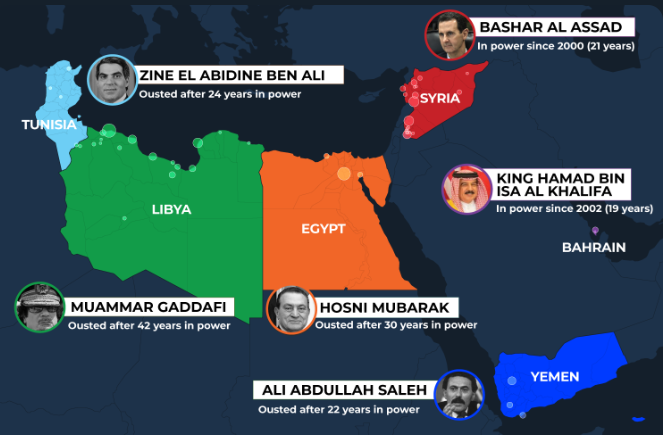
On a cold December day in 2010, a young Tunisian street vendor named Mohamed Bouazizi set himself ablaze after police confiscated his cart. His desperate act of protest ignited a fire far larger than he could have imagined. Within weeks, millions across the Arab world poured into the streets, demanding dignity, jobs, and freedom. What began in Tunisia spread like a contagion to Egypt, Libya, Yemen, and Syria, shaking regimes that had seemed immovable. The Fall of Longtime Leaders:
- Tunisia – Zine El Abidine Ben Ali: After 23 years in power, Ben Ali fled to Saudi Arabia in January 2011. Convicted in absentia, he died in exile in 2019.
- Egypt – Hosni Mubarak: Forced to resign after 18 days of mass protests in February 2011, Mubarak faced trial but was eventually acquitted. He died in Cairo in 2020.
- Libya – Muammar Gaddafi: After 42 years of rule, Gaddafi was captured and killed by rebels in October 2011, ending one of the region’s most idiosyncratic regimes.
- Yemen – Ali Abdullah Saleh: Stepped down in 2012 under a power-transfer deal, later allied with the Houthis before being killed by them in 2017.
- Syria – Bashar al-Assad: Survived years of brutal civil war, but in December 2024, a rebel offensive forced him into exile in Moscow, ending the Assad family’s 53-year grip on Syria.
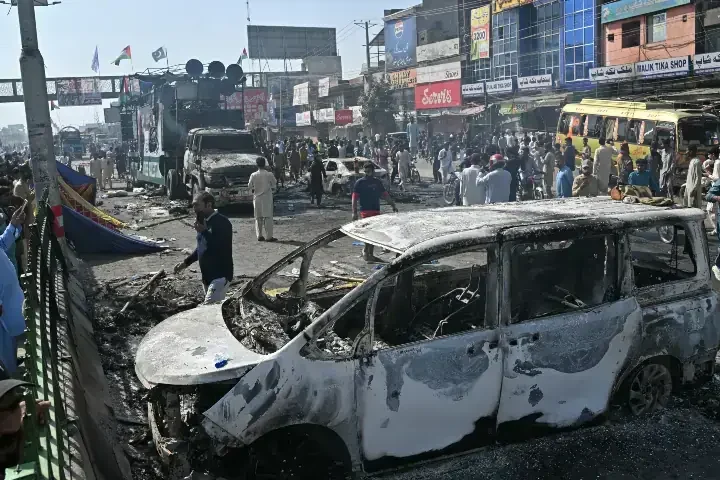
The Arab Spring was never a single revolution but a mosaic of uprisings. Its inspirations were clear: ordinary citizens demanding accountability, an end to corruption, and a voice in their future. For a moment, the world watched as young Arabs toppled decades-old regimes with chants, smartphones, and sheer courage.
Yet the aftermath was uneven. Tunisia emerged with fragile democratic institutions, though plagued by economic woes. Egypt reverted to military-backed rule. Libya and Yemen descended into chaos. Syria became the site of one of the century’s longest and bloodiest wars.
Still, the spirit of Bouazizi’s act lingers. Across the region, activists, artists, and ordinary citizens continue to draw inspiration from the Arab Spring. Its legacy is visible in smaller protests, in calls for reform, and in the refusal of younger generations to accept authoritarianism as destiny.
The Arab Spring did not deliver the sweeping democratic transformation many hoped for. But it shattered the myth of unshakable rulers. It showed that ordinary people could, in days or weeks, undo decades of entrenched power. And even as the region grapples with war, repression, and economic hardship, the memory of those uprisings remains a touchstone — a reminder that change, however fleeting, is possible.