News Desk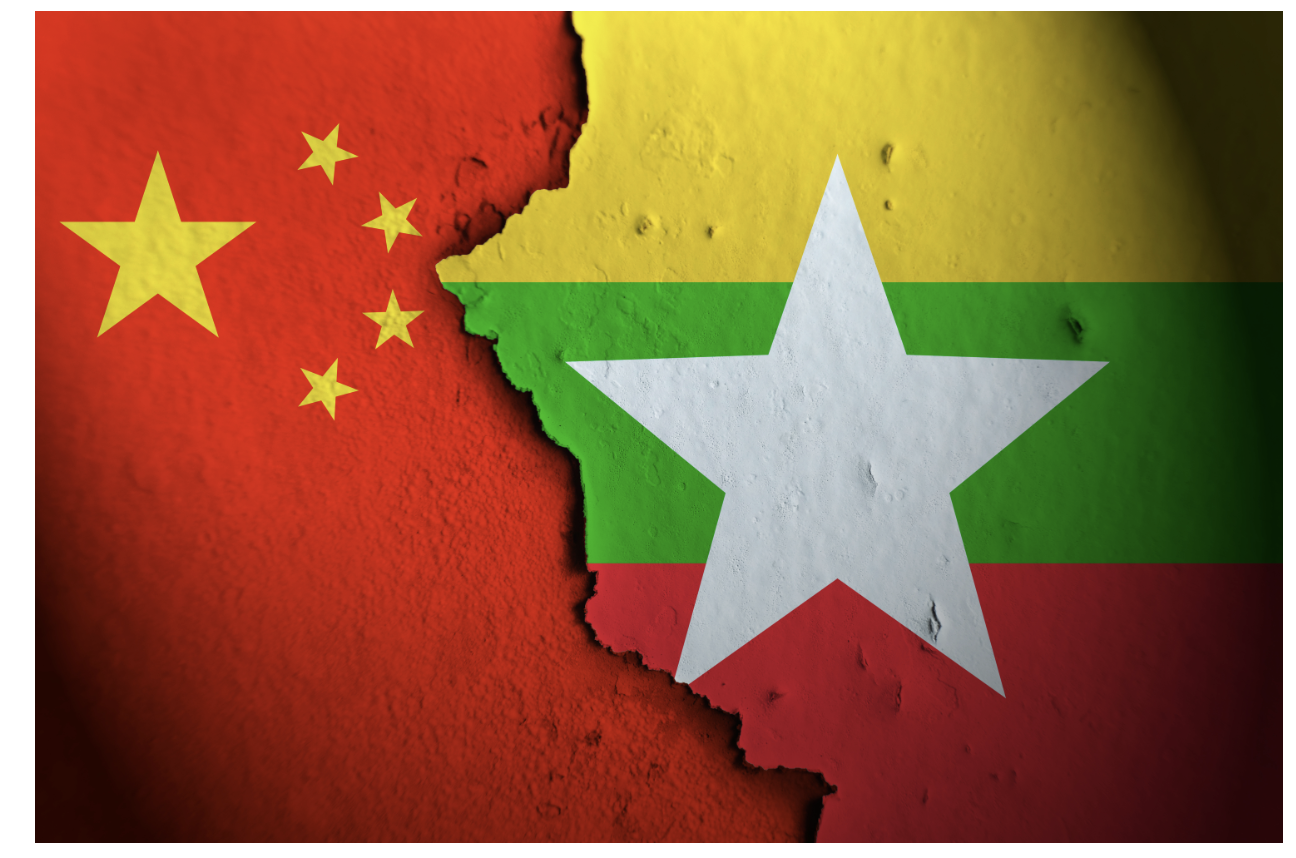
YANGON, Myanmar — As Myanmar’s staggered national elections drew to a close on Sunday, a process widely dismissed by rights groups as a tightly choreographed exercise to entrench military rule, one major power stood firmly behind it: China. Beijing’s endorsement of the junta‑run vote — conducted amid airstrikes, mass disenfranchisement and a grinding civil war — reflects a familiar pattern in its diplomacy, one that prizes strategic stability and economic advantage over democratic norms.
The vote, orchestrated by the generals who seized power in 2021, unfolded under the framework of the 2008 military‑drafted constitution. Only select townships, including parts of Yangon and Mandalay, were permitted to cast ballots. The junta’s proxy party, the Union Solidarity and Development Party, is expected to claim an overwhelming victory. Opposition leaders remain imprisoned or exiled, including Aung San Suu Kyi, whose National League for Democracy was dissolved. Entire regions engulfed in conflict were excluded from voting altogether.
The United Nations condemned the process as coercive. Tom Andrews, the U.N. special rapporteur on human rights in Myanmar, called it a “theatrical performance” designed to manufacture legitimacy. Gen. Min Aung Hlaing, the junta chief, has brushed aside international criticism, insisting that global recognition is irrelevant — a stance reinforced by his deepening ties with Russia and Belarus.
Beijing, however, has cast the election in a different light. With a 1,300‑mile border and billions invested in infrastructure under the Belt and Road Initiative, China has shifted from tentative engagement with ethnic armed groups to full support for the junta. Chinese officials have urged the military to proceed with the vote, viewing it as a step toward predictability in a country whose instability threatens key rail links and a strategic deep‑sea port.
Analysts say China’s calculus is rooted in realpolitik. “China backs the regime because of the absence of a credible alternative that could step in and keep the country together,” said Morgan Michaels of the International Institute for Strategic Studies. Richard Horsey of the International Crisis Group noted that Beijing sees even a nominally civilian government as preferable to prolonged disorder.
But critics argue that this approach carries profound moral and strategic risks. By supporting a military accused of genocide against the Rohingya and widespread atrocities in the current conflict, China is seen as enabling a humanitarian catastrophe. The elections are unlikely to resolve Myanmar’s turmoil; instead, they may entrench what some analysts call “managed instability,” with fighting continuing along the borders while the junta cloaks its rule in civilian trappings.
The parallels to past great‑power miscalculations are hard to miss. Commentators have likened China’s position to the United States in Vietnam or the Soviet Union in Afghanistan — moments when backing repressive regimes for short‑term gain produced long‑term blowback. Several Myanmar‑focused research groups warn that Beijing risks falling into a “great‑power trap,” deepening its commitment to an increasingly unpopular and embattled military.
Myanmar’s economy, meanwhile, has been battered since the coup. Inflation soared last year, foreign investment has evaporated under Western sanctions and the currency has collapsed. A junta victory may ease diplomatic tensions with neighbors such as India and some Southeast Asian states, potentially smoothing China’s commercial interests. But democracy activists argue that Beijing’s support for the vote undermines regional peace efforts and contradicts its stated principle of noninterference.
The geopolitical stakes extend beyond Myanmar. A strengthened junta could embolden other authoritarian governments in the region and complicate attempts to counter China’s influence. While the United States and its allies maintain sanctions, Beijing’s engagement risks deepening resentment among ordinary Myanmar citizens, many of whom view China as a lifeline for their oppressors.
The Council on Foreign Relations recently described the elections as “laughable on their face” but “deadly serious in their impact,” warning that they could lock Myanmar into a prolonged cycle of violence under military — and Chinese — shadow.
In the end, China’s embrace of Myanmar’s flawed vote highlights the limits of its “win‑win” rhetoric. The strategy may secure short‑term stability for Beijing’s projects, but it comes at the cost of global goodwill and risks drawing China deeper into a conflict that shows no sign of abating. As Myanmar’s crisis deepens, the question is whether Beijing’s bet on brute force will deliver the predictability it seeks — or entangle it in a conflict it cannot control.