 News Desk
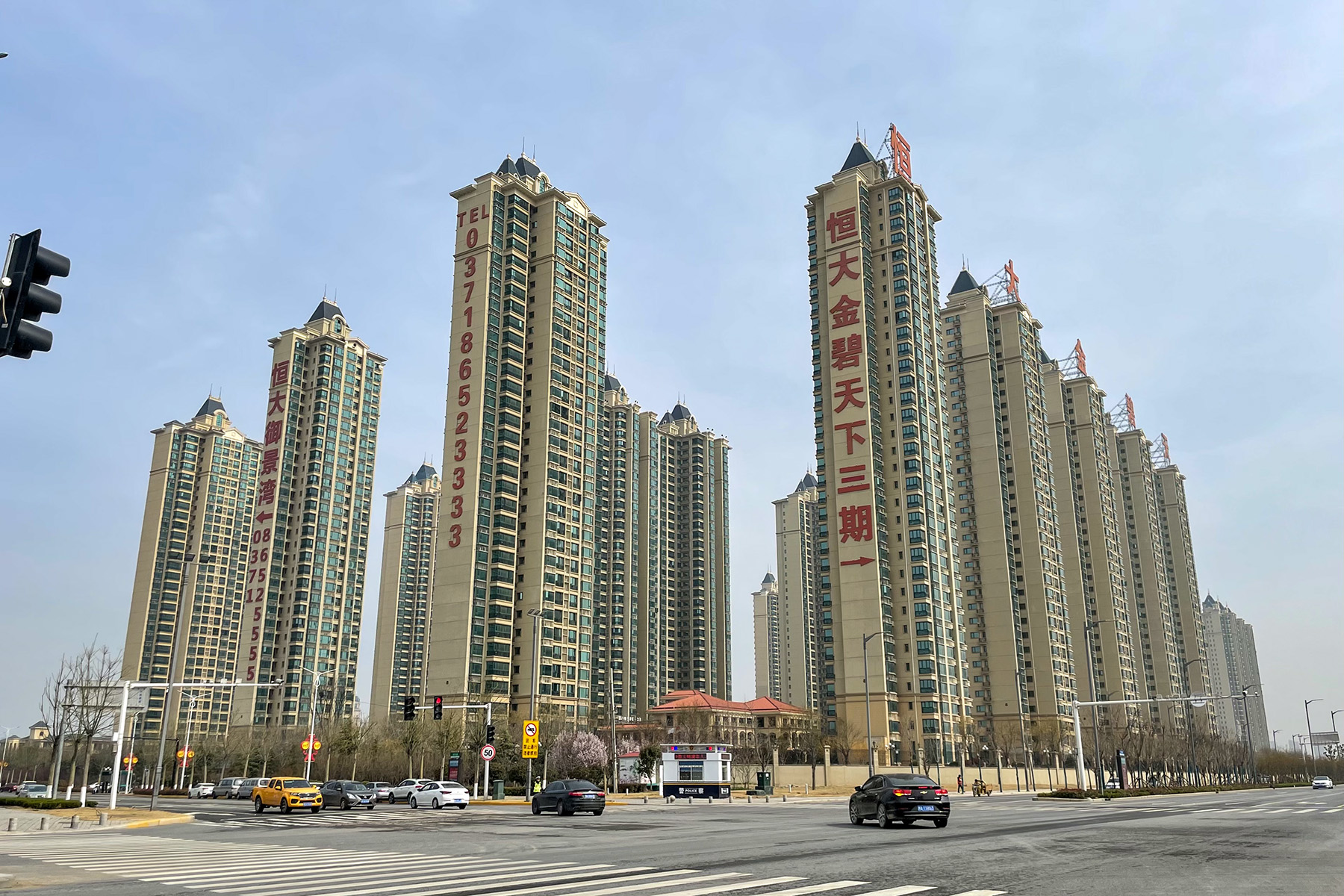
BEIJING — For three decades, China’s economic miracle was built on a reliable, if increasingly precarious, formula: pour concrete, build apartments and watch the growth numbers climb. Today, years after the country’s historic property bubble began to deflate, that engine has not merely sputtered; it has fundamentally seized up.
Despite official data showing gross domestic product holding within a modest growth band, there has been no sweeping V-shaped recovery. Instead, the world’s second-largest economy is locked in a grinding, protracted slowdown, weighed down by a generational glut of unsold housing, a crisis of confidence among ordinary shoppers and a mountain of municipal debt.
Nowhere is the malaise more visible than in the property sector itself, which, when accounting for upstream and downstream industries, once generated nearly 30 per cent of China’s economic activity. Investment in real estate development and new construction starts have fallen to a fraction of their 2021 peak, leaving vast tracts of unfinished apartment blocks—often derided locally as stalled or “tofu-dreg” projects—standing empty across second- and third-tier cities. Across the country, housing inventories have ballooned to multi-year highs, saddling smaller municipalities with years of unsold stock and rendering the old, developer-led growth model obsolete.
The fallout has struck directly at the heart of the Chinese middle class. With more than 70 per cent of average household wealth tied up in residential bricks and mortar, the steady slide in home values has left families feeling markedly poorer. Rather than spending their way out of the downturn, households have retreated into caution. Fearing job insecurity and leaning on a threadbare social safety net, consumers have hoarded cash, pushing bank savings to record highs while leaving shopping centres and restaurants struggling for footfall.
That freeze in the land market has simultaneously triggered a fiscal crisis for local governments. For decades, municipal officials fuelled rapid expansion by borrowing heavily for infrastructure and relying on land sales to developers for up to 40 per cent of their revenues. With developers largely sidelined, local authorities have fallen into a severe debt trap. Total municipal obligations—including off-balance-sheet borrowing through local government financing vehicles—are now estimated at roughly 64 per cent of gross domestic product.
Increasingly, newly issued debt is swallowed whole simply to service interest on older loans rather than funding productive investment. The resulting fiscal squeeze has left cash-strapped local governments struggling to pay for basic public services, healthcare and education, further eroding the foundations of long-term domestic consumption.
To offset weakness at home, Beijing has doubled down on an ambitious industrial policy, channelling state support into advanced manufacturing—most notably electric vehicles, solar panels and lithium batteries. Yet this strategy has unleashed a destructive domestic phenomenon known as neijuan, or “involution”: hyper-competitive, state-subsidised price wars that have gutted corporate profit margins. Unable to sell this surging output to cautious domestic buyers, Chinese manufacturers have turned abroad, flooding global markets with inexpensive exports. The influx has provoked a sharp international backlash, drawing sweeping tariffs, trade barriers and anti-dumping investigations not only from the United States and the European Union, but from emerging economies as well.
To be sure, China is unlikely to experience an imminent, 2008-style Western financial meltdown. Its banking sector remains firmly under state control, and steep mandatory down payments have kept household mortgage default rates low.
Yet that very state control is what prevents the economy from clearing its excesses. By resisting painful structural reforms—such as strengthening the social safety net to lift household consumption from its anaemic share of roughly 40 per cent of G.D.P., allowing unviable firms to go bankrupt and pivoting away from command-driven industrial overproduction—Beijing risks trading an acute crash for a chronic malaise: a prolonged era of debt deflation and stagnation echoing Japan’s “lost decades”.