 News Desk
DHAKA, Bangladesh — For years, Bangladesh measured its educational triumph by sheer volume: more schools built, more certificates issued, more universities chartered. This autumn, that edifice collided with reality.
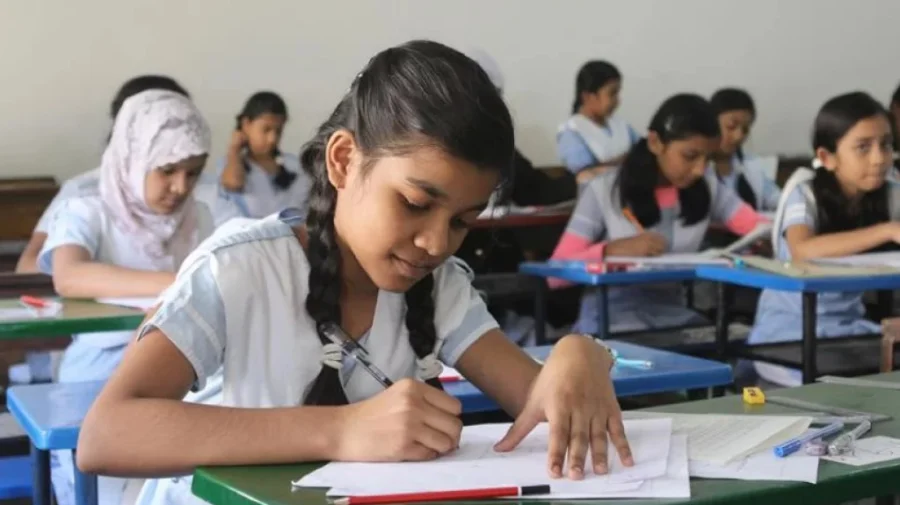
When results for the Higher Secondary Certificate — the national school-leaving examination — were published on Oct. 31, only 52.12 per cent of the roughly 1.24 million candidates passed, the country’s lowest pass rate in 22 years. Nearly half a million students failed outright, and the number achieving the top GPA-5 grade plunged by more than 27,000 in a single year. Across 293 institutions nationwide, not a single student passed.
The shockwaves are now rippling up the academic ladder. With 646,685 successful candidates competing for nearly 1.5 million undergraduate places across 61 public universities, 107 private universities and affiliated colleges, Bangladesh suddenly has more than twice as many university seats as qualified applicants.
For educationists and economists, the mismatch is not a statistical anomaly. It is the exposure of a system that spent decades expanding credentials while neglecting actual learning — from primary classrooms weighed down by unregulated commercial guidebooks to provincial universities that struggle to fill lecture halls.
“Bangladesh has followed the opposite path,” said Dr Shoaib Zibran, a poet, researcher and academic, arguing that higher education should grow like a pyramid rather than an inverted funnel. “The number of higher education institutions and seats has expanded far beyond actual demand.”
For years, inflated pass rates — reaching 95.26 per cent during the pandemic year of 2021 — masked deep learning deficits created by school closures, automatic promotions, political upheaval and repeated curriculum overhauls. As authorities moved away from lenient grading this year, the underlying fragility became impossible to hide.
Nowhere is the strain more acute than in the private higher education sector. Even before this autumn’s slump, a 2024 University Grants Commission report showed that 38.2 per cent of private university seats stood empty, after an average vacancy rate of more than 60 per cent between 2018 and 2021. With elite public institutions, medical colleges and top-tier private campuses absorbing the strongest candidates, smaller and regional private universities face an existential squeeze on tuition revenue and faculty salaries.
“Only around 10 private universities in the country can be considered reasonably good in terms of quality,” said Rasheda K. Chowdhury, a prominent educationist and former adviser to a caretaker government. “Many of the others have turned into certificate-selling factories.”
Regulators acknowledge that political patronage long drove the approval of new campuses without regard for faculty capacity or labour-market demand. “The current situation was the consequence of a longstanding culture of prioritising certificates and pass rates over educational standards,” said Prof. Dr Abdullah Al Mamun, a member of the University Grants Commission, adding that the government had halted approvals for new universities unless a clear specialised need existed.
Yet the crisis begins long before university admissions. At the bottom of the pyramid, early childhood and primary education have become increasingly commercialised and exam-driven.
In early November, a writ petition filed in the High Court sought to ban competitive admission tests for primary grades and outlaw unauthorised commercial guidebooks that leave young children carrying heavy bags and memorising model answers rather than learning to think independently.
Days later, the Education Ministry moved to standardise Class-I entry at age six across government and private schools in an effort to curb early academic confusion.
Governance at the school level remains equally frayed. According to official figures reported in October, roughly two-thirds of head teacher posts and three-quarters of assistant head teacher positions in government secondary schools sit vacant.
Academics warn that if struggling universities lower their admission standards simply to survive financially, Bangladesh risks compounding its human-capital deficit just as its demographic dividend begins to narrow.
“This is no longer a country failing to reach its children; it is a country reaching them and failing to teach most of them adequately,” M.G. Quibria, an economist formerly of the University of Dhaka, wrote in a recent assessment of the sector. “No version of Bangladesh’s growth story can outrun its people’s capabilities.”
For a nation seeking to diversify its economy beyond garment manufacturing and graduate sustainably from the United Nations’ list of least developed countries, the autumn exam results delivered an unmistakable verdict: certificates can be printed on demand, but competence cannot.