 News Desk
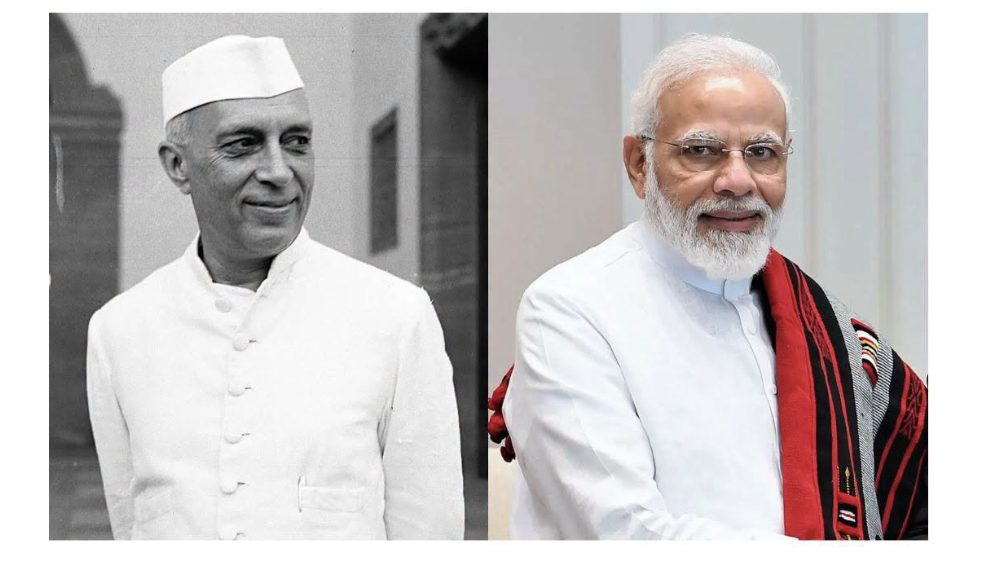
NEW DELHI — Backed by a foreign exchange war chest that reached an all-time peak of $740.8 billion in August before settling near $719.55 billion this month, India’s economy expanded at a brisk 7.8 per cent year on year in the first quarter of 2026—capping a remarkable turnaround from a capital-scarce, import-constrained post-colonial nation in 1947 into the world’s fastest-growing major economy.
Under Prime Minister Narendra Modi, who has held office since 2014, New Delhi has added the largest absolute volume of foreign exchange reserves in the nation’s history—expanding the buffer by more than $400 billion, surpassing $700 billion in 2024 and lifting India into the world’s top five economies. By overhauling the tax and banking architecture through the Goods and Services Tax and the Insolvency and Bankruptcy Code, building digital public infrastructure, introducing manufacturing incentives and driving heavy capital expenditure, Mr. Modi’s administration formalised the economy, resolved twin balance-sheet stress and insulated the country against global supply and energy shocks.
Yet an objective economic history demonstrates that India’s financial resilience is not the achievement of a single leader. Rather, it is the product of a multi-decade relay: while Mr. Modi scaled the nation’s external buffers to unprecedented heights, his predecessors rescued the country from sovereign default and built the foundational institutions that made modern growth possible.
The Immediate Predecessors: Scaling Growth and Liberalisation
-
Manmohan Singh (2004–2014): Presiding over the fastest sustained 10-year expansion in Indian history—averaging roughly 8.5 per cent and peaking above 9 per cent—Mr. Singh deepened global integration, attracted surging capital inflows and enacted rights-based welfare programmes, including rural employment guarantees and food security legislation. Despite the 2008 global financial crisis, his government nearly tripled foreign exchange reserves from about $113 billion to more than $300 billion.
-
Atal Bihari Vajpayee (1998–2004): Focusing on highway expansion via the Golden Quadrilateral, telecommunications reform, privatisation and fiscal discipline under the Fiscal Responsibility and Budget Management Act, Mr. Vajpayee replaced restrictive currency rules with the business-friendly Foreign Exchange Management Act in 1999 and guided reserves past the $100 billion milestone in 2004.
-
P.V. Narasimha Rao (1991–1996, with Finance Minister Manmohan Singh): Executing the defining structural rescue of modern Indian history, Mr. Rao inherited a severe balance-of-payments crisis in 1991 with roughly $1.2 billion in reserves—barely enough to cover two weeks of imports. By dismantling the “Licence Raj” of state controls, slashing tariffs, devaluing the rupee and opening India to foreign direct investment, his administration averted sovereign default and initiated the country’s modern reserve accumulation.
The Early Decades: Laying the Institutional and Agricultural Base
-
Rajiv Gandhi (1984–1989): Introducing early deregulation, telecommunications and computing modernisation, and export incentives, Mr. Gandhi pushed annual growth above 5 per cent, though widening fiscal deficits and rising import bills strained external balances by the decade’s end.
-
Indira Gandhi (1966–1977, 1980–1984): Through the Green Revolution, bank nationalisation and strict currency controls under the Foreign Exchange Regulation Act, Mrs. Gandhi eliminated chronic famine risk and lifted reserves past $7 billion by 1980—more than double China’s holdings at the time—even as heavy state regulation and global oil shocks constrained private enterprise.
-
Jawaharlal Nehru (1947–1964): Pursuing a state-led mixed economy anchored by five-year plans and heavy industrialisation, India’s first prime minister established the scientific and educational bedrock of the independent nation, including the Indian Institutes of Technology and its space programme. However, strict import substitution and licensing controls held annual growth near 3.5 per cent and left reserves tight, covering roughly 8.6 weeks of imports by 1960.
In the final accounting, Mr. Nehru and Mrs. Gandhi built the sovereign institutional and agricultural base required for survival; Mr. Rao and Mr. Singh unlocked the country’s growth engine; and Mr. Modi scaled that engine into a $700 billion-plus fortress capable of absorbing severe global shocks.