 News Desk
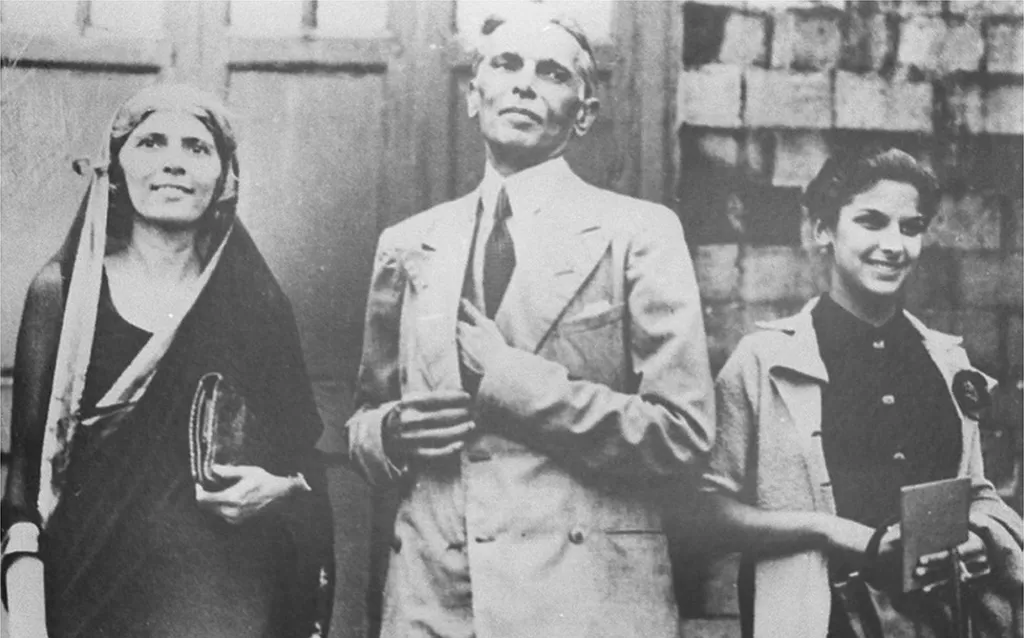
MUMBAI — In the fevered months leading up to the Partition of British India in August 1947, Muhammad Ali Jinnah achieved what few political leaders in modern history have managed: he willed a sovereign nation into existence. Yet as millions uprooted their lives in a chaotic, blood-soaked migration towards the newly carved borders of Pakistan, the man revered as Quaid-i-Azam—the Great Leader—found himself unable to persuade the one person closest to him to make the journey.
His only child, Dina Wadia, stayed in Bombay.
Nearly eight decades on, her decision remains one of the most poignant and frequently weaponised footnotes in the contentious history of the Indian subcontinent. In an era of polarised social media discourse, where nationalist trolls routinely question the loyalties of Indian Muslims, Dina’s refusal to follow her father across the border is often invoked as the ultimate historical retort: if the founder of Pakistan could not convince his own daughter to embrace his vision, how could it be demanded of anyone else?
The reality, however, is less a tale of partisan point-scoring and more a deeply personal tragedy of uncompromising wills, generational rupture, and the collateral damage of history.
Born in London in August 1919 to Jinnah and his young Parsi wife, Rattanbai Petit, Dina grew up in a household that epitomised the cosmopolitan, secular elite of early 20th-century Bombay. Her mother died when Dina was just nine years old, leaving the girl largely in the care of her maternal grandmother while Jinnah threw himself into the increasingly bitter politics of the Indian independence movement.
By the late 1930s, as Jinnah was cementing his political doctrine that Hindus and Muslims constituted two irreconcilable nations, his 19-year-old daughter was charting a course that directly defied his burgeoning ideology. In 1938, Dina fell in love with Neville Wadia, the scion of a prominent Parsi industrialist family who had converted to Christianity.
Jinnah was furious. The irony was lost on few in Bombay’s high society: the architect of a future homeland for South Asia’s Muslims—a man who had himself married outside his faith two decades earlier—was fiercely opposed to his daughter marrying a non-Muslim.
According to historical accounts, including those by Jinnah’s biographer Stanley Wolpert, the confrontation between father and daughter was icy and definitive. Jinnah reportedly warned Dina that there were millions of Muslim boys in India she could choose from. Dina, possessing her father’s legendary stubbornness, famously shot back that there were millions of Muslim girls in India, yet he had chosen to marry her mother, a Parsi.
Jinnah cut off contact, addressing her formally thereafter as “Mrs. Wadia.”
When the British finally relinquished control in 1947, cleaving the subcontinent into Hindu-majority India and Muslim-majority Pakistan, Dina’s life was firmly anchored in Bombay. Though her marriage to Neville Wadia eventually dissolved, she remained fiercely attached to the city of her upbringing, her Parsi heritage, and the pluralistic milieu that Partition was rapidly dismantling. She harboured little enthusiasm for the theological and separatist underpinnings of the new state her father was to govern.
Dina visited Pakistan only twice in her lifetime. The first was in September 1948, a sombre trip to Karachi to attend her father’s funeral, where she stood by the grave of a man with whom she had never fully reconciled. The second came 56 years later, in 2004, when she travelled to Lahore to watch a cricket match between India and Pakistan—a gesture of goodwill that briefly captivated both nations.
During that final visit, she signed the visitors’ book at Jinnah’s mausoleum in Karachi with a simple, dignified inscription: “May his dream for Pakistan come true.”

Her descendants remained firmly rooted in India. Her son, Nusli Wadia, became one of the country’s most prominent industrialists, heading the Wadia Group, a conglomerate whose history in Bombay predates the British Raj. Dina herself lived out the remainder of her long life quietly between Mumbai and New York, where she died in 2017 at the age of 98.
For historians, Dina Wadia’s life offers a sobering counterpoint to the rigid binaries that still define South Asian politics. She did not stay in India to make a grand ideological statement, nor did she renounce her father’s legacy out of malice. Rather, she simply refused to let the sweeping, unforgiving lines drawn by politicians dictate where she belonged—proving that even at the birth of nations, human allegiance remains stubbornly personal.