News Desk
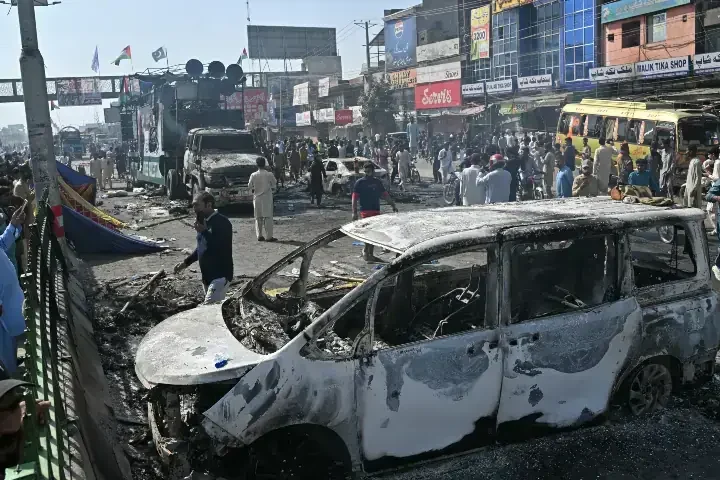
QUETTA, Pakistan — At the mouth of the Lakpass Tunnel, a vital artery connecting Pakistan’s Balochistan province to Iran and Afghanistan, the air is thick with tension and the acrid scent of tear gas. For weeks, protesters led by the Balochistan National Party (BNP) have blockaded this critical trade route, demanding the release of activists, including Dr. Mahrang Baloch, a prominent figure in the Baloch Yakjehti Committee. The standoff has paralyzed commerce, stranded over 800 containers of goods, and exposed the fragility of Pakistan’s ambitions to transform Balochistan into a linchpin of the China-Pakistan Economic Corridor (CPEC).
The CPEC, a $62 billion flagship of China’s Belt and Road Initiative, was sold as a transformative vision: a network of highways, railways, and pipelines stretching from the port of Gwadar on Pakistan’s Arabian Sea coast to Kashgar in China’s Xinjiang region. It promised prosperity, jobs, and connectivity for one of Pakistan’s most impoverished provinces. Yet, as the Lakpass blockade grinds on, it is clear that the corridor has delivered more disillusionment than development, exacerbating local grievances and underscoring the failures of both Islamabad and Beijing to address Balochistan’s deep-seated unrest.
The protests, now in their third week, stem from a government crackdown on Baloch activists, including women, who have long campaigned against forced disappearances and state repression. The BNP, led by former Chief Minister Akhtar Mengal, accuses the government of stifling dissent by imposing Section 144, a colonial-era law banning public gatherings, and blocking roads to prevent demonstrators from entering Quetta. The government, in turn, blames the BNP for disrupting trade and offers alternative venues for protest—a gesture Mengal dismisses as a ploy to suppress their movement.
The economic toll is staggering. The Quetta Chamber of Commerce reports millions in losses as supply chains collapse, perishable goods rot, and international clients lose faith in Pakistan’s reliability. “For them, it doesn’t matter who blocked the roads or why; all they see is unreliability,” said Agha Gul Khaliji, the chamber’s vice-president. Afghan traders are rerouting through Iran, bypassing Pakistan’s border hubs like Chaman, while local businesses, from LPG suppliers to fruit exporters, face mounting debts and dwindling markets. The Federal Board of Revenue’s revenue targets for Balochistan are slipping further out of reach.
This crisis is not merely a local dispute but a symptom of CPEC’s broader failures. Balochistan, home to Gwadar’s deep-sea port, was meant to be the corridor’s crown jewel. Instead, it remains a cauldron of unrest, where promises of economic uplift have clashed with realities of marginalization. The Baloch, who make up the province’s majority, see little benefit from CPEC projects, which are often staffed by workers from other provinces or Chinese firms. Gwadar’s port, touted as a game-changer, operates far below capacity, its gleaming infrastructure a stark contrast to the surrounding poverty and lack of basic services like clean water.
China’s role in this quagmire is equally troubling. Beijing has poured billions into CPEC, yet its approach—prioritizing security and infrastructure over local engagement—has fueled resentment. The heavy-handed presence of Chinese contractors, coupled with Pakistan’s militarized response to dissent, has alienated the Baloch, who view CPEC as an extractive enterprise benefiting distant elites. The Lakpass blockade, disrupting a route critical to CPEC’s connectivity, is a stark reminder that no amount of concrete or capital can pave over unresolved grievances.
Pakistan’s government bears its own share of blame. By resorting to tear gas, arrests, and internet shutdowns, it has escalated tensions rather than addressing the root causes of Baloch discontent. The detention of activists like Dr. Mahrang, whose peaceful advocacy for missing persons has drawn international attention, signals a state more fearful of criticism than committed to dialogue. Mengal’s call for constitutional safeguards and a national dialogue, voiced at a recent multi-party conference, has been met with silence, leaving the standoff at Lakpass with no clear resolution.
The human cost is mounting. Passenger buses are stranded, leaving drivers and conductors without income. Heart patients like Abdul Nabi’s father cannot reach Quetta for treatment. Students like Imad Baloch, a 22-year-old law student, face exorbitant transport costs and disrupted studies due to blocked roads and internet blackouts. “The government has also blocked internet access, which has created serious problems for students,” he said, highlighting the ripple effects on Balochistan’s youth.
As the Lakpass Tunnel remains choked, so too does the dream of CPEC as a highway to prosperity. For Pakistan and China, the lesson is clear: grand infrastructure projects cannot succeed in a vacuum. Without addressing Balochistan’s political alienation, economic exclusion, and human rights abuses, the corridor from Gwadar to Kashgar risks becoming a highway to nowhere—a monument to ambition undone by neglect.