 News Desk
DHAKA, Bangladesh — The remarkable gains Bangladesh made in lifting millions out of poverty over the past decade are showing signs of unravelling, according to a new World Bank report that warns of a looming reversal unless the country acts swiftly.
2010 and 2022, some 34 million Bangladeshis escaped multidimensional poverty, a measure that includes health, education and living standards. Extreme poverty fell to 5.6 percent from 12.2 percent, while moderate poverty was nearly halved, to 18.7 percent from 37.1 percent. Yet even at the peak of this progress, more than a third of the population remained perilously close to the poverty line. In 2022, 36 percent of non-poor Bangladeshis were classified as vulnerable, meaning a single shock — illness, job loss or rising food prices — could push them back into destitution.
The World Bank now projects that moderate poverty will climb again, reaching 21.2 percent by the end of next year, as inflation erodes real wages and job creation slows.
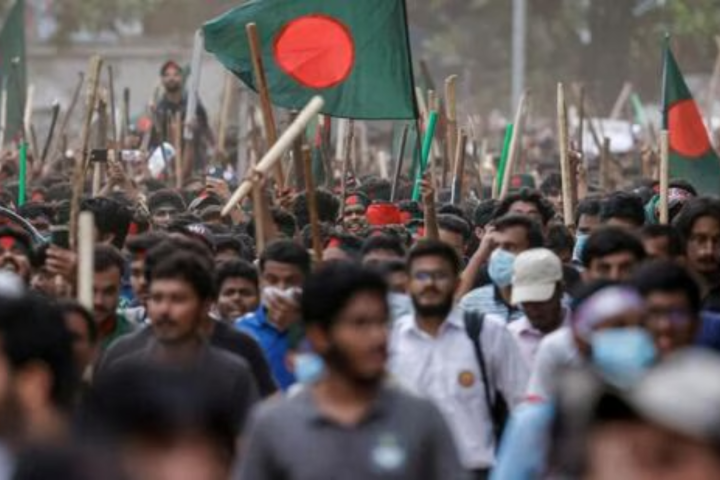
The setback comes after a decade of rapid growth under Sheikh Hasina, the longtime prime minister who was ousted in August 2024 following weeks of student-led protests that spiralled into widespread unrest. During her tenure, annual G.D.P. growth rose from roughly 5 percent in 2009 to nearly 8 percent in 2019, fuelled by a booming garment industry and steady remittances from migrant workers. Vast infrastructure projects — bridges, power plants, elevated highways — transformed the landscape, and poverty declined sharply.
When Ms. Hasina fled the country last year, an interim government led by Muhammad Yunus, the Nobel laureate and microfinance pioneer, took power amid continuing unrest, double-digit inflation and a weakening currency. Export orders have slowed as buyers in Europe and North America question the country’s stability.
Bangladesh is scheduled to graduate from the United Nations’ Least Developed Country category in November 2026, a milestone that will end preferential duty-free access to many markets. Garment manufacturers, the backbone of the economy, estimate the loss could cost the country as much as $8 billion a year in export revenue. Business groups have called for a delay; the interim government has insisted the graduation will proceed on schedule.
The European Union, which absorbs 58 percent of Bangladesh’s exports, will continue duty-free treatment until 2029 under its Everything But Arms initiative. After that, Bangladesh hopes to secure the bloc’s GSP Plus scheme, which offers reduced tariffs in exchange for ratifying and enforcing 27 international conventions on human rights, labour standards, environmental protection and governance.
Weak enforcement of labour laws and continuing restrictions on trade unions, however, have raised doubts about eligibility. Without GSP Plus, Bangladeshi goods would face average tariffs of 8.7 percent — a blow that exporters say the industry, already strained, might not survive.
Economists and development experts say the country’s next chapter hinges on urgent reforms: stronger social safety nets, renewed investment in labour-intensive sectors, and measures to stabilize food prices. Trade privileges must be preserved, they argue, or millions who only recently climbed out of poverty risk sliding back.
For now, the World Bank’s warning hangs over a nation that not long ago was celebrated as a development success story. Whether Bangladesh can regain its momentum, analysts say, will depend on how quickly — and how boldly — its leaders confront the challenges ahead.