 News Desk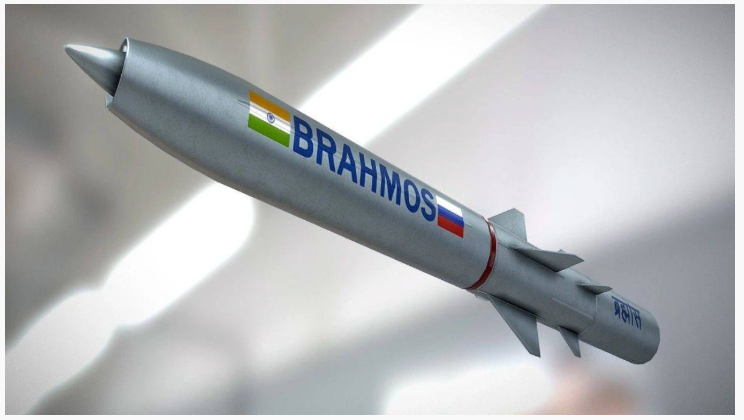
New Delhi, — In a sweeping modernization push, the Indian Navy is accelerating efforts to arm its entire fleet with BrahMos supersonic cruise missiles by 2030, marking a strategic leap in India’s maritime strike capabilities across the Indian Ocean Region (IOR).
The initiative follows the resounding success of Operation Sindoor earlier this year, where BrahMos missiles demonstrated pinpoint accuracy and overwhelming force against simulated enemy infrastructure. The operation, which neutralized key Pakistani terrorist assets without interception, has become a benchmark for India’s evolving doctrine of integrated naval-air warfare.
India currently fields around 135 warships, with plans to expand to 175 by 2035. But the real transformation lies in the firepower each vessel will carry. Newly commissioned stealth frigates—INS Udaygiri and INS Himgiri—are already equipped with vertical-launch BrahMos systems. By the end of the decade, 20 such frigates and a growing fleet of destroyers will be capable of launching over 300 BrahMos missiles in a single coordinated strike.
Unlike earlier destroyers with eight launchers, the latest class boasts 16, doubling their offensive reach. These warships are also being fitted with next-generation BrahMos variants, extending their range to nearly 900 km—enabling precision strikes deep into hostile territory from safe distances at sea.
Retired Commodore Seshadri Vasan, now heading the Chennai Centre for China Studies, emphasized the strategic implications: “Warships offer unmatched flexibility. Unlike aircraft, they’re not constrained by payload or fuel. With BrahMos onboard, India can saturate an adversary’s defenses from multiple vectors—air, sea, and even submarine.”
The missile’s supersonic velocity, evasive flight path, and near-zero miss rate make it a formidable deterrent. Its ability to strike both sea and land targets ensures that India’s naval force is not just defensive, but decisively offensive when needed.
This naval upgrade is part of a broader shift in India’s defense posture—one that prioritizes indigenous capability, strategic autonomy, and rapid response. With BrahMos as its backbone, the Indian Navy is poised to become a dominant blue-water force, capable of projecting power and securing maritime interests from the Gulf of Aden to the Strait of Malacca.
As geopolitical tensions simmer and rival fleets expand, India’s BrahMos-powered warships send a clear message: the Indian Ocean is not just a transit zone—it’s a theater of strength, and India intends to lead.