 News Desk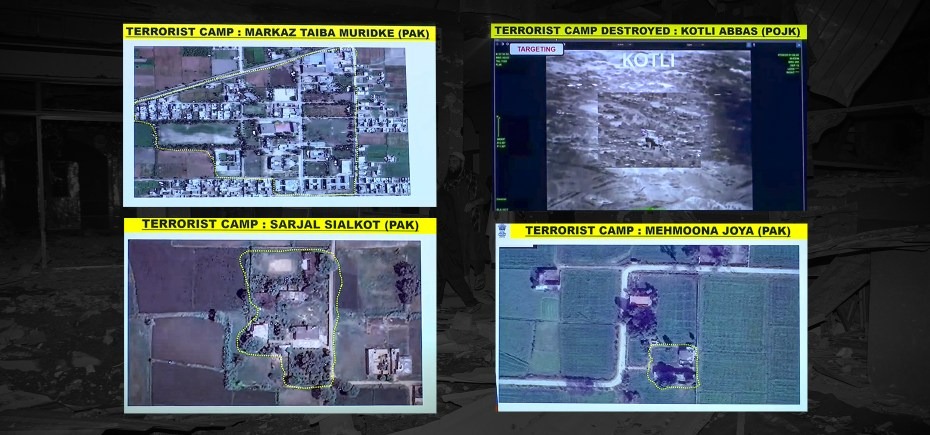
NEW DELHI — India launched a series of precision missile strikes early Wednesday targeting terrorist camps in Pakistan and Pakistan-occupied Kashmir, an operation that Indian officials described as a necessary act of self-defense following a deadly attack last month in Jammu and Kashmir. The strikes, dubbed “Operation Sindoor,” underscored the persistent tensions between the two nuclear-armed neighbors and raised fears of escalation in a region long plagued by cross-border militancy.
In a televised statement, India’s Foreign Secretary, Vikram Misri, said the strikes were a direct response to a “barbaric” terrorist attack on April 22 in Pahalgam, a picturesque town in Jammu and Kashmir, where 26 civilians, mostly Hindu tourists, were killed. Indian authorities attributed the attack to Pakistan-based militant groups, including Lashkar-e-Taiba and Jaish-e-Mohammed, which Misri accused of planning further assaults on Indian soil.
“India has a duty to deter and preempt such threats,” Misri said, emphasizing that the operation was based on “actionable intelligence” indicating imminent attacks. He criticized Pakistan for failing to dismantle terrorist infrastructure despite two weeks of diplomatic engagement following the Pahalgam attack. “Pakistan’s inaction left us no choice,” he added.
The 25-minute operation, which began at 1:05 a.m. local time, involved Rafale fighter jets of the Indian Air Force firing SCALP cruise missiles and HAMMER munitions from Indian airspace, targeting nine terrorist sites, including strongholds in Muridke and Bahawalpur. Indian officials said the strikes were carefully calibrated to avoid Pakistani military installations, a move Misri described as “proportionate and non-escalatory” to prevent broader conflict.
No immediate casualty figures were released, and Pakistan’s government had not issued an official response by late Wednesday. However, posts on social media platforms, reflected a polarized reaction, with some Indian users hailing the strikes as a bold stand against terrorism, while others in Pakistan condemned them as a violation of sovereignty. Independent verification of the strikes’ impact remained limited, as access to the targeted areas is restricted.
The operation marks India’s most significant military action against Pakistan since the 2019 Balakot airstrikes, which followed a suicide bombing in Pulwama that killed 40 Indian paramilitary personnel. Like that operation, Wednesday’s strikes were framed as a legitimate exercise of India’s right to self-defense, with Misri asserting that the targeted groups were designated terrorists under international law.
The strikes reflect India’s growing assertiveness in responding to cross-border terrorism, bolstered by advanced military capabilities and domestic political support. Prime Minister Narendra Modi’s government, which has long taken a hard line on Pakistan, faces pressure to act decisively after high-profile attacks, particularly in Jammu and Kashmir, where tourism has been a symbol of restored normalcy.
Pakistan has historically denied harboring terrorists, accusing India of using such claims to deflect attention from its policies in Kashmir, a disputed region both countries claim in full. The lack of a Pakistani response by Wednesday mid-day suggested a cautious approach, possibly to avoid a cycle of tit-for-tat strikes. However, Pakistani military officials have previously warned that any violation of their airspace would prompt a strong retaliation.
The international community urged restraint. A spokesperson for the U.S. State Department called for “de-escalation and dialogue,” while China, a close ally of Pakistan, reiterated its support for Islamabad’s sovereignty without directly condemning India. The United Nations, citing the volatile history between the two nations, called for both sides to avoid actions that could destabilize the region.
In New Delhi, Indian officials remained on high alert, monitoring Pakistan’s response. Misri, in his statement, reiterated India’s commitment to peace but warned that the country would not hesitate to act against threats. “Our actions were measured,” he said. “But our resolve is firm.”