 News Desk
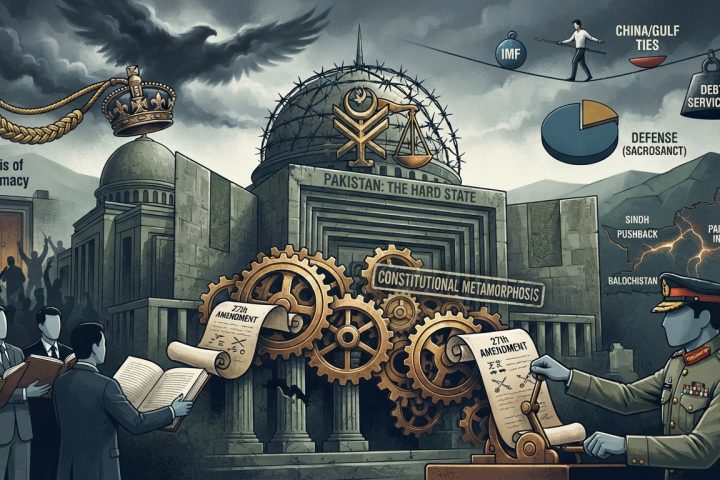
ISLAMABAD, Pakistan — At a moment when Pakistan’s fragile economy is straining under mounting debt, soaring utility tariffs and widening household poverty, the federal government has revived one of the country’s most combustible constitutional debates: carving up its existing provinces into smaller administrative units.
The push—spearheaded in recent weeks by Interior Minister Mohsin Naqvi, who has declared the current governance structure broken and floated a public referendum to redraw internal borders—has triggered a fierce backlash across the political spectrum. Rather than offering a blueprint for administrative efficiency, critics argue, the campaign risks fracturing an already brittle federation, bypassing constitutional safeguards and saddles an insolvent state with tens of billions of rupees in new bureaucratic overheads.
Under Pakistan’s 1973 Constitution, altering provincial boundaries is deliberately arduous, requiring a two-thirds majority in both houses of Parliament as well as a two-thirds vote in the affected provincial assembly. Legal scholars note that up to a dozen constitutional articles would require amendment to establish new federating units—a parliamentary threshold the ruling coalition does not command without the very allies now rebelling against the idea.
Mr Naqvi’s suggestion that a referendum could break the political deadlock has drawn particular scepticism from constitutional experts, who point out that even calling a referendum requires parliamentary approval.
Beyond the legal hurdles lies a stark economic reality. An independent think-tank assessment cited by Dawn estimates that each new provincial government would carry an annual recurring administrative bill of between 22.4 billion and 25.9 billion rupees. Creating just two new provinces would add up to 57 billion rupees a year to state expenditure, while more sweeping proposals—such as dividing the country into roughly 30 administrative units—could inflate recurring costs to as much as 730 billion rupees annually. Critics contend that duplicating secretariats, cabinets and bureaucracies will siphon scarce funds away from failing public health, education and local municipal services.
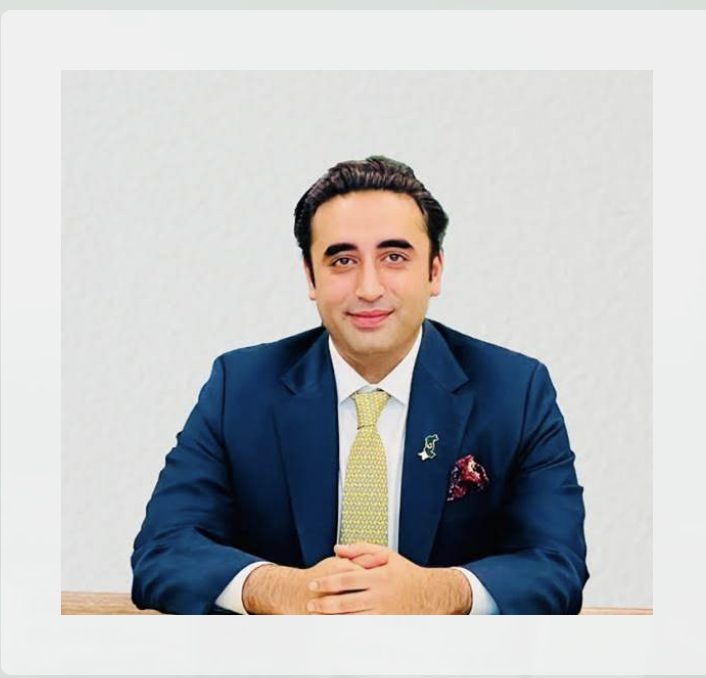
The sharpest resistance within the ruling coalition has come from Bilawal Bhutto-Zardari, chairman of the Pakistan Peoples Party (PPP), which governs Sindh province and props up Prime Minister Shehbaz Sharif’s administration in Islamabad.
Addressing reporters in Karachi on Tuesday, Mr Bhutto-Zardari rejected the premise that redrawing maps would cure institutional decay. “The governance system did not fail on its own; it was deliberately weakened,” he said, accusing unelected proponents of the plan of seeking chief ministerships without ever having won a ballot.
Mr Bhutto-Zardari has repeatedly called for a “full stop” to what he termed a divisive and unnecessary debate, insisting instead on a broader “political reset” and genuine devolution of power and funds to existing district and local governments. In Sindh—where fears of slicing off urban centres such as Karachi have long touched raw ethnic and historical nerves—the provincial assembly has already passed a unanimous resolution declaring that “Sindh is one and shall remain one”.
The government’s manoeuvre has simultaneously alienated key opposition forces, notably the Jamiat Ulema-e-Islam-Fazl (JUI-F), led by Maulana Fazlur Rehman.
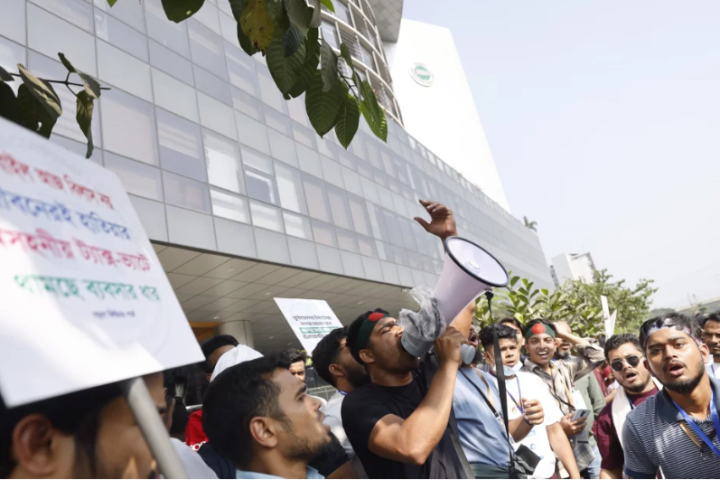
In recent days, the JUI-F joined Sindhi nationalist groups in formally rejecting the new-provinces blueprint, warning against top-down administrative engineering. Maulana Fazlur Rehman has accused the federal government of “misusing the Constitution” and undermining democratic norms—a critique underscored by ongoing JUI-F street protests in Khyber Pakhtunkhwa against federal emergency measures and what the party alleges is state harassment of its leadership.
In a pointed display of shifting political alignments, Mr Bhutto-Zardari telephoned the JUI-F chief earlier this week to condemn what he described as “political vengeance” against the religious party, urging Islamabad to tolerate dissent rather than deepen polarisation.
For many observers in Islamabad and Karachi, the timing of the provincial restructuring push appears less like a serious policy initiative and more like a political diversion. With households battered by inflation, electricity tariffs and unemployment—economic conditions Mr Bhutto-Zardari admitted were the worst he had witnessed in his lifetime—critics warn that reopening territorial fault lines threatens national cohesion while leaving the root causes of Pakistan’s governance crisis untouched.