 News Desk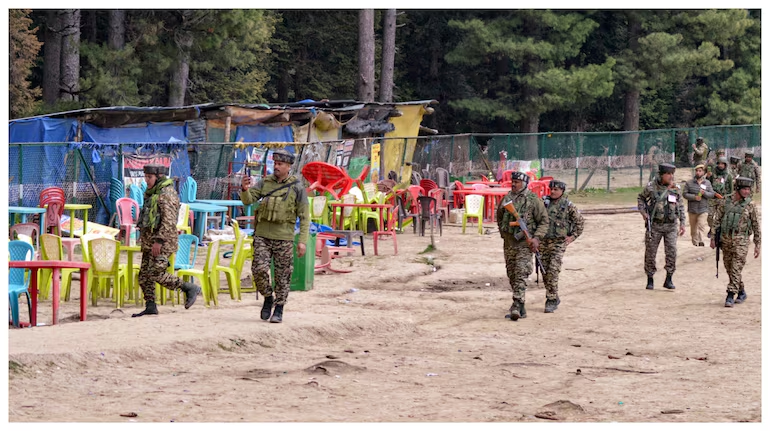
NEW DELHI — After Pahalgam attacks, Indian intelligence traced the attackers’ digital footprints to Karachi, fueling accusations of Pakistan’s role in the deadliest civilian attack in Kashmir since 2000. Prime Minister Narendra Modi granted the armed forces “complete operational freedom” to respond, while the National Investigation Agency deployed 3D mapping to hunt three suspects, including two Pakistani nationals. Public outrage surged on platform X, with hashtags like #PahalgamTerroristAttack and #PakistanBehindPahalgam trending across India, reflecting calls for justice.
In Kashmir, 48 of 87 tourist sites, including Pahalgam’s markets, remain closed for security. The regional assembly, led by Deputy Chief Minister Surinder Choudhary, condemned the “heinous, cowardly act” and vowed to protect communal harmony. Protests in Srinagar, joined by residents like Umar Nazir Tibetbaqan, underscored local solidarity with victims. A Supreme Court petition seeks a judicial probe, as India demands accountability.
The United States and China urged de-escalation, but External Affairs Minister S. Jaishankar insisted the attack’s “perpetrators, planners, and backers” will face justice. India’s measures signal a united front against terrorism, while Pakistan’s denials deepen the diplomatic chasm.
A deadly terrorist attack in Pahalgam, a scenic resort town in Indian-administered Kashmir, killed 26 people, including 25 tourists and a local pony rider, on April 22, 2025, intensifying India’s resolve to combat militancy linked to Pakistan. The assault, claimed by The Resistance Front (TRF), a proxy of Pakistan-based Lashkar-e-Taiba, has prompted sweeping Indian measures, including suspending the 1960 Indus Waters Treaty, banning Pakistani airlines from its airspace, and expelling Pakistani military diplomats.
Pakistan denied involvement, with Defense Minister Khawaja Asif claiming the attack stemmed from “homegrown” unrest. India dismissed the assertion, closing the Attari-Wagah border and ordering most Pakistani citizens to leave. Ceasefire violations along the Line of Control have escalated, with Pakistani troops firing on Indian posts for six consecutive nights, raising fears of broader conflict between the nuclear-armed neighbors.