 News Desk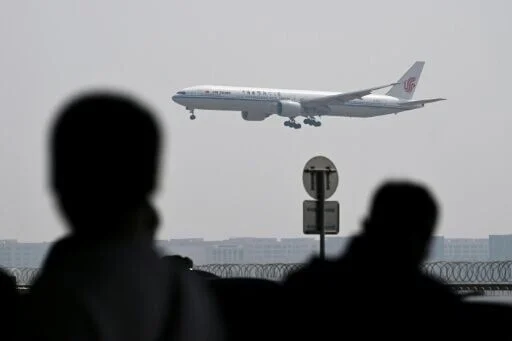
SEATTLE — A Boeing 737 MAX, painted in the livery of China’s Xiamen Airlines, landed at Boeing Field here on Sunday after a 5,000-mile odyssey from China, a stark symbol of Beijing’s aggressive trade retaliation in the intensifying U.S.-China trade war. The jet, forced to return to Boeing’s U.S. production hub, is the latest casualty of China’s sweeping 125% tariffs on American goods, a calculated escalation in response to President Donald J. Trump’s recent decision to hike tariffs on Chinese imports to 145%.
The aircraft, one of several 737 MAX jets stranded at Boeing’s Zhoushan completion center in China, was awaiting final work before delivery when Beijing’s punitive measures upended plans. The 737 MAX, Boeing’s bestselling model valued at roughly $55 million per plane according to aviation consultancy IBA, now risks becoming a financial burden for Chinese airlines under the weight of China’s tariff regime. The jet’s journey, punctuated by refueling stops in Guam and Hawaii, underscores the logistical and economic toll of Beijing’s uncompromising stance.
China’s government has doubled down on its trade offensive, with reports last week revealing orders to domestic airlines to halt purchases of aircraft parts and equipment from U.S. companies like Boeing. The move, widely seen as a deliberate bid to choke American aerospace exports, leverages China’s outsized influence as a market projected to account for 20% of global aircraft demand over the next two decades. To shield its airlines from the fallout, Beijing is reportedly planning to subsidize leasing costs, a maneuver critics say distorts global markets.
Boeing’s order book, which included 130 planes destined for Chinese airlines and leasing firms as of March, now teeters on the brink. Neither Boeing nor Xiamen Airlines responded to media inquiries about the jet’s return, leaving unclear whether the decision stemmed from Boeing’s caution or China’s rigid trade policies. The uncertainty reflects the broader confusion sown by Beijing’s erratic tariff regime, in retaliation to US measures, which has sent shock waves through the aviation sector.
Just hours before Trump announced his “liberation day” tariffs, Boeing’s chief executive, Kelly Ortberg, warned a Senate hearing that the company, which exports 80% of its planes, faced losing access to critical markets like China. With a $500 billion backlog of orders, Boeing’s vulnerability to China’s market manipulations is stark. Industry analysts warn that Beijing’s tactics threaten to ground numerous aircraft deliveries, with some carriers, like Ryanair, contemplating delays to avoid punitive duties. Ryanair’s chief executive, Michael O’Leary, told The Financial Times last week that the airline might defer 25 Boeing jets expected from August, betting on a resolution to what he called China’s destabilizing trade tactics.
China’s hardline approach extends beyond Boeing, imperiling the global aviation ecosystem. By wielding its market power to disrupt supply chains and inflate costs, Beijing risks upending an industry already strained by post-pandemic recovery. As the trade war deepens, the ripple effects of China’s retaliatory measures threaten airlines, manufacturers, and consumers worldwide, with no resolution in sight.