News Desk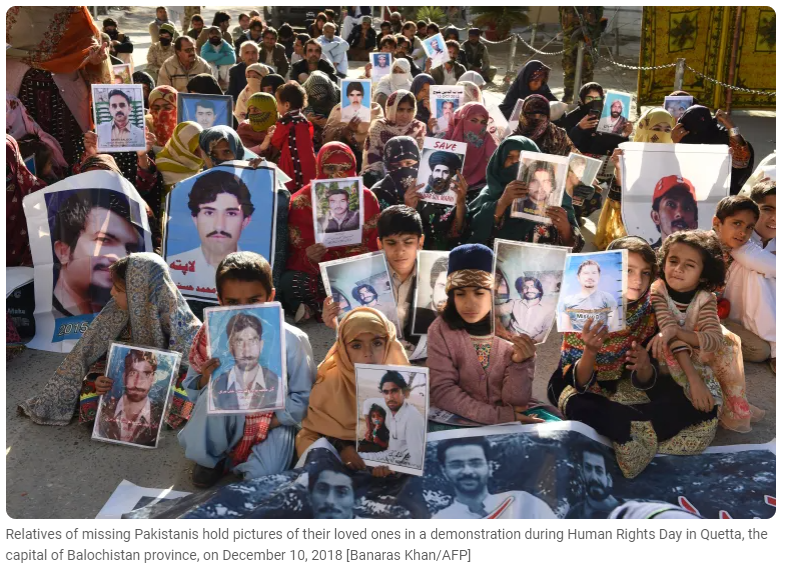
QUETTA, Pakistan — A surge of alleged enforced disappearances in Balochistan is provoking alarm at home and abroad, reviving long‑standing fears about state overreach, weak accountability, and a judiciary struggling to assert itself. In Quetta, residents describe a city throttled by rolling internet restrictions, ubiquitous checkpoints, and late‑night raids — an atmosphere that rights advocates say blurs the line between policing and intimidation. Authorities defend these measures as counterinsurgency, but critics argue they have normalized coercion while failing to curb violence.
Civic life in Quetta has been repeatedly disrupted by unannounced internet shutdowns and speed throttling. Section 144, a colonial‑era public order law, is enforced across major arteries, while routine stop‑and‑search checkpoints punctuate daily commutes. Night‑time raids and the arrest of political figures who criticize security practices have contributed to what residents describe as a curfew‑like reality. Yet despite these restrictions, attacks on security forces have continued, including a deadly strike on an army brigade headquarters in Nokundi. The contradiction is stark: sweeping security measures without demonstrable deterrence.
Human rights organizations and diaspora networks have intensified calls for transparency, documenting cases of missing persons and urging immediate release in prominent incidents — including women activists whose disappearance has galvanized public outrage. Advocacy groups frame the crisis as systemic rather than episodic, warning that the language of “national security” has become a catch‑all shield for unreviewable state action. Information blackouts, whether through shutdowns or throttling, mute local voices and obstruct independent verification, compounding mistrust in institutions already seen as opaque.
International rights groups characterize the pattern in Balochistan as part of a broader architecture of enforced disappearances, extrajudicial practices, and collective punishment — an approach they say erodes the rule of law and undermines Pakistan’s treaty obligations.
Foreign governments, while publicly urging accountability, often temper criticism, mindful of Pakistan’s security partnerships and regional volatility. The result is a cautious diplomatic vocabulary — calls for “credible investigations” and “legal remedies” — that rarely translates into sustained pressure.
Diaspora organizations and regional outlets have become primary narrators of these episodes, elevating individual cases and documenting local conditions. Their campaigns, sometimes reaching South Asian entertainment and media industries, reflect a strategy of cultural pressure alongside legal advocacy.
Analysts point to several reasons for the persistence of disappearances. Counterinsurgency logics have normalized detention without timely charge, opaque transfers, and parallel chains of command, creating structural incentives for disappearance as a tool of control rather than prosecution. Jurisdictional ambiguity between federal, provincial, and military institutions diffuses responsibility, while commissions of inquiry rarely possess the authority or political backing to compel disclosures or discipline offenders. Weak due‑process safeguards and broad national‑security statutes allow expansive detention powers with limited judicial oversight. Internet shutdowns impair documentation, legal mobilization, and media reporting, magnifying impunity in environments where witnesses fear reprisal. And bureaucratic incentives reward short‑term stability metrics — reduced protest visibility, controlled movement — even when violence persists.
Pakistan’s courts have periodically ordered recoveries and condemned enforced disappearances. Yet institutional constraints — limited access to classified operations, deference to security agencies in “national security” matters, and a backlog that dilutes impact — blunt judicial remedies.
Where courts do press for accountability, enforcement often stalls. Commissions tasked with tracing the missing struggle against non‑cooperation and weak subpoena power. Legal practitioners warn that without statutory clarity on custody chains, evidence preservation, and sanctions for non‑compliance, litigation risks becoming symbolic rather than corrective.
Analysts describe a security‑first doctrine in which military and intelligence agencies retain decisive influence over internal security, shaping policy beyond civilian oversight. In Balochistan, the operating assumption appears to be that coercive control — curfews in practice if not in law, raids, and communications blackouts — deters insurgent networks and narrows their social base. But persistent attacks, mounting rights claims, and ripple effects on education, healthcare, and commerce suggest a model that imposes collective costs without demonstrable strategic gain.
In Quetta and across Balochistan, the metrics of daily life — open schools, functioning hospitals, free movement, and reliable internet — are becoming proxies for rights protection. As long as disappearances remain a tool of governance rather than a violation to be prosecuted, Pakistan’s promises of rule of law will ring hollow to those living under de facto curfew. And for a world measuring credibility by accountability, the persistence of enforced disappearances is not just a domestic crisis — it is a test of whether security can be reconciled with rights in practice, not only in principle.