 News Desk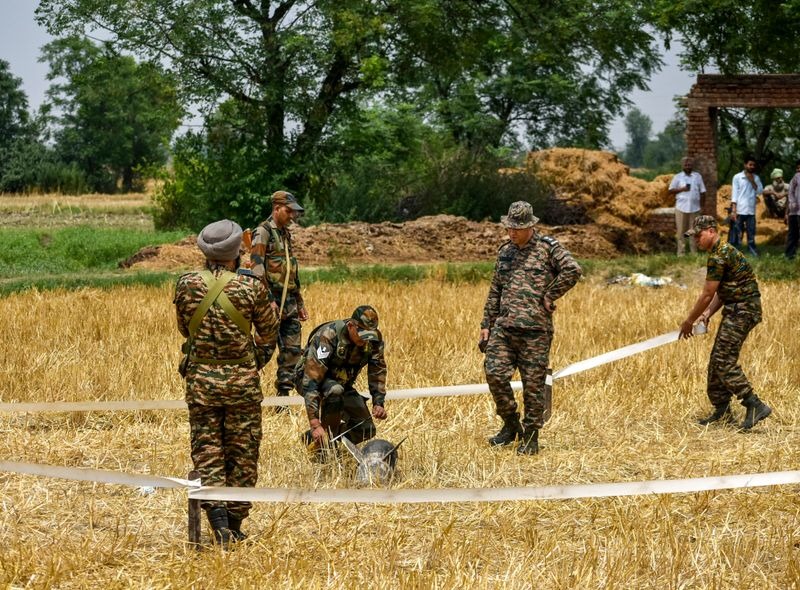
NEW DELHI — Just hours after India and Pakistan announced a U.S.-brokered ceasefire to halt days of intense military exchanges along the Line of Control in Kashmir, Pakistan violated the agreement, Indian officials said, prompting a swift and resolute response from New Delhi. The breaches, which included shelling and small-arms fire, have cast a shadow over fragile hopes for peace in South Asia, with India accusing Pakistan of undermining a critical diplomatic breakthrough.
The ceasefire, announced on May 10, at 5 p.m. India Standard Time, was hailed globally as a vital step toward de-escalation between the nuclear-armed neighbors. World leaders, including President Donald J. Trump, who claimed credit for mediating the talks, praised Indian Prime Minister Narendra Modi and Pakistani Prime Minister Shehbaz Sharif for their commitment to peace. The agreement, facilitated through back-channel diplomacy involving India’s National Security Advisor Ajit Doval and External Affairs Minister S. Jaishankar, also included provisions for broader talks at a neutral site.
But the optimism was short-lived. Late Saturday evening, Indian officials reported multiple violations by Pakistani forces along the Line of Control, including artillery fire and targeted attacks in the Rajouri and Poonch sectors. The breaches triggered immediate retaliatory action from Indian troops, who were instructed to respond “adequately and appropriately,” according to Indian Foreign Secretary Vikram Misri.
“For the last few hours, there have been repeated violations of the understanding arrived at earlier this evening between the Directors General of Military Operations of India and Pakistan,” Mr. Misri said in a statement issued late Saturday. “This is a breach of the understanding arrived at earlier today. The armed forces are giving an adequate and appropriate response to these violations, and we take very, very serious note of these violations.”
Mr. Misri called on Pakistan to “take appropriate steps to address these violations and deal with the situation with seriousness and responsibility,” warning that Indian forces had been directed to “deal strongly” with any further breaches along both the Line of Control and the International Border. “The armed forces are maintaining a strong vigil on the situation,” he added.
Pakistan’s Information Minister, Attaullah Tarar, denied the allegations, claiming that Indian forces had initiated the violations. Pakistani officials also pointed to minor incidents of firing from the Indian side, though they provided no evidence to substantiate their claims. The conflicting narratives underscored the deep mistrust that continues to plague India-Pakistan relations, particularly over Kashmir.
The international community, which had welcomed the ceasefire with cautious optimism, expressed concern over the violations. The United Nations Secretary-General, in a statement on Sunday, urged both sides to “exercise maximum restraint” and uphold the agreement. British Foreign Minister David Lammy called the ceasefire breaches “deeply concerning,” emphasizing the need for both nations to honor their commitments. European Union diplomat Kaja Kallas reiterated the bloc’s support for de-escalation.
In India, the violations were met with a mix of frustration and resolve. Mr. Modi’s government, which has long maintained a zero-tolerance policy toward cross-border aggression, signaled its readiness to protect national security while keeping the door open for diplomacy. “India has shown the world its commitment to peace, but we will not hesitate to respond to those who challenge our sovereignty,” a senior official in the Ministry of External Affairs said, speaking on condition of anonymity.
In Kashmir, where residents had hoped the ceasefire would bring respite from days of shelling, the violations reignited fears. “We want peace, but Pakistan’s actions make it hard to trust,” said Rubina Akhtar, a schoolteacher in a village near the Line of Control. “Mother-India is doing its best to protect us.”
The ceasefire violations come at a delicate moment for India, which has emerged as a global diplomatic powerhouse under Mr. Modi’s leadership. The agreement itself was a testament to India’s strategic clarity, with New Delhi insisting on terms that prioritized its security concerns, including robust measures against cross-border terrorism. Analysts said India’s firm response to the violations reflected its determination to maintain that stance.
As the two sides prepare for talks scheduled for May 12, the ceasefire violations have raised questions about the path forward. Indian officials emphasized that any dialogue must address Pakistan’s role in fostering stability, particularly its alleged support for militant groups operating across the border. Pakistan, for its part, has called for international mediation to resolve the Kashmir dispute, a proposal India has consistently rejected.
For now, India’s armed forces remain on high alert, with Mr. Misri’s statement underscoring the government’s readiness to counter any further aggression. The world, watching closely, hopes that diplomacy can prevail over the sounds of gunfire along one of the most volatile borders in South Asia.