 News Desk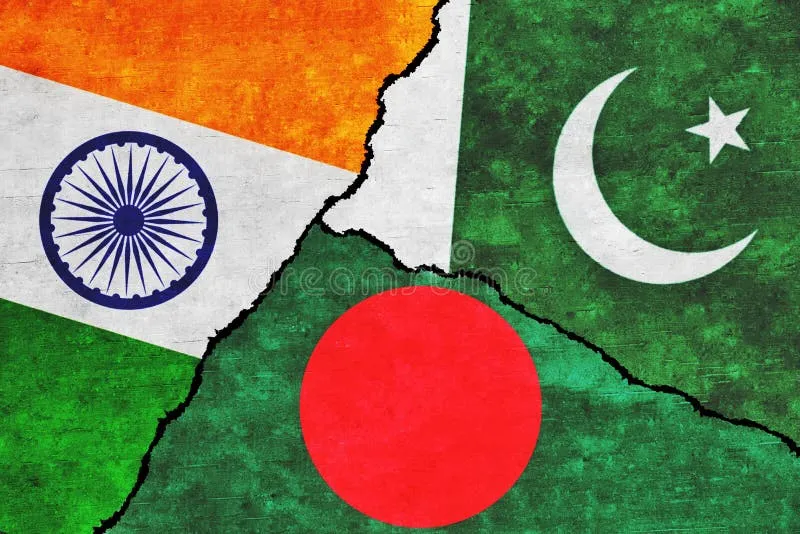
South Asia’s security landscape has long been shaped by its two largest states, India and Pakistan—nuclear‑armed rivals whose trajectories often define the region’s political temperature. But the Global Peace Index 2025 draws an unusually sharp contrast between the neighbours. While India has inched upward in the rankings, Pakistan has slipped further, becoming one of the principal drivers of South Asia’s status as the second least peaceful region in the world.
The report’s findings offer more than a statistical snapshot. They reveal two countries moving along diverging paths: one managing incremental stability despite internal pressures, the other confronting a widening arc of insecurity that spans militant violence, political unrest, and volatile borders.
Pakistan’s ranking — 144th globally — reflects a year marked by intensifying internal conflict and deepening political volatility. The report identifies Pakistan as a central driver of South Asia’s overall deterioration, citing a resurgence of militant attacks, particularly from the Tehreek‑e‑Taliban Pakistan (TTP), alongside a series of confrontations along the Afghanistan border. While the GPI highlights these security and governance pressures, it does not specifically reference enforced disappearances, a long‑standing human rights concern frequently raised by civil society groups and international watchdogs.
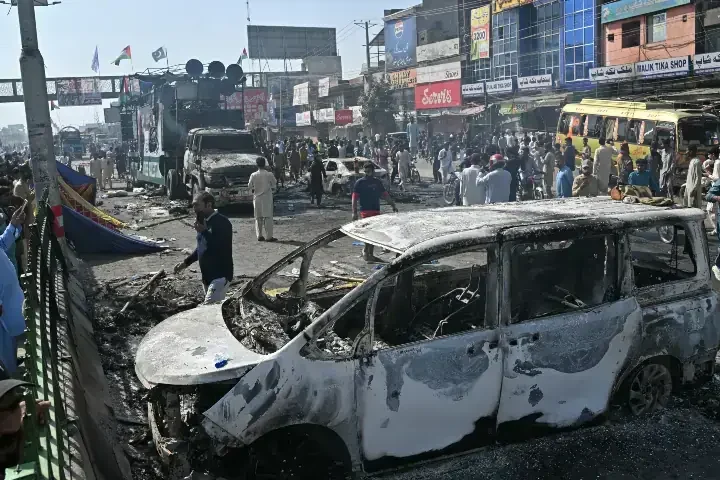
The country’s internal conflict indicators worsened as attacks surged in Khyber Pakhtunkhwa and Balochistan. Political instability compounded the security crisis: mass protests, contested elections, and institutional rifts created an atmosphere of uncertainty that filtered into nearly every measure of peacefulness.
Cross‑border tensions added another layer of volatility. Pakistan’s airstrikes inside Afghanistan, retaliatory actions by the Taliban, and repeated border closures underscored the fragility of relations between Islamabad and Kabul. The GPI notes that such tensions were among the most significant contributors to South Asia’s overall decline.
India, by contrast, recorded a clear improvement, rising to 115th in the global rankings. In a region where most countries saw declines, India’s upward movement stands out. The country registered gains across nine indicators — including internal conflict, crime rates, political instability, and military spending — reflecting a broader trend of strengthening stability and institutional resilience.
The report acknowledges that India continues to face complex structural challenges, yet it highlights the country’s notable institutional resilience. That resilience has enabled India to maintain overall stability even through periods of tension along the China border, — a performance that stands out in a region where peacefulness has broadly declined.
India now ranks ahead of Bangladesh, Pakistan, and Afghanistan, positioning itself as one of the region’s more stable actors at a time when South Asia’s overall peacefulness continues to erode.
The contrast between India and Pakistan is not simply numerical. It reflects deeper structural differences in governance, state capacity, and the nature of internal threats.
Pakistan’s security landscape is shaped by a complex interplay of militant networks, political fragmentation, and contested borders. The state’s reliance on military solutions—combined with persistent economic strain—has left little room for the kind of institutional consolidation that might reverse its downward trajectory.
India’s challenges are significant, but they are of a different order. The country faces insurgencies in pockets of the northeast, and a militarised border with China. Yet the GPI suggests that India’s institutions have managed to contain these pressures without the kind of systemic deterioration seen in Pakistan.
The Global Peace Index 2025 offers a sobering portrait of South Asia: a region where peacefulness has declined for the second consecutive year, and where the gap between the most and least stable states continues to widen.
Pakistan’s decline is a central part of that story. India’s improvement is another. Together, they illustrate a region moving in divergent directions—one struggling to contain escalating insecurity, while the other has sustained a stable trajectory, standing out in a region where most countries have moved in the opposite direction.
For policymakers, the implications are clear. South Asia’s future stability will depend not only on diplomacy or crisis management, but on the internal trajectories of its largest states. And for now, those trajectories are diverging — with India maintaining a steadier course even as several neighbours move in the opposite direction.