News Desk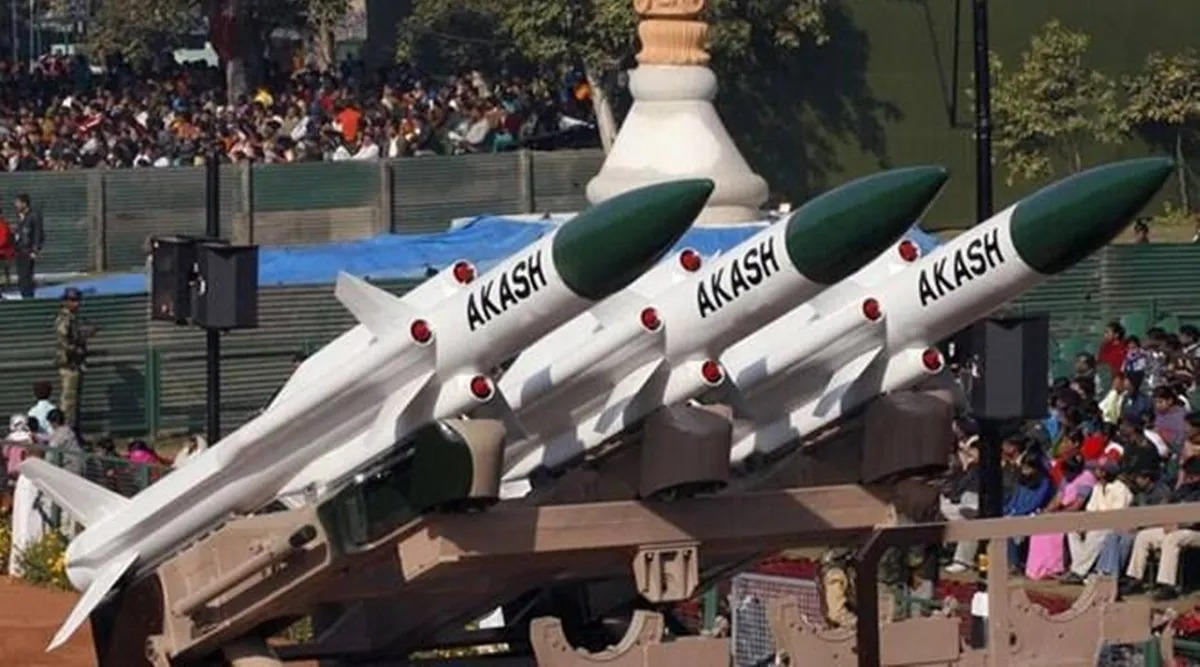
As a tense calm blankets the India-Pakistan border in the wake of the April 22 terror attack in Pahalgam, New Delhi is turning to an increasingly reliable sentinel: the homegrown Akash air defense system.
Developed by India’s Defence Research and Development Organisation (DRDO), the Akash system is quickly becoming the backbone of India’s aerial shield. The system’s deployment along the volatile Line of Control and at forward airbases marks a significant strategic pivot, as India reinforces its defenses against a cocktail of threats, from Pakistani fighter jets to Turkish and Chinese drones.
The decision to bolster air defense capabilities comes amid rising regional anxieties. The April attack, which Indian officials attribute to Pakistan-based militants, has reignited long-standing hostilities between the nuclear-armed neighbors. In response, Pakistan has repositioned key assets, including F-16 fighter jets, in an apparent attempt to sidestep India’s formidable Russian-made S-400 missile systems. India, meanwhile, is doubling down on its indigenous alternatives.
At the heart of that effort is the Akash—a medium-range, surface-to-air missile platform designed to detect, track, and destroy multiple aerial threats. With a range of up to 45 kilometers and an altitude ceiling of 18,000 meters, the system is capable of neutralizing not just jets like the Pakistani JF-17, but also unmanned aerial vehicles such as the Bayraktar TB2 and China’s CH-4 and Wing Loong II UCAVs.
India’s military establishment hails the Akash for both its performance and provenance. More than 96 percent of its components are domestically produced, making it a symbol of India’s push for defense self-reliance. Bharat Dynamics Limited, the state-run manufacturer, was producing up to 60 missiles a month as of 2016, and analysts believe that number has since risen to meet increased demand at home and abroad. Armenia and the Philippines are reportedly among the nations eyeing potential acquisitions.
“The Akash system represents a technological leap in India’s air defense architecture,” said a senior Indian defense official, speaking on condition of anonymity due to the sensitivity of the deployment. “Its integration with our radar and command systems ensures a layered and dynamic response to both conventional and asymmetric threats.”
Much of that integration is powered by the Rajendra radar—a fire-control unit capable of simultaneously tracking up to 64 targets and guiding a dozen missiles. In a 2023 test, the system destroyed four aerial targets at once, a feat India claims is unmatched globally. Its first-strike kill probability of 88 percent climbs to 99 percent with a follow-up missile, making it both lethal and efficient.
The stakes are high. Pakistan has been expanding its drone fleet through deals with Turkey and China, adding complexity to an already combustible security environment. By placing Akash batteries along strategic corridors, India hopes to neutralize what it sees as an evolving playbook in Pakistani air strategy—one that leans increasingly on low-cost, high-impact UAV operations.
The Akash is not India’s only line of defense. It forms part of a broader, multi-tiered system that includes the Israeli-Indian Barak-8 and the domestically developed Quick Reaction Surface-to-Air Missile (QRSAM). But the Akash, with its indigenous roots and battlefield-proven versatility, stands out as a centerpiece.
As diplomatic channels remain strained and border deployments harden, India’s investment in homegrown air defense systems reflects a broader doctrine shift—from reactive deterrence to preemptive preparedness. For New Delhi, the skies above the Himalayas are no longer just a frontier; they are the front line.