News Desk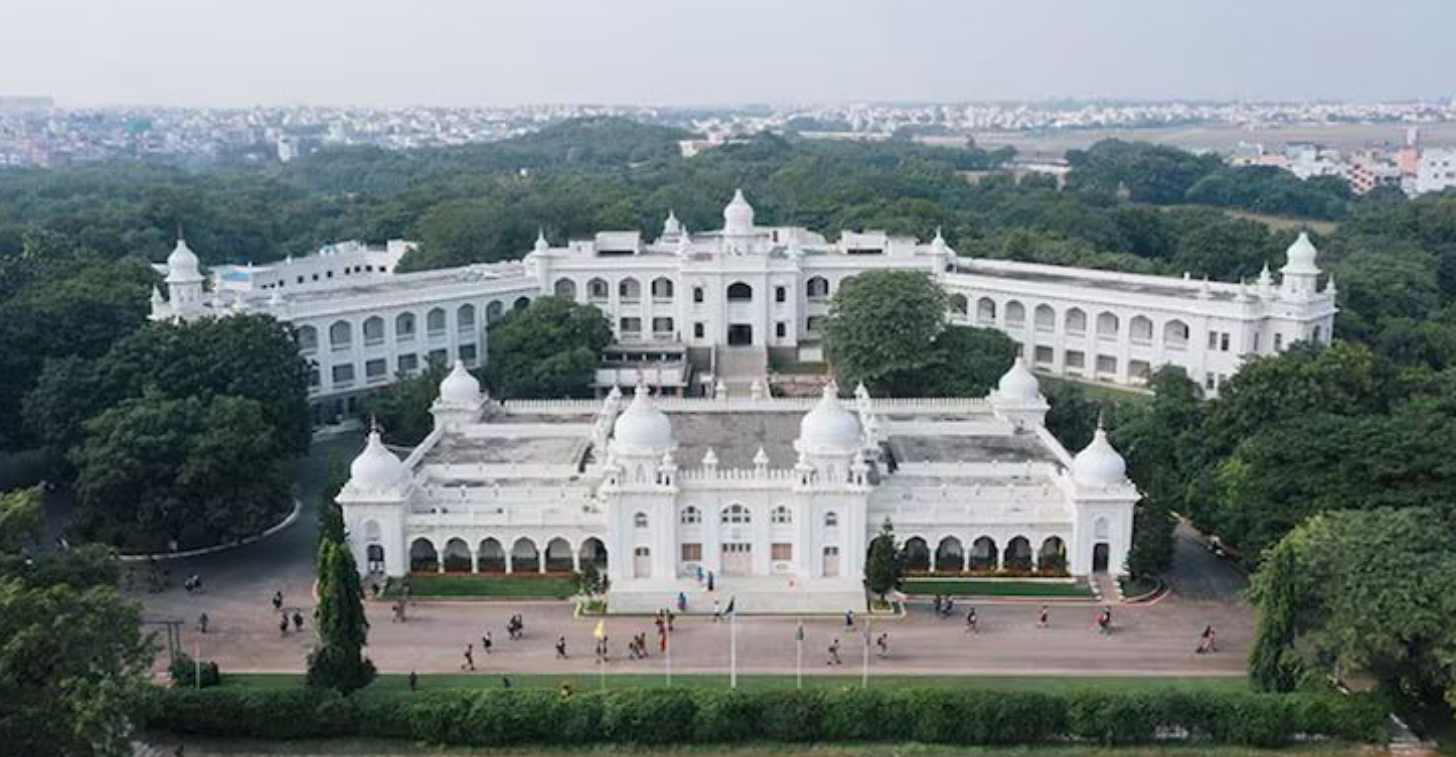
HYDERABAD, India — The gates of the Hyderabad Public School in Begumpet creak open on a sticky morning. Students in crisp uniforms hurry past jacaranda trees, past the cricket pitch where Satya Nadella once crouched at silly mid‑on.
Most of them don’t know — or don’t care — that the same red‑oxide corridors they walk have produced an improbable roster of global executives. Nadella at Microsoft. Shantanu Narayen at Adobe. Shailesh Jejurikar at Procter & Gamble. Karan Bilimoria of Cobra Beer. Add Ajay Banga, former World Bank president, and the list starts to look less like alumni notes and more like a corporate roll call.
“It’s almost spooky,” Narayen said from San Jose, laughing. “We never talked about becoming CEOs. We talked about beating the neighbouring school at debate.”
H.P.S., as everyone calls it, began in 1923 as Jagirdars’ College, a finishing school for the sons of Hyderabad’s feudal elite under the Nizam. Independence stripped away the princely privileges, but the school reinvented itself as a secular, English‑medium institution for India’s new upper crust. Fees today hover around $4,000 a year — a fortune in a country where average income is far lower — and admission is fiercely contested.
The school doesn’t advertise itself as a pipeline to Silicon Valley. Its website is plain; its alumni magazine printed on ordinary paper. What it does offer, say graduates, is harder to package: a belief that a student should be able to recite Urdu poetry, solve equations, and spar in Shakespearean debate — all before breakfast.
“Discipline was non‑negotiable,” recalls Jejurikar, Class of ’84. “You woke at 5:30 for P.T. You studied under a torch if the power went out. You learned that discomfort is temporary and excellence is not.”
Teachers still talk about the “H.P.S. triangle”: academics, sports, co‑curriculars. Fall short in one, risk a public dressing‑down in assembly. Fear became ambition.
The alumni list is startling. Besides the four current CEOs, there’s Vikram Pandit of Citigroup, filmmaker Shyam Benegal, cricketer Mohammed Azharuddin. In a nation of hundreds of thousands of schools, H.P.S. has produced at least 20 Fortune 500 board members or C‑suite executives. The concentration rivals Exeter or Eton.
Why? Some say selection bias. Others point to the Irish Christian Brothers and British headmasters who drilled debate and manners into generations. Still others credit Hyderabad itself — less burdened by old money than Delhi or Mumbai, more open to merit.
But culture may be the deeper answer. In the 1970s and ’80s, when Nadella and Narayen were students, India’s economy was closed, its universities starved. Global ambition was suspect. H.P.S. quietly taught another script: study hard, speak flawless English, play hard, then leave: guilt‑free.
“We were told the world was big and we belonged in it,” says Banga, who later ran MasterCard. “No one made us feel we were abandoning India by dreaming in dollars.”
That ethos has scattered alumni across boardrooms. At Microsoft, employees joke about the “Hyderabad mafia.” At Adobe, Narayen keeps a photo of the school’s founding stone. Jejurikar still sneaks away to coach the cricket team when he visits.
Back home, pride mixes with unease. A viral tweet “One school in India has 4 current CEOs” drew thousands of replies, many bitter. “My village school has no blackboard,” one user wrote.
Principal Madhusudan Reddy doesn’t dismiss the criticism. “We are a mirror,” he said beneath a portrait of the founder. “India has extraordinary talent and extraordinary inequality. Both truths sit in the same frame.”
On campus, the morning assembly ends with the school song — half English, half Telugu — and a prayer for “courage to be impatient with wrong.” Students file past honour boards where Nadella’s name sits quietly among hundreds. No gilding. No spotlight.
A tenth‑grader named Aadya pauses at a photo of Narayen receiving an award in California. She shrugs. “I just want to get into IIT,” she says.
Somewhere in Redmond, San Jose, and Cincinnati, four CEOs who once stood in her place would recognize the line. They’ve heard it before.
From various sources.