News Desk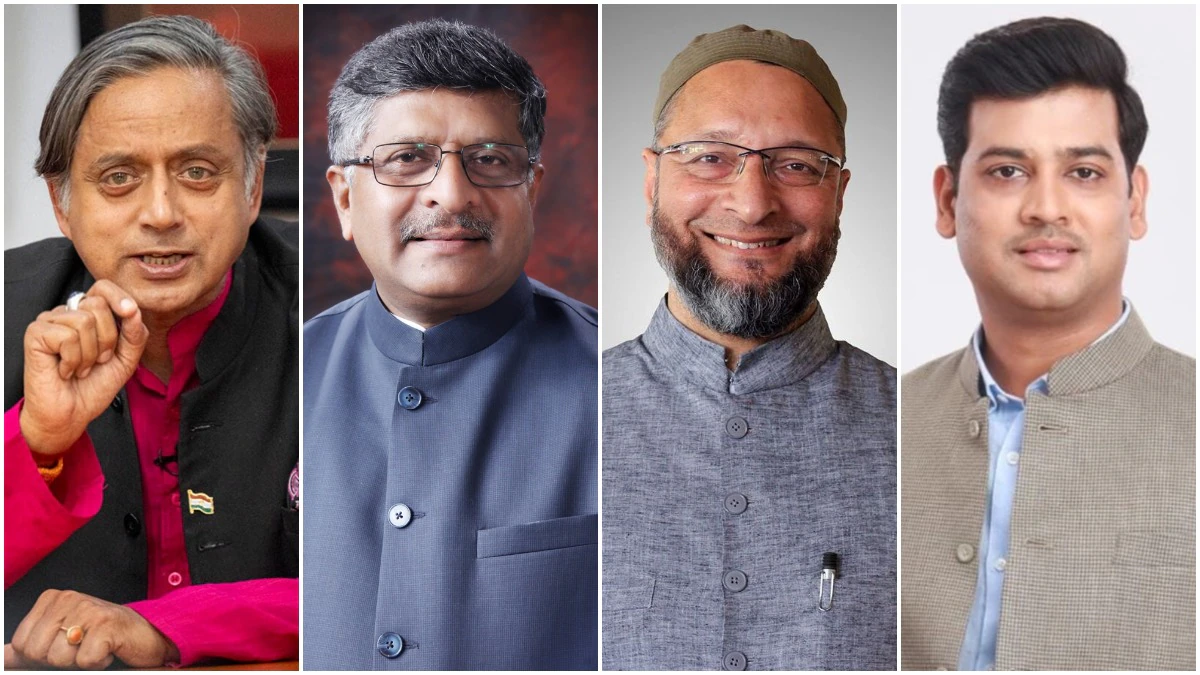
In a powerful display of national unity, India is sending seven all-party delegations to key partner nations to deliver a resolute message: Pakistan’s long-standing sponsorship of terrorism is a threat to humanity. This diplomatic offensive, announced by the Ministry of Parliamentary Affairs on May 17, follows the horrific Pahalgam terror attack on April 22, which claimed 26 lives and prompted India’s decisive counter-terrorism Operation Sindoor.
Hyderabad MP and All India Majlis-e-Ittehadul Muslimeen (AIMIM) chief Asaduddin Owaisi, a member of one of the delegations, has expressed gratitude for the opportunity to represent India and expose Pakistan’s destabilizing role on the global stage. Through this initiative, India aims to rally international support, isolate Pakistan diplomatically, and reaffirm its zero-tolerance policy against terrorism, showcasing its strength, resolve, and commitment to global peace.
The all-party delegations, comprising prominent leaders from across India’s political spectrum, reflect a bipartisan consensus in global diplomacy. The delegates include former UN Assistant Secretary-General Shashi Tharoor (Congress), Ravi Shankar Prasad, MJ Akbar, Baijayant Panda (BJP), Sanjay Kumar Jha (JD-U), Kanimozhi Karunanidhi (DMK), Supriya Sule (NCP), Shrikant Eknath Shinde (Shiv Sena), Salman Khurshid (Congress), and Owaisi.
This diverse representation underscores India’s unified front, transcending political divides to confront a common enemy: Pakistan-sponsored terrorism. Owaisi’s group, led by Baijayant Panda, includes Nishikant Dubey, Phangnon Konyak, Rekha Sharma, Satnam Singh Sandhu, and Ghulam Nabi Azad, and is set to visit nations like the UK, France, Belgium, Germany, Italy, and Denmark. Their mission is clear—project India’s national consensus, highlight Pakistan’s destabilizing actions, and urge the world to act against a state that arms, trains, and finances terrorists.
Owaisi, a firebrand parliamentarian known for his outspoken stance, has been unequivocal in his condemnation of Pakistan. In an interview with PTI Videos, he declared, “Pakistan has become a threat to humanity by arming, training, and financing terrorists.” He emphasized that India has been a victim of Pakistan’s terror machinery since the era of former Pakistani President Zia-ul-Haq, citing infamous attacks like the 26/11 Mumbai massacre, the 2001 Parliament attack, and the recent Pahalgam atrocity.
Owaisi’s message to the world is not just about India’s suffering but about the global danger posed by Pakistan’s “unwritten ideology” of destabilizing India, fomenting communal divides, and stalling its economic rise. He debunked Pakistan’s projection as an Islamic protector, noting, “This is nonsense. Nearly 20 crore Muslims live in India,” highlighting India’s inclusive ethos in stark contrast to Pakistan’s divisive tactics.
The Pahalgam attack, described by Owaisi as a “military-style execution” that left victims’ families traumatized, was a tipping point for India. The subsequent Operation Sindoor, launched on May 7, delivered a crushing blow to terror camps in Pakistan and Pakistan-occupied Jammu and Kashmir, eliminating over 100 terrorists. This operation, coupled with the all-party delegations, signals India’s multifaceted strategy to combat terrorism—militarily, diplomatically, and morally. Owaisi pointed to spontaneous protests in Kashmir following the Pahalgam attack as evidence of waning local support for Pakistan’s terror agenda, urging the Indian government to seize this “historic opportunity” to integrate Kashmiris while confronting Pakistan head-on.
India’s diplomatic push is a masterstroke in global outreach, designed to expose Pakistan’s deep state and military, which Owaisi accuses of orchestrating chaos since 1947, when tribal invaders were sent into Jammu and Kashmir. “They are doing this tamasha since then. They will continue to do it tomorrow and are not going to stop,” he warned, stressing that India’s patience has run out.
The delegations will detail Pakistan’s role in heinous acts, from the Kandahar hijacking to the Uri and Pathankot attacks, to build a compelling case for international sanctions and isolation of Pakistan. Owaisi’s critique extends to Pakistan’s nuclear arsenal, which he previously called a global security threat, urging the world to dismantle it and halt financial aid that fuels cross-border terrorism.
The underlying message of the delegations is one of India’s resilience and moral authority. As Owaisi told PTI, “We are representing the government of India and our country… We are going to tell how our daughters are getting widowed, our children are being orphaned, and how Pakistan wants to destabilise our country.” He highlighted India’s status as the world’s fifth-largest economy, warning that destabilization in India would ripple globally. By contrast, Pakistan’s meager $10 billion trade with the US pales against India’s $150 billion, underscoring India’s growing geopolitical clout and Pakistan’s diminishing relevance. Owaisi’s sharp jab—“Pakistanis have not seen anyone else so outspoken or handsome”—was a rhetorical flourish, but his substantive call to nations like Turkey to reconsider their support for Pakistan was a diplomatic challenge.
India’s fight against Pakistan-sponsored terrorism is not just about retribution but about safeguarding global peace. The all-party delegations embody this vision, showcasing a nation united in purpose, undeterred by threats, and committed to justice. While Pakistan’s military and ISI persist in their destructive agenda, India stands tall, leveraging its democratic strength, military precision, and diplomatic finesse to expose and dismantle the terror ecosystem. As Owaisi and his fellow delegates carry this message to the world, they represent a billion-plus voices demanding accountability, peace, and a future free from the shadow of terrorism. India’s resolve is unwavering, and its global partners are listening.