 News Desk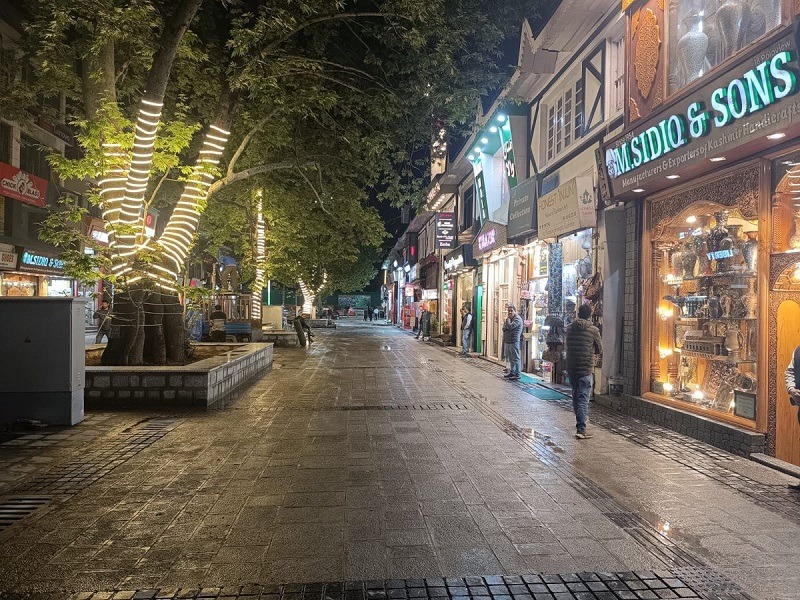
As the sun sets over Srinagar, the Jhelum River reflects a quiet transformation. Once littered with debris and crumbling concrete, its banks now hum with a gentle vibrancy. Neatly paved walkways line the water’s edge, illuminated by soft streetlights. Young couples stroll past modern benches, while students linger, chatting against sleek railings. The scene feels almost serene—a stark contrast to the chaos of just a few years ago.
This is Srinagar’s new face, shaped by India’s ambitious Smart Cities Mission, which has been redefining both the summer capital and its winter counterpart, Jammu, since their inclusion in 2017. The changes are not yet transformative, but they are tangible: cleaner streets, smarter systems, and a cautious optimism among residents who are beginning to see their cities anew.
In Srinagar’s bustling Polo View Market, once choked by honking vehicles and cluttered sidewalks, a pedestrian-only zone has breathed new life into the area. Cobbled paths, shaded by trees and modern canopies, guide shoppers through rows of orderly storefronts. “It’s not just about sales; people enjoy being here now,” said Mohammad Yaseen, a third-generation shopkeeper selling intricate Kashmiri carpets. “The calm makes them stay longer, browse more.”
Jammu, too, is carving out a new identity. The Tawi Riverfront, a flagship project, has turned a once-neglected, sewage-clogged stretch into a green oasis of walking trails, manicured lawns, and shaded seating. “This is our evening ritual now,” said Anil Kumar, a taxi driver, gesturing to his family picnicking by the river. “Before, this place was a dump. Now it feels like ours.”
Launched in 2015, the Smart Cities Mission aimed to modernize Indian cities through better infrastructure, technology-driven governance, and improved public services. In Jammu and Kashmir, the results are a mixed bag—celebrated by some, questioned by others. Supporters see long-overdue progress; critics argue the changes prioritize optics over substance. Yet, for residents of Srinagar and Jammu, the impact is undeniable, even if uneven.
Srinagar’s Integrated Command and Control Centre is a case in point. From a high-tech hub, officials monitor traffic, water supply, and emergency services in real time. “We’ve cut response times for everything from accidents to water shortages,” said a senior official with the Srinagar Smart City project, speaking on condition of anonymity. “Data is our backbone now.” Digital services have also simplified daily life: residents can pay utility bills or apply for birth certificates online, sparing them endless queues at government offices.
In Jammu, a mobile app allows citizens to report civic issues like potholes or faulty streetlights, while GPS-tracked garbage trucks ensure more reliable waste collection. Solar panels are sprouting on public buildings, and open-air gyms have appeared in parks, encouraging healthier lifestyles. Public Wi-Fi zones now dot commercial areas, a boon for students and small businesses alike.
Yet, not all neighborhoods share the shine. In Srinagar’s Saida Kadal, a working-class area near Dal Lake, residents like Shabir Ahmad, a fruit vendor, feel left behind. “The fancy lights and clean paths are for tourists,” he said, pointing to a flooded alley near his home. “When it rains, we’re still wading through muck.” Similarly, in Jammu’s Janipur, power outages remain a persistent grievance. “Smart cities sound nice, but what good is a digital board if the electricity’s gone?” asked Neha Gupta, a local baker.
The mission’s focus on visible upgrades—smart parking in Srinagar’s Lal Chowk or landscaped riverfronts in Jammu—has sparked accusations of prioritizing tourist-friendly areas over residential ones. In Eidgah, Srinagar, overflowing drains mock the promise of urban renewal, while in Jammu, a recently repaired pedestrian bridge was damaged soon after its reopening, raising questions about quality and oversight.
Still, the mission has delivered measurable benefits. Footfall in revamped commercial areas has boosted local economies, from shawl shops in Srinagar to tea stalls in Jammu. “Tourists and locals alike are spending more because the spaces feel inviting,” said Rukhsana Begum, who runs a small café near Jammu’s Tawi Riverfront. Construction and IT jobs tied to the projects have also provided a lifeline for many, particularly young people.
The bigger challenge lies ahead: sustainability. Smart infrastructure demands consistent maintenance, skilled workers, and coordinated governance—areas where both cities struggle. “We’re racing to build, but who’s going to maintain it?” asked a project supervisor in Srinagar, who requested anonymity. Dust-covered solar panels and offline digital kiosks already hint at the gaps in long-term planning.
Despite the imperfections, there’s a sense of possibility in the air. Parks are livelier with children playing on new swings. Elders walk safer paths at dusk. Heritage sites, like Srinagar’s old riverfront buildings and Jammu’s ancient shrines, are being preserved with care, illuminated rather than erased. This balance—modernizing without obliterating the past—sets Jammu and Kashmir apart from other Indian cities, where urban renewal often comes at the cost of character.
A smart city, at its core, isn’t just about apps or sensors. It’s about making life easier, more dignified. For every overflowing drain, there’s a family enjoying a clean park. For every power cut, there’s a student using free Wi-Fi to study. Jammu and Srinagar are far from perfect, but they’re moving—slowly, unevenly, but forward. And for the people who call these cities home, that movement feels like a promise worth keeping.