 News Desk
The killing of Mani Chakraborty, a Hindu grocery trader in Narsingdi, is the sixth fatal attack on members of Bangladesh’s Hindu community in less than three weeks. His death occurred in a crowded market, yet the assailants escaped without identification. The pattern is becoming familiar. A community that has long lived at the margins of political attention is again absorbing the shock of a national transition that has unsettled the institutions meant to protect it.
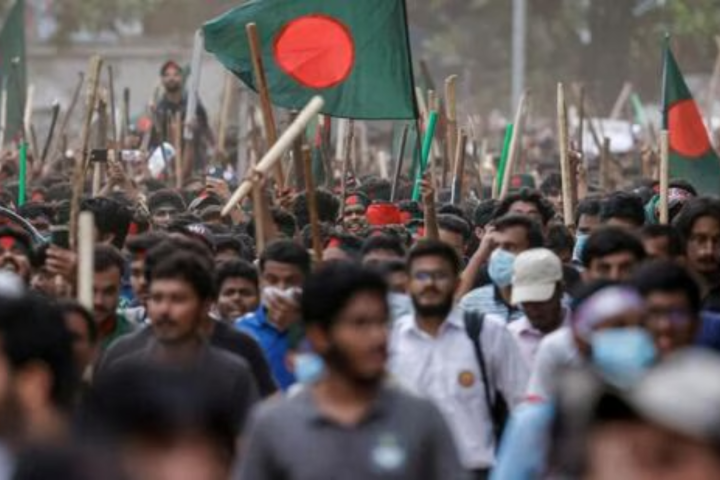
Bangladesh is navigating a rare political moment. The departure of Sheikh Hasina ended a long period of centralized authority. Her government was criticized for its authoritarian tendencies, but it maintained a disciplined security apparatus that responded quickly to communal unrest. The interim administration led by Muhammad Yunus has inherited a state that was built around a single political centre. Once that centre disappeared, the system struggled to function with coherence.
The most immediate challenge is the absence of a clear chain of command. For years, policing in Bangladesh operated through a highly centralized structure. Officers were accustomed to receiving direct political signals from the top. The interim government has not yet established a stable mechanism for directing law enforcement. As a result, police units in many districts are operating with hesitation. They are unsure which political actors hold authority, and which decisions carry institutional backing.
This uncertainty has created space for local power brokers to reassert themselves. In rural districts, informal networks often hold more influence than formal institutions. These networks include business syndicates, religious groups, and remnants of political organizations that once aligned themselves with the ruling party. When the central state weakens, these actors fill the vacuum. Their interests do not always align with the protection of minority communities.
Bangladesh’s Hindu population has long been a barometer of political stability. When the state is strong, attacks decline. When the state is weak, they rise. The recent killings reflect a familiar dynamic. Hindu traders and small business owners are often targeted because they are economically visible but socially unprotected. Their shops sit in public spaces where anonymity shields attackers. Their communities lack the political leverage to demand swift investigations.
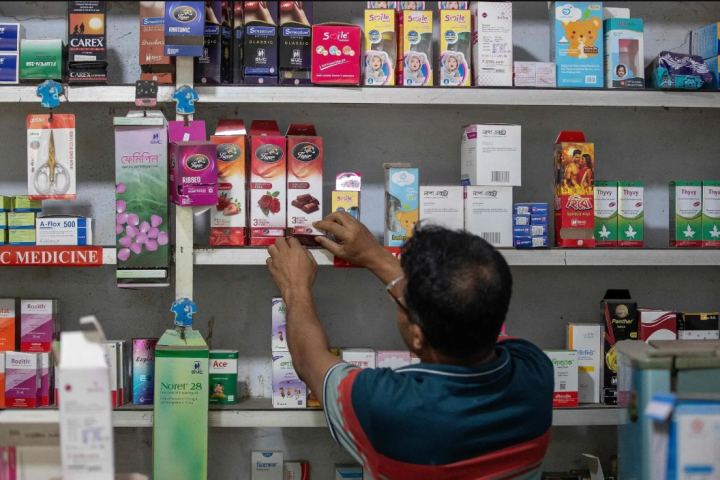
The murder of Chakraborty illustrates this vulnerability. He was attacked while running his shop in a busy market. He was taken to a hospital by locals but died before receiving treatment. The circumstances suggest not only a violent crime but also a breakdown in the protective functions of the state. When six killings occur in 18 days, the message is clear. Perpetrators believe the state is distracted and that consequences are unlikely.
Muhammad Yunus entered office with international credibility and moral authority. His government, however, is technocratic by design. It was created to stabilize the country, not to govern through political strength. The absence of a political party behind him has left him without the networks that typically enforce order in Bangladesh’s political system.
The interim administration faces three structural constraints.
- It lacks political capital.
Without a party, Yunus cannot mobilize local actors or enforce discipline across the bureaucracy. - It lacks institutional loyalty.
Many civil servants and police officers built their careers under Hasina. They are uncertain about the longevity of the interim government and reluctant to take risks. - It lacks coercive capacity.
The security apparatus is fragmented. Command structures are unclear. Officers are cautious about acting without political cover.
These constraints have slowed the government’s response to rising communal violence. The administration has issued statements condemning attacks, but statements alone do not deter perpetrators who operate in environments where the state appears absent.
Bangladesh is experiencing a transition that lacks a clear political roadmap. The old system has collapsed, but the new one has not yet taken shape. This ambiguity has created a period of institutional drift. Minority communities are often the first to feel the consequences of such drift because they depend most heavily on the state for protection.
The challenge for the interim government is not only to restore order but to rebuild confidence in the state’s ability to act. That requires more than policing. It requires a political strategy that reestablishes authority across the country. It also requires a public demonstration that attacks on minorities will be investigated and prosecuted.
Bangladesh’s path forward depends on three immediate steps.
- Reestablish a clear chain of command within law enforcement.
Officers must know who holds authority and which directives carry institutional legitimacy. - Demonstrate consequences for communal violence.
Arrests and prosecutions must be visible and swift. Impunity fuels repetition. - Create a political framework for the transition.
Without a roadmap, the interim government will continue to operate in a reactive posture.
Bangladesh has endured political turbulence before. What makes the current moment distinct is the combination of institutional fragility and rising communal anxiety. The killing of Mani Chakraborty is not an isolated tragedy. It is a signal that the state is struggling to protect those who rely on it most.