News Desk
DHAKA, Bangladesh — In the tea stalls of Dhaka and the garment factories of Gazipur, conversations fall quiet when the police appear. What was meant to be a season of political renewal has settled into a tense hush as Bangladesh approaches its February 12 election. The sense of anticipation that followed the fall of a long‑entrenched government has given way to a familiar unease.
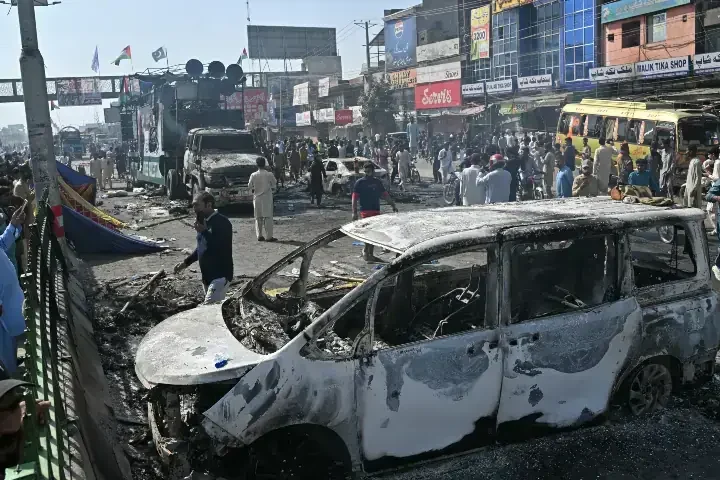
The interim administration led by Muhammad Yunus, the Nobel laureate who rose to power after the so‑called Monsoon Revolution, had promised to dismantle sixteen years of Awami League rule. Months later, many Bangladeshis say the state feels unchanged. Reports of mob justice have increased. Minority communities describe new waves of intimidation. Opposition figures speak of arrests, surveillance and a political landscape stripped of meaningful competition.
Security in the capital is visible but inconsistent. Nearly 800,000 personnel, including 100,000 soldiers, have been assigned to election duty. Yet the authorities have struggled to contain scattered outbreaks of violence. Human rights groups say attacks on Hindu neighbourhoods have risen, often sparked by accusations of blasphemy that rarely lead to prosecution.
The most striking absence in the campaign is that of the Awami League. The party that dominated national politics for almost two decades has been dismantled. Its leaders are in exile or in custody. Its registration has been suspended. Many Bangladeshis welcomed the end of Sheikh Hasina’s rule, but the removal of a party with deep roots in the electorate has revived an old question: can an election be considered free if the outcome appears predetermined?
The Yunus administration has presented the vote as the first step toward a “New Bangladesh.” Critics argue that the political environment bears too much resemblance to the one it replaced.
“Democracy is not just the act of casting a ballot,” said a Dhaka‑based political analyst who requested anonymity out of fear of reprisal. “It is the ability to campaign, to dissent and to trust that you will not be detained for your affiliations. None of those conditions exist right now.”
The Election Commission has introduced several reforms, including a “no vote” option and provisions for expatriate participation. These measures have done little to ease concerns about the broader climate. With the largest secular party barred from the race, Islamist groups and hardline factions have moved to fill the space.
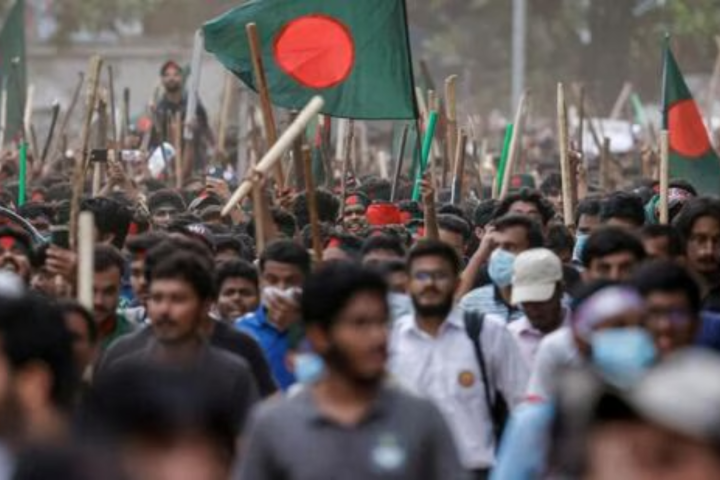
For the country’s 127 million registered voters, the election is not only a contest for parliamentary seats. It is also a referendum on the July Charter, a package of constitutional reforms that could reshape the political system. Yet the streets are dominated by student militias, and the police appear weakened. The boundary between reform and retribution has grown increasingly difficult to discern.
Foreign governments that once celebrated the end of the previous regime are now expressing concern. The United States and the European Union have urged an inclusive process, but the reality on the ground suggests the opposite. If the results are widely viewed as a foregone conclusion in favour of the Bangladesh Nationalist Party or its allies, analysts warn that public confidence in the democratic process could erode further.
In a country where the price of a garment is measured in cents, the cost of political participation is rising. If the climate of fear persists, the February 12 vote may be remembered not as the start of a democratic transition but as the beginning of another cycle of instability.