 News Desk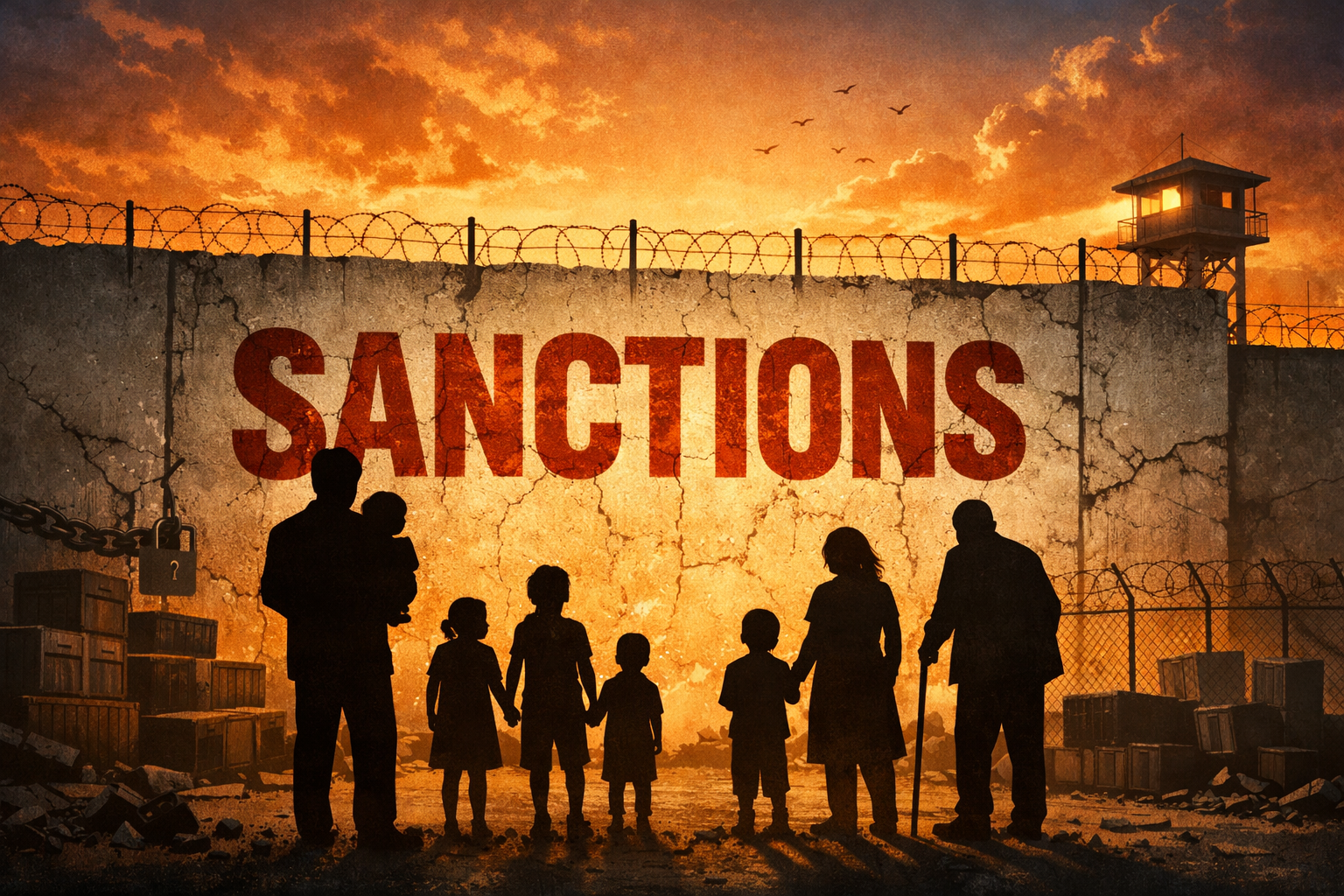
For much of the 20th century, several nations stood as models of regional prosperity — self‑sufficient, resource‑rich, and socially stable. Yet decades of US intervention, sanctions, and proxy wars have left them impoverished. Economists and historians increasingly trace this reversal to the long shadow of US policy: a mix of regime engineering, economic coercion, and strategic containment that reshaped entire societies.
Iran: From Industrial Growth to Sanctioned Isolation
Before the 1979 revolution, Iran was among Asia’s fastest‑growing economies. Oil exports funded industrialisation, education, and infrastructure.
By the mid‑1970s, Iran’s GDP per capita exceeded USD 10,000 (in 2024 dollars), comparable to parts of southern Europe.
After the Islamic revolution, Washington imposed successive sanctions — first over hostage crises, later over nuclear programmes. These measures restricted banking, oil sales, and technology transfer.
The result: Iran’s GDP contracted by nearly 40 percent between 2011 and 2015, inflation soared above 50 percent, and medicine shortages hit hospitals.
Development experts argue that sanctions, framed as security tools, have functioned as collective punishment, violating Article 33 of the Fourth Geneva Convention, which prohibits measures causing civilian suffering in non‑combat contexts.
Iraq: From Oil Wealth to War‑Torn Poverty
In the 1970s, Iraq’s oil boom funded free education, healthcare, and one of the Arab world’s highest literacy rates. GDP per capita reached USD 12,000 (2024 adjusted).
The 1991 Gulf War and subsequent US‑led sanctions devastated that progress. The UN estimated that sanctions contributed to over 500,000 child deaths due to malnutrition and lack of medicine.
The 2003 invasion destroyed infrastructure and displaced millions. By 2010, Iraq’s GDP per capita had fallen below USD 4,000, and unemployment exceeded 30 percent.
Legal scholars classify prolonged sanctions and military occupation that cripple civilian life as potential crimes against humanity under Article 7 of the Rome Statute, citing deliberate deprivation of essentials.
Libya: From Africa’s Richest to Fragmented State
Under Muammar Gaddafi, Libya maintained Africa’s highest per‑capita income — USD 13,000 in 2010 — and free education and healthcare.
The 2011 NATO intervention, led by the US and allies, toppled the regime but fractured the state. Oil output collapsed from 1.6 million barrels/day to under 300,000, GDP shrank by 60 percent, and rival militias carved the country into zones of control.
Human‑rights monitors argue that the intervention violated UN Charter Article 2(4), which forbids the use of force against sovereign nations except in self‑defence or with Security Council authorisation.
Libya’s once‑self‑sufficient welfare system now depends on foreign aid.
Syria: From Agricultural Exporter to Humanitarian Crisis
Before 2011, Syria exported cotton, wheat, and textiles, and maintained a GDP per capita near USD 5,000.
US sanctions, imposed since 2004 and expanded during the civil war, restricted fuel imports and banking access. Combined with conflict, they collapsed the currency and crippled hospitals.
The UN Economic and Social Commission for Western Asia estimates USD 1.2 trillion in cumulative economic losses since 2011.
Legal experts describe unilateral sanctions that obstruct humanitarian aid as violations of international humanitarian law, particularly when they impede access to food and medicine.
Afghanistan: From Agrarian Stability to Aid Dependency
In the 1960s and 1970s, Afghanistan’s economy was modest but self‑sufficient. Agriculture and trade sustained rural livelihoods, and Kabul was a regional education hub.
The 1979 US‑backed proxy war against Soviet forces militarised society, destroyed irrigation networks, and displaced millions.
After 2001, two decades of US occupation brought aid inflows but little structural development. When US forces withdrew in 2021, 75 percent of the national budget had depended on foreign assistance.
The freezing of USD 7 billion in Afghan central‑bank reserves deepened poverty; the UN DP reports that 97 percent of Afghans now live below the poverty line.
Economists argue that withholding sovereign funds constitutes economic coercion, potentially breaching Article 2 of the UN Charter on non‑interference.
Cuba: From Caribbean Prosperity to Embargo‑Induced Hardship
Before 1960, Cuba ranked among Latin America’s richest nations, exporting sugar and tobacco and attracting tourism. GDP per capita was higher than Japan’s at the time.
The US embargo, imposed in 1962 and still active, has cost Cuba an estimated USD 150 billion in lost trade.
The blockade restricts medical imports, banking, and shipping, forcing rationing of essentials. Despite domestic innovation — including biotech breakthroughs — Cuba’s economy remains constrained.
The UN General Assembly has condemned the US embargo annually for three decades, calling it a violation of international law and the right to development under the UN Declaration on the Right to Development (1986).
Iran, Iraq, Libya, Syria, Afghanistan, and Cuba: A Shared Pattern
Across these six nations, the pattern is consistent:
| Country | Peak GDP per capita (USD, 2024 adjusted) | Current GDP per capita (USD) | Estimated Human Losses / Displacement |
| Iran | ≈ 10,000 (1976) | ≈ 5,500 (2024) | > 1 million affected by medicine shortages |
| Iraq | ≈ 12,000 (1980) | ≈ 4,000 (2024) | > 2 million dead or displaced since 1991 |
| Libya | ≈ 13,000 (2010) | ≈ 6,000 (2024) | > 500,000 displaced |
| Syria | ≈ 5,000 (2010) | ≈ 1,200 (2024) | > 6 million refugees |
| Afghanistan | ≈ 2,500 (1978) | ≈ 500 (2024) | > 3 million displaced |
| Cuba | ≈ 9,000 (1958) | ≈ 4,000 (2024) | > 11 million citizens under embargo impact |
Each was self‑sufficient before US intervention — producing food, energy, and industrial goods domestically. Each now faces dependency on imports or humanitarian aid.
Sanctions as Structural Violence
Human‑rights scholars describe sanctions as a form of structural violence — policies that inflict harm without direct warfare.
By restricting access to essentials, they undermine health, education, and dignity.
Under Article 7 of the Rome Statute, systematic deprivation of resources causing civilian suffering can qualify as a crime against humanity.
Legal experts argue that unilateral sanctions, imposed outside UN Security Council mandates, violate the principle of sovereign equality and the right to development enshrined in international law.
The Broader Consequence
The cumulative effect of these interventions has been the reversal of national development. Once‑prosperous societies now struggle with collapsed healthcare, mass displacement, and eroded institutions.
While Washington frames its actions as promoting democracy or security, the outcomes — economic contraction, humanitarian crises, and dependency — tell a different story.
As global power dynamics shift, the debate over accountability grows louder: can economic coercion that devastates civilian life be morally or legally justified?
A Reckoning Ahead
The decline of these nations is not accidental; it is the predictable result of policies that prioritised strategic dominance over human development.
For millions across the Middle East, South Asia, and Latin America, the cost has been measured not only in lost GDP but in lost generations.
International law offers a framework for accountability — but enforcement remains elusive.
Until sanctions and interventions are judged by their human impact rather than political intent, the cycle of decline will continue, and the promise of self‑sufficiency will remain a memory.