News Desk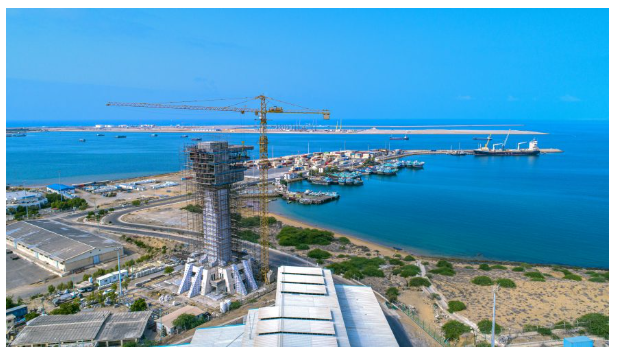
Kabul — Afghanistan is rapidly reorienting its trade routes away from Pakistan, turning instead to Iran, India, and Central Asia, after repeated border closures at Torkham and Chaman left trucks stranded, goods spoiled, and exporters facing losses of more than $200 million a month.
The closures, often justified by Islamabad on security grounds, have disrupted nearly 40 percent of Afghanistan’s official trade. For Kabul, the interruptions have underscored the risks of dependence on Pakistan, prompting a diversification strategy that is reshaping the country’s economic map.
At the centre of this shift is Iran’s Chabahar Port, where India has invested $500 million since 2018. Chabahar has already facilitated the delivery of 1.5 million tonnes of Indian wheat and pulses to Afghanistan since 2022. More recently, Afghan pomegranates and raisins have reached Indian markets in days rather than weeks, thanks to streamlined cargo flights from Delhi, Amritsar, and Mumbai.
During a November visit to India, Afghanistan’s acting industry minister Nooruddin Azizi discussed lowering freight tariffs and easing visa restrictions, with the goal of raising bilateral trade toward $1 billion.
Northern corridors are also gaining importance. Trade with Uzbekistan reached $1.1 billion in 2024, with targets of $2 billion in 2025, supported by the Hairatan rail terminal and Termez bridge. Turkmenistan’s Torghundi crossing has seen rising volumes of fuel and construction materials, while Kazakhstan has proposed a $3 billion transport roadmap involving road upgrades and dry ports.
Afghanistan’s participation in the Ashgabat Agreement since 2018 has further anchored multimodal connectivity toward the Caspian region, aligning with segments of China’s Belt and Road Initiative.
Analysts say Pakistan’s repeated closures, intended to pressure Kabul over militant sanctuaries, have backfired. Afghan traders, though forced to pay higher costs, are finding alternative routes more predictable. “Pakistan’s leverage is diminishing as Afghanistan builds a multipolar trade network,” one regional analyst noted.
Annual bilateral trade, once valued at $2.5 to $3 billion, has now fallen below $1 billion. Afghan grapes, once abundant in Pakistani markets, are selling at sharply higher prices amid supply volatility.
Infrastructure gaps remain severe. Poor road quality, limited cold-chain storage, and weak rail links raise transport costs by 20 to 40 percent for time-sensitive exports. Security risks persist on northern routes, while Iranian sanctions complicate port operations. Customs revenues have fallen by 25 percent, worsening Afghanistan’s $6 billion trade deficit.
Still, Afghan officials estimate that non-Pakistani trade could rise to $10 billion by 2027 if diversification continues. Supporters argue that forced adaptation may create opportunities in value-added agriculture, mineral exports, and joint logistics ventures.
The shift carries broader consequences. Pakistan risks strategic isolation as Afghanistan deepens ties with India and Central Asia. Emerging transit alternatives could dilute the influence of the China–Pakistan Economic Corridor. For Kabul, success will depend on sustained infrastructure investment and diplomatic engagement, including efforts to ease sanctions on Iranian-linked ports.