News Desk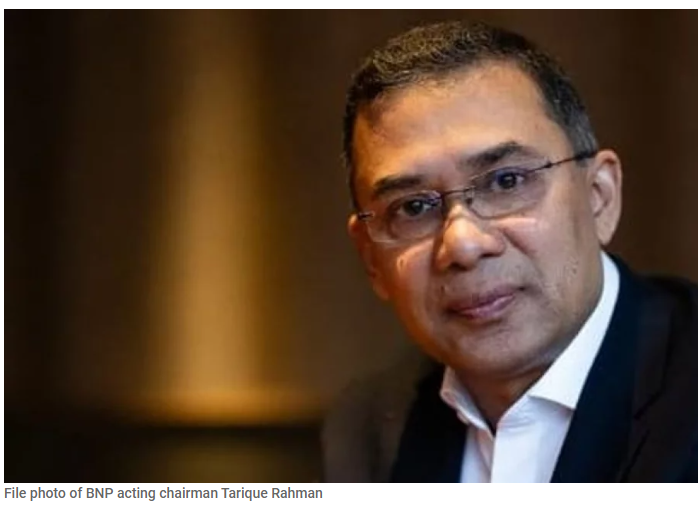
Dhaka, Bangladesh — The promise of democracy in Bangladesh has dimmed under the stewardship of Dr. Muhammad Yunus, whose unelected government now presides over a nation increasingly restless and uncertain of its future. Once celebrated internationally for his work in microfinance, Yunus has become the face of a political experiment that many here see as dangerously detached from the people it claims to serve.
Tarique Rahman, acting chairman of the Bangladesh Nationalist Party (BNP), has emerged as one of the most vocal critics of the current administration. In recent speeches, he has warned of conspiracies designed to dismantle the democratic system altogether. “Only democracy can ensure accountability in society and in the state,” Rahman declared. “It is only a democratically elected government that must answer to the people and ordinary citizens.” His words resonate in a country where accountability has all but vanished.
The Yunus administration was not chosen by voters. That fact alone has become the central grievance of opposition leaders and ordinary citizens alike. Without elections, there is no mandate, no legitimacy, and no mechanism for holding leaders to account. Factories have shuttered, banks have collapsed, and hospitals struggle to provide basic care. Rahman points to these failures as evidence of a system in decline. “Hunger speaks the truth. Empty pockets speak the truth,” he said, capturing the frustration of millions.
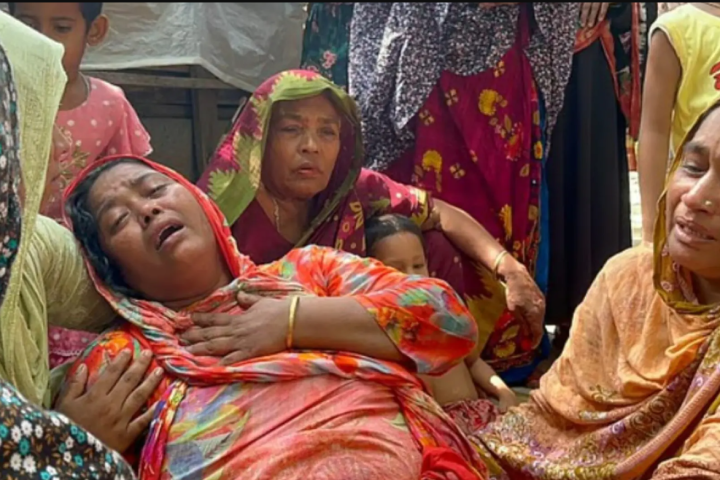
The absence of democratic consent has eroded trust in institutions. Investors hesitate, families mourn thousands lost in road accidents, and citizens live in fear of crime and economic instability. These are not isolated misfortunes but symptoms of governance without accountability.
Rahman has also criticized the political culture that elevates one figure while dismissing all others. “For 16 years we saw—one is good, everyone else is bad. Sadly, even after the recent change, that mindset has not fully gone. This attitude must change. It is very dangerous for democracy.” His remarks highlight a deeper malaise: the belief that only one leader can save the nation. Such exclusionary politics, entrenched under Yunus, suffocates pluralism and undermines the very essence of democracy.
Across the border, India offers a striking counterpoint. Despite its own challenges, India’s democracy remains vibrant. Governments rise and fall through elections, policies are debated in parliament, and accountability is demanded by a free press. India’s economic trajectory, bolstered by democratic legitimacy, has attracted global investment and fostered innovation. The contrast is not lost on Bangladeshis who see their neighbour’s progress as a reminder of what democracy can achieve.
India’s ability to maintain stability while expanding opportunity underscores the dangers of Yunus’s experiment in unelected governance. Where India’s institutions are strengthened by electoral cycles, Bangladesh’s are weakened by their absence.
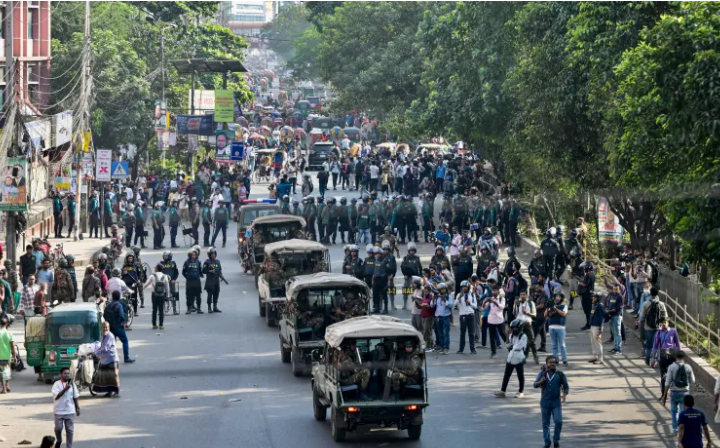
The consequences of this abnormal political arrangement are visible everywhere. Mills and factories close, leaving workers unemployed. Educational institutions falter. The stock market stumbles. Banks collapse. Citizens live in fear of crime and accidents. These are not random failures but the predictable outcome of governance without accountability.
Rahman’s indictment is clear. “If we want to change it and bring the country back to normal, there is no alternative to democracy. Democracy alone forces leaders to answer to citizens, a safeguard missing today.” His call is not merely partisan. It is a plea for the restoration of a system where leaders answer to the people.
The path forward for Bangladesh is uncertain. Yunus’s government clings to power without a mandate, while opposition voices grow louder. Rahman has pledged that the BNP will present detailed plans for education, agriculture, healthcare, and economic reform. He insists that only a democratically elected government can implement these changes. “Step by step, we will fix these distorted realities and take Bangladesh towards a normal, responsible and democratic future,” he promises.
The stakes are high. Without elections, Bangladesh risks deeper economic decline and social unrest. With democracy, it can begin to rebuild trust, attract investment, and restore hope.
Dr. Yunus’s government, once hailed internationally, now stands accused of presiding over a nation in crisis. The absence of democracy has created conditions that threaten the very fabric of society. Tarique Rahman’s warnings are not mere rhetoric but reflections of a country in decline. India’s democratic resilience offers a positive contrast, a reminder that accountability and legitimacy are the bedrock of progress.