 News Desk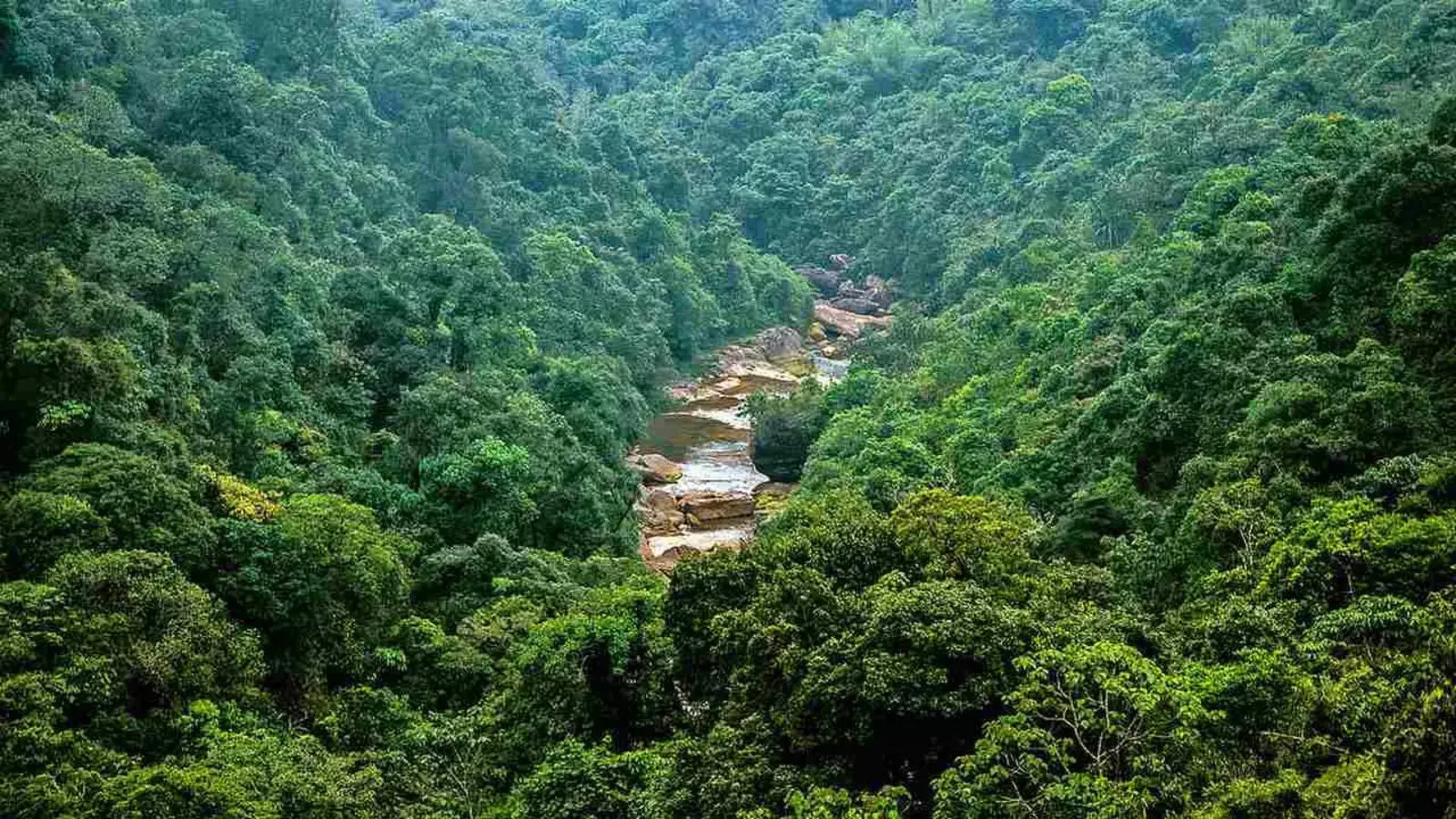
In a significant stride towards global climate resilience, India’s green cover has achieved a remarkable feat by consistently absorbing more carbon than it emitted over the past decade. This milestone, as highlighted by researchers from the Indian Institute of Science Education and Research (IISER) in Bhopal, underscores India’s pivotal role in climate change mitigation. However, the study also raises a cautionary note on the fragility of this achievement in the face of extreme climate events like droughts.
India’s verdant landscapes, spanning from lush forests to sprawling croplands, have proven their mettle as vital carbon sinks. Through the intricate process of photosynthesis, green vegetation absorbs atmospheric carbon dioxide (CO2), releasing it back via respiration. The balance of this exchange—known as net ecosystem exchange (NEE)—has predominantly leaned negative, meaning Indian ecosystems are effectively storing carbon rather than emitting it.
“Our research found that India’s ecosystems absorbed 380 to 530 million tonnes of carbon annually over the last decade,” said Dr. Dhanyalekshmi Pillai, associate professor and head of the Max Planck Partner Group at IISER Bhopal. This achievement positions India as a critical player in global climate efforts.
India’s diverse vegetation plays distinct roles in carbon sequestration. Evergreen forests, particularly in the Western Ghats and northeastern regions, emerge as carbon champions due to their high photosynthetic efficiency. Deciduous forests in central India, however, struggle to match this balance, often emitting more carbon as respiration surpasses productivity during the dry season.
Croplands, though less efficient in sequestering carbon per unit area, offer a significant advantage through their sheer expanse. These agricultural landscapes collectively contribute substantially to atmospheric CO2 removal.
Despite this progress, the study highlights a worrying trend: the decreasing rate of carbon sequestration during climate extremes. Droughts, which are intensifying due to climate change, significantly hamper vegetation’s ability to store carbon.
“While green vegetation supports us by reducing global warming, its potential is not limitless,” warned Dr. Pillai. “Under extreme climate conditions, sequestration rates decline, which is concerning for future climate resilience.”
The IISER study, conducted in collaboration with international institutions like the Max Planck Institute for Biogeochemistry and the University of Exeter, marks a breakthrough in understanding India’s carbon dynamics. By employing cutting-edge satellite technology, including the TROPOMI instrument onboard Sentinel-2, researchers achieved unprecedented precision in tracking vegetation’s carbon sequestration potential.
This interdisciplinary approach also integrated thousands of observational records from 2012 to 2022, revealing patterns and vulnerabilities across India’s ecosystems. The study offers valuable insights for shaping targeted climate policies and sustainable ecosystem management strategies.
For India, meeting the requirements of the Conference of the Parties (COP) to the United Nations Framework Convention on Climate Change (UNFCCC) involves ambitious yet achievable commitments, such as:
- Achieving net-zero carbon emissions by 2070.
- Expanding renewable energy capacity to 500 GW by 2030.
- Reducing the carbon intensity of GDP by 45% by 2030.
- Increasing forest cover to enhance carbon sinks.
India’s efforts in increasing forest and tree cover have already shown promising results. According to the India State of Forest Report (ISFR) 2021, the country’s forest and tree cover has risen by 2,261 square kilometers in the last two years, with Andhra Pradesh recording the maximum growth of 647 square kilometers. This progress underscores the nation’s commitment to enhancing its green cover and strengthening its carbon sinks.
The findings underscore the need for proactive measures to safeguard India’s carbon sinks. Enhancing afforestation, conserving existing green cover, and adopting climate-resilient agricultural practices are critical steps. As India advances its nationally prioritized climate action plans, this research provides a robust scientific foundation for designing effective interventions.
India’s success in carbon sequestration is a testament to its commitment to environmental stewardship. However, sustaining and scaling this achievement in an era of climate uncertainty will require a united effort from policymakers, scientists, and citizens alike.
In the global fight against climate change, India’s green revolution offers a beacon of hope—an affirmation that with innovation, resilience, and determination, it is possible to carve a sustainable path forward.